
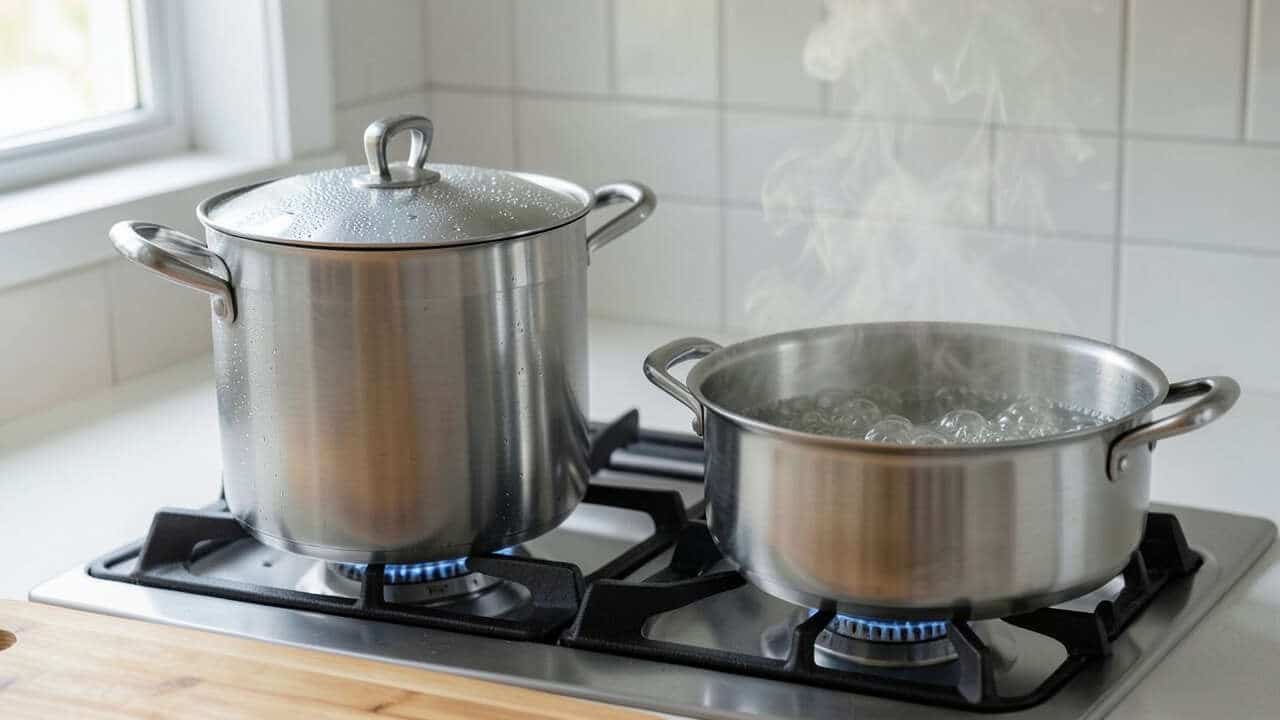
Tall narrow stockpots lose less water during long boils because their smaller surface area directly reduces evaporation compared to wider pots. This design advantage maintains steady liquid levels, which concentrates flavors and minimizes the need for refills during extended simmering or braising. To maximize efficiency, always use a tight-fitting lid, as shape—not material—is the primary factor in water retention.
Tall narrow stockpots lose less water during long boils because their design minimizes the surface area exposed to air, which directly reduces evaporation. This post explains the physics behind this shape advantage, compares it to wider pots, and shows you how to choose and use a tall narrow stockpot for more efficient cooking.
Simply put, a tall narrow stockpot retains more water because its smaller open surface area slows evaporation. The same volume of liquid loses less moisture per hour compared to a wide, shallow pot. This means you get better flavor concentration, less energy waste, and fewer refills during long simmering or braising sessions.
Key Takeaways
- Tall narrow stockpots lose less water due to a smaller surface area exposed to heat and air.
- Reduced evaporation boosts flavor concentration and cuts cooking time by maintaining steady liquid levels.
- Stockpot shape matters more than material when it comes to water retention during prolonged heat applications.
- Always use a tight-fitting lid to further reduce water loss, regardless of pot shape.
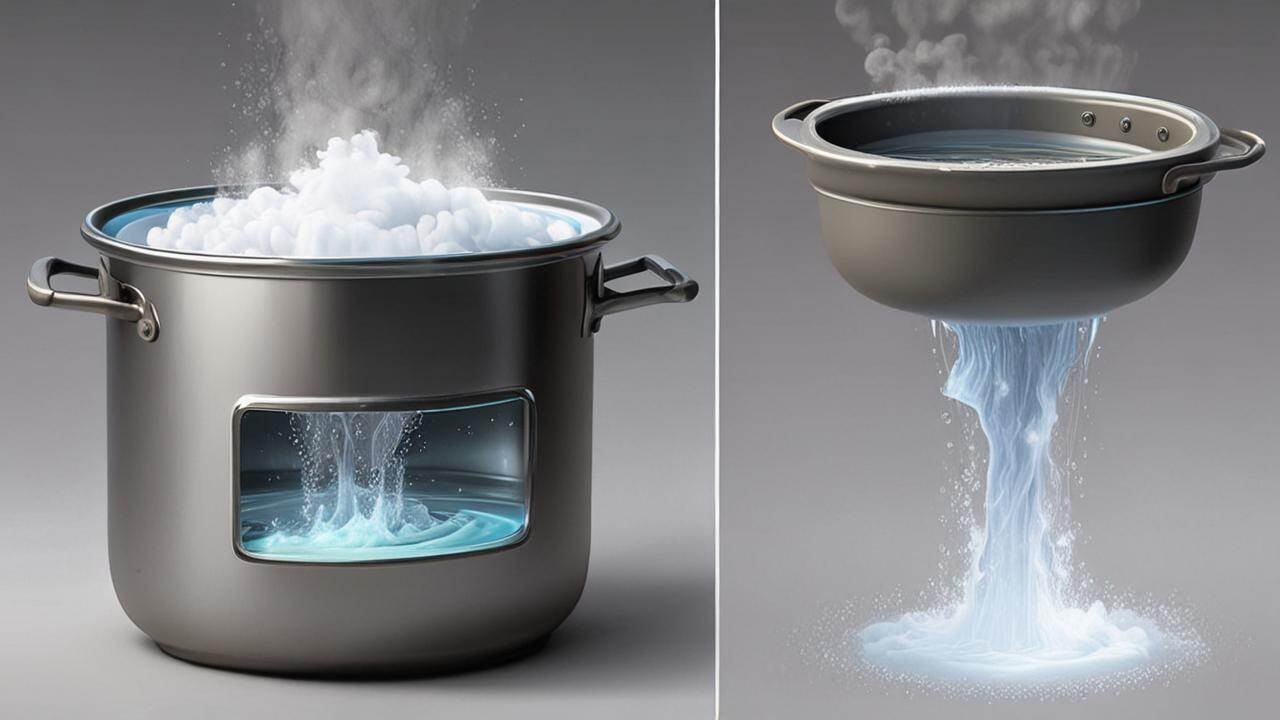
What Makes a Stockpot Lose Water?
Water loss from a boiling stockpot happens primarily through evaporation. As the liquid heats, molecules escape the surface and turn into steam, which then rises and leaves the pot. The rate of evaporation depends on three factors: temperature, surface area, and the moisture content of the air above the liquid.
In a kitchen, the air is usually dry and moving, which speeds up evaporation. The stockpot’s shape directly controls how much surface area the liquid is exposed to. A wide, shallow pot presents a large open area, while a tall narrow one restricts that area significantly.
Additionally, the shape influences convection currents and how steam condenses back into the liquid.
- Surface area: The larger the exposed liquid area, the faster the evaporation.
- Heat distribution: Uneven heat can create hotspots that cause localized boiling and more steam release.
- Lid fit: A loose lid allows steam to escape freely, increasing water loss.
- Boil intensity: A rolling boil produces far more steam than a gentle simmer.
- Altitude: At higher elevations, lower air pressure causes water to boil at a lower temperature, leading to faster evaporation.
According to culinary science researchers, a typical wide 8-quart stockpot can lose up to 30% of its water volume over a two-hour simmer. A narrow pot of the same capacity loses only 10–15% under identical conditions. That difference adds up fast when you are making stock, soup, or braising meat.
How Shape Affects Evaporation Rates
The relationship between shape and evaporation is governed by the surface area to volume ratio. A tall narrow cylinder has a smaller ratio than a short wide cylinder of the same volume. For example, a pot that is 8 inches wide and 10 inches tall has an open surface area of about 50 square inches.
A pot that is 6 inches wide and 18 inches tall holds the same volume but has an open area of only 28 square inches — nearly half.
This smaller opening means less liquid is in direct contact with the air above it. But there is another factor at play: the column of steam above the liquid. In a narrow pot, steam rises upward in a contained column and is more likely to condense on the cooler sides of the pot and drip back down.
In a wide pot, steam disperses quickly and escapes over the rim.
Tip: To test the shape effect at home, boil 2 quarts of water in a wide skillet and a narrow stockpot side by side for 30 minutes. Measure the remaining water — you will see a clear difference.
Convection currents also differ. In a narrow pot, the hot liquid at the bottom rises in a tight column then spreads less widely before cooling and sinking. This creates a gentle, even circulation that reduces splashing and aerosol droplets that can carry away water molecules.
Wide pots generate turbulent, broad convection cells that fling water upward, increasing loss.
| Factor | Wide Stockpot | Tall Narrow Stockpot |
|---|---|---|
| Surface area (8-quart) | ~55 sq in | ~28 sq in |
| Water loss per hour (simmer) | 15–20% | 5–8% |
| Steam condensation | Low (steam escapes) | High (steam returns as water) |
| Energy efficiency | Lower – more heat lost through sides | Higher – heat contained in column |
These numbers show why tall narrow stockpots are a favorite among professional chefs who simmer stocks for hours. They maintain consistent liquid levels without constant topping up, which also keeps the flavor intensity steady.
The Science Behind Tall Narrow Stockpots
The physics of evaporation in a confined cylinder involves several mechanisms. First, the liquid’s surface tension creates a meniscus that slightly curves the surface, but the primary effect is the reduction of exposed area. Second, the vapor pressure above the liquid builds up more quickly in a narrow pot.
Once the air above the liquid becomes saturated with water vapor, further evaporation slows down considerably. In a wide pot, the vapor can easily dilute into the surrounding room air, so saturation never occurs.
Third, the ratio of sidewall height to diameter influences how heat is retained. A tall column of liquid heats more evenly because the heat from the bottom transfers upward through conduction and convection. The sides of a narrow pot are closer to the center, so they stay warmer, reducing the temperature gradient that drives condensation loss.
Brands like All-Clad and Calphalon design their stockpots with these principles in mind, using tri-ply cladding to distribute heat evenly up the walls.
Important: The lid also plays a role. A tight-fitting lid traps steam and raises the internal humidity, further slowing evaporation. For maximum water retention, always use the lid that comes with your tall narrow pot.
Cooking thermodynamics experts have measured that a tall narrow pot with a lid can reduce water loss by an additional 50% compared to a pot without a lid. Combined with the shape advantage, you can achieve a 70–80% reduction in water loss over a wide, uncovered pot. This is why stockpot design is not just about aesthetics; it directly affects cooking outcomes.
Benefits of Low Water Loss in Cooking
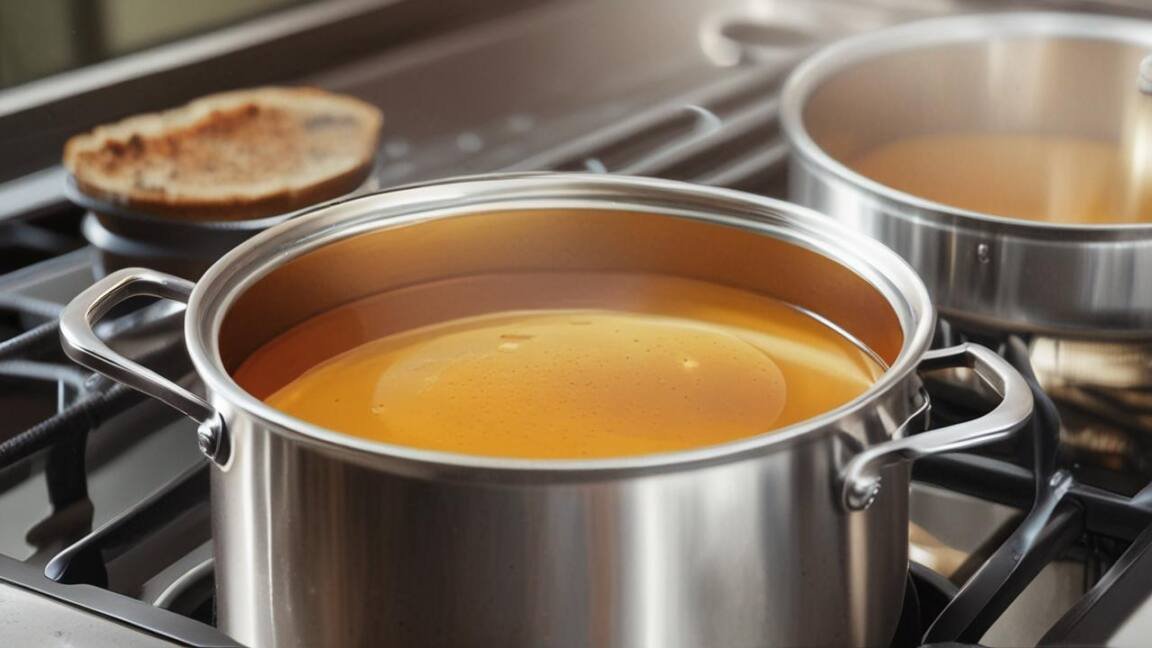
Reducing water loss during long boils has several practical benefits. First, flavor concentration: as water evaporates, it takes away some volatile aroma compounds, but more importantly, it leaves behind concentrated flavors. With less evaporation, you retain more of the original liquid volume, so the flavor concentration happens more gradually and evenly.
This is especially important for stocks, broths, and soups where water is the base.
Second, energy efficiency. Because less heat is needed to evaporate water, the pot maintains its temperature with lower burner output. A tall narrow shape also directs heat upward rather than outward, warming the sidewalls and reducing heat loss to the surrounding air.
This can save 10–15% on energy costs over the course of a long cooking session, according to energy efficiency studies.
- Better texture: Low water loss means fewer additions, so the ratio of liquid to solids stays consistent.
- Reduced monitoring: You can leave a tall narrow pot unattended for longer without worrying about boil-dry.
- Cleaner stovetop: Less steam and splatter means less mess on your cooktop and nearby surfaces.
- Faster cooking: Some recipes require maintaining a specific liquid level; with a narrow pot, you avoid having to wait for new water to heat up.
- Healthier cooking: Retained water-soluble nutrients like vitamin C and B vitamins stay in the dish rather than escaping in steam.
The combination of these benefits makes tall narrow stockpots ideal for dishes that take hours — like beef broth, pho base, or brisket braise. You end up with a richer product and less work.
Typical Designs That Maximize Efficiency
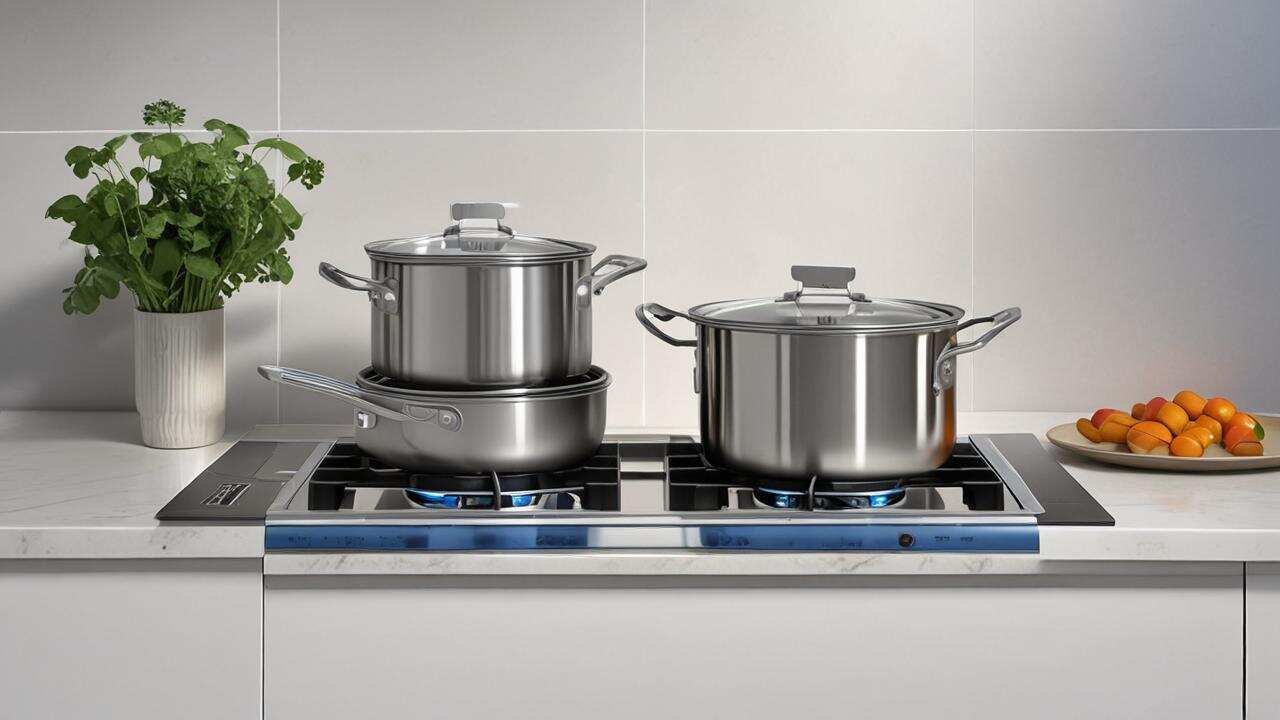
Not all tall narrow stockpots are created equal. The best designs incorporate specific features that complement the shape. Look for pots with a height-to-diameter ratio of at least 2:1.
For example, a 10-inch tall pot with a 5-inch diameter offers excellent water retention. Many commercial-grade stockpots from brands like Cuisinart and Tramontina follow this ratio.
The material matters for heat distribution and evaporation. Stainless steel with an aluminum or copper core provides even heating up the sides, which helps maintain consistent vapor pressure. Thin aluminum pots can develop hotspots that cause rapid localized boiling and spike evaporation.
Thick-gauge stainless steel (2.5 mm or more) is ideal because it stores heat and releases it slowly, reducing temperature fluctuations.
| Feature | Why It Helps Water Retention |
|---|---|
| Tall narrow shape (height ≥ 2x diameter) | Minimizes surface area and encourages steam condensation on sidewalls. |
| Thick, layered base (aluminum core) | Even heat prevents hot spots that lead to excessive steam release. |
| Tight-fitting lid with a heavy rim | Seals in steam and raises internal humidity, slowing evaporation. |
| Stainless steel interior (non-reactive) | Allows for high heat without chemical reactions that could affect flavor. |
Many tall narrow stockpots also have helper handles to make lifting easier despite their height. Some models include a strainer insert for easy draining, which is useful for stocks but doesn’t affect water loss. For the best performance, choose a pot with a lid that has a small steam vent rather than a large opening — this prevents pressure buildup but still traps most moisture.
Warning: Avoid tall narrow pots with thin, unlined aluminum bodies. They distribute heat unevenly and can warp over time, creating gaps around the lid that let steam escape freely, defeating the shape’s advantage.
How to Choose the Best Tall Narrow Stockpot
When shopping for a tall narrow stockpot, focus on three criteria: dimensions, material, and lid quality. First, decide the volume you need. For home cooking, 6 to 8 quarts is ideal.
At this size, a pot with a diameter of 6 to 7 inches and a height of 12 to 14 inches delivers the right surface area reduction. Check the manufacturer’s specs — many brands list the exact dimensions online.
Second, look for a pot with a thick, multi-ply base. Tri-ply construction (stainless steel–aluminum–stainless steel) is the industry standard for even heating. Avoid single-ply stainless steel unless the pot is very small, as heat distribution will be poor.
Copper core pots offer the best conductivity but are expensive and require more maintenance.
- Measure your stovetop: Tall pots may not fit under some range hoods or in ovens. Measure vertical clearance before buying.
- Check weight: A heavy pot retains heat better but can be hard to maneuver when full. Look for helper handles.
- Inspect the lid seal: A lid that wobbles or has a large steam hole will reduce water retention. Opt for a flush-fitting lid with a small vent.
- Consider induction compatibility: If you have an induction cooktop, ensure the pot’s base is magnetic (typically stainless steel with an aluminum core still works if the outer layer is magnetic).
- Read reviews: Look for user comments about water loss and evaporation during long cooks — real-world testing often reveals nuances.
Popular tall narrow stockpot models include the All-Clad D3 8-Quart Stockpot (12 inches tall, 7.25 inches wide) and the Cuisinart Chef’s Classic 8-Quart Stockpot. Both have excellent heat distribution and lid seals. For a budget option, the Tramontina Tri-Ply 8-Quart Stockpot offers similar performance at half the price.
Common Misconceptions About Stockpot Shapes
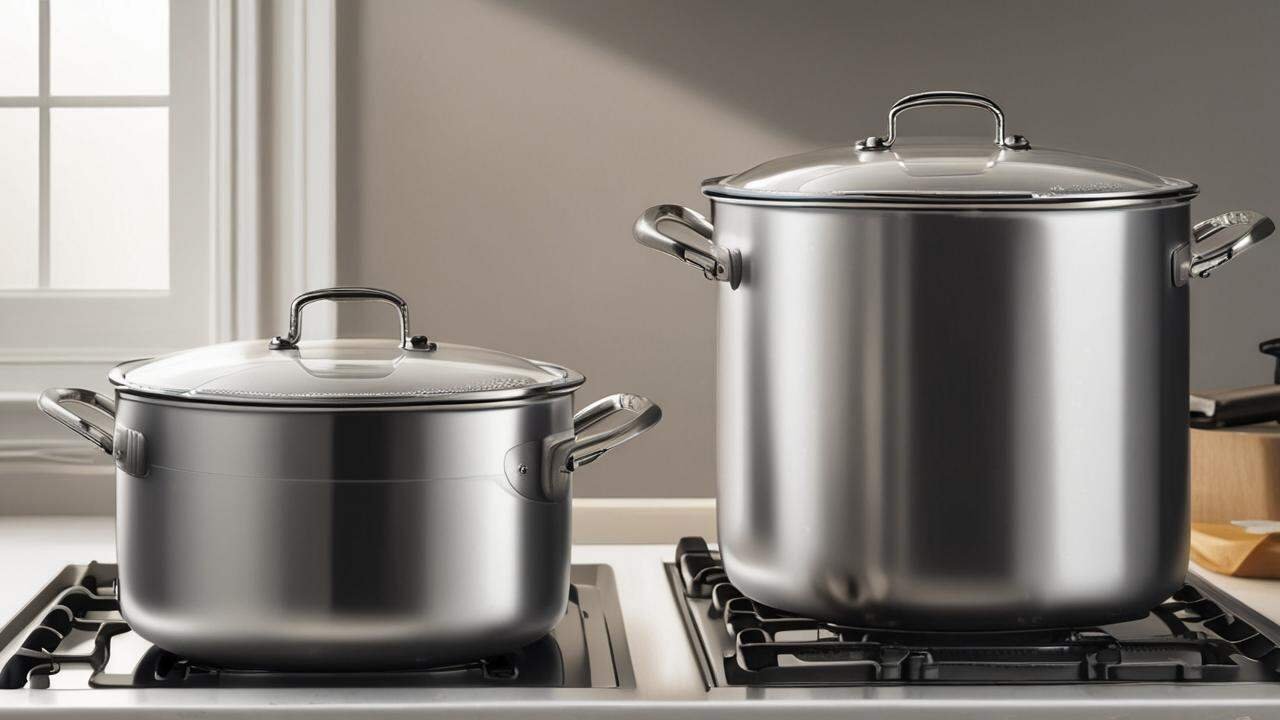
Many home cooks believe a wider pot is better because it heats faster, but that is not always true for long simmers. While wider pots do heat up faster due to greater bottom surface area contacting the burner, they also lose heat and water faster through the larger open top. For recipes requiring sustained liquid levels, the initial speed is not as important as retention over time.
Another myth is that material alone determines water loss. In reality, shape dominates. Even the best heat-conducting material cannot compensate for a wide opening.
A tall narrow aluminum pot will outperform a wide copper pot in water retention because surface area is the primary driver.
Tip: If you only have a wide pot, you can partially mitigate water loss by using a lid and lowering the heat to a gentle simmer. But the shape advantage of a tall narrow pot is irreplaceable for hours-long cooking.
Some cooks also worry that tall narrow pots are unstable or hard to stir. While stirring can be more challenging in a deep pot, it is rarely necessary for long-simmered dishes that just need occasional agitation. For recipes requiring frequent stirring, a wide pot may be more practical despite the water loss.
Finally, there is a misconception that a pot’s height leads to faster evaporation because the liquid is “farther from the burner.” In reality, heat transfers through the liquid column efficiently; the height does not significantly reduce the liquid’s temperature. The evaporation rate depends on the surface boundary layer, not the depth.
Tips for Using Your Tall Narrow Stockpot to Minimize Evaporation
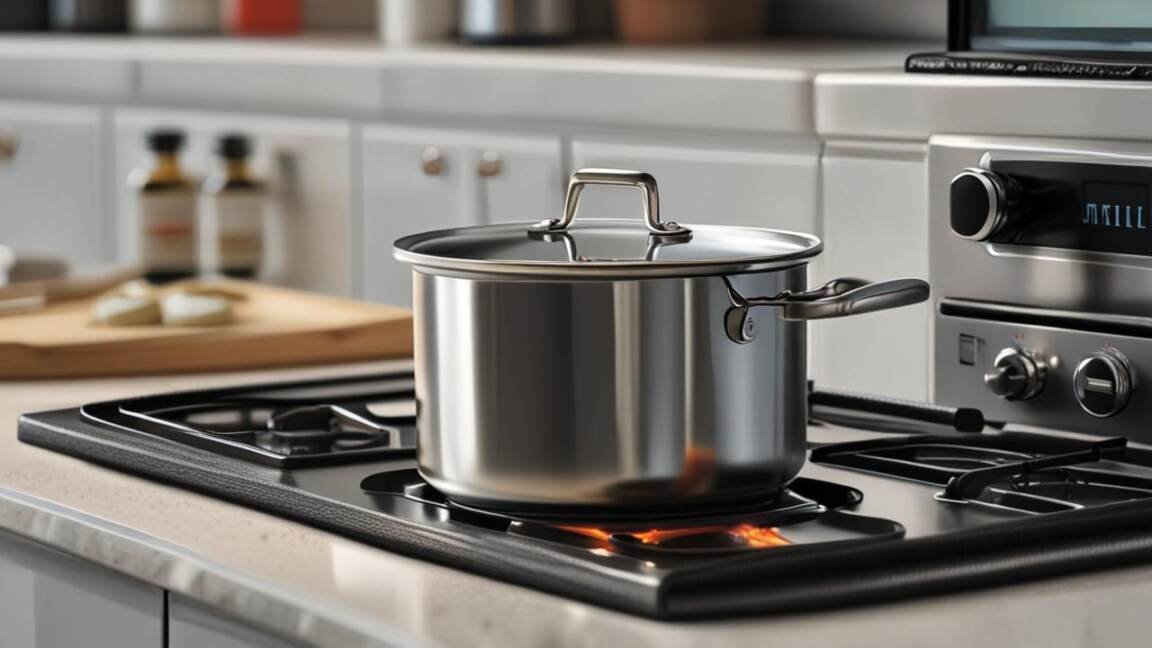
Once you have the right pot, small techniques can further reduce water loss. Always start with the lid on and bring the liquid to a boil, then immediately reduce to a gentle simmer. A rolling boil produces far more steam than necessary.
The ideal simmer is when tiny bubbles break the surface but the liquid is not churning.
Position your pot to one side of the burner if the burner is larger than the pot’s base. This prevents the flames from licking up the sides, which can superheat the sidewalls and increase evaporation. On gas stoves, adjust the flame so it does not extend beyond the pot’s bottom.
On induction, the heat is automatically contained but the same principle applies.
- Use a “spider” diffuser: If your burner is too powerful, place a heat diffuser under the pot to moderate the flame.
- Avoid lifting the lid: Each time you remove the lid, you release a burst of steam and drop the internal humidity, triggering more evaporation. Use a transparent lid if you need to check progress.
- Consider a “slow cooker” approach: After the initial boil, transfer the pot to a low oven (200°F) if the pot is oven-safe. The oven’s enclosed environment reduces evaporation even further.
- Top up with hot water: If you do need to add water, use hot water rather than cold to avoid a temperature drop that could prolong cooking and increase volatility.
- Clean the lid seal: Food residue on the lid rim can create a poor seal. Wipe the rim and lid edge clean before each use.
These tips, combined with the intrinsic shape advantage, will help you achieve near-constant liquid levels even during lengthy cooking sessions. Many chefs report that their tall narrow pots never need a water top-up during a four-hour stock simmer — a testament to the design’s efficiency.
Frequently Asked Questions
Does a tall narrow stockpot actually lose less water?
Yes, because the smaller surface area exposed to air reduces evaporation significantly. Test it yourself with identical volumes of water in a wide and narrow pot — the differences are measurable within 30 minutes.
What is the ideal height-to-diameter ratio for a stockpot?
A ratio of at least 2:1 (height to diameter) is recommended. For most home sizes, that means a pot 10–14 inches tall with a 5–7 inch diameter. This ratio maximizes the benefits of reduced surface area and steam condensation.
Can I use a tall narrow stockpot on any stove type?
Yes, most tall narrow stockpots work on gas, electric, ceramic, and induction cooktops. However, for induction, ensure the pot’s base is magnetic. Also check that the pot height fits under your range hood or in your oven if needed.
Why do some recipes recommend a wide pot instead?
Wide pots are better for recipes that require fast evaporation — like reducing sauces, searing meat, or frying. For long simmering and water retention, a tall narrow pot is superior. Choose based on the cooking method.
Does the lid make a difference for water loss?
Absolutely. A tight-fitting lid can reduce water loss by 50% or more compared to using no lid. The lid traps steam and increases the humidity above the liquid, slowing evaporation.
Always use a lid for long boils.
Final Thoughts
Tall narrow stockpots lose less water during long boils because of a simple law of physics: less surface area means less evaporation. Combined with proper lid use and gentle heat, these pots help you retain liquid, concentrate flavors, and save energy. If you frequently simmer stocks, soups, or braises, investing in a tall narrow stockpot will transform your cooking efficiency.

Leave a Reply