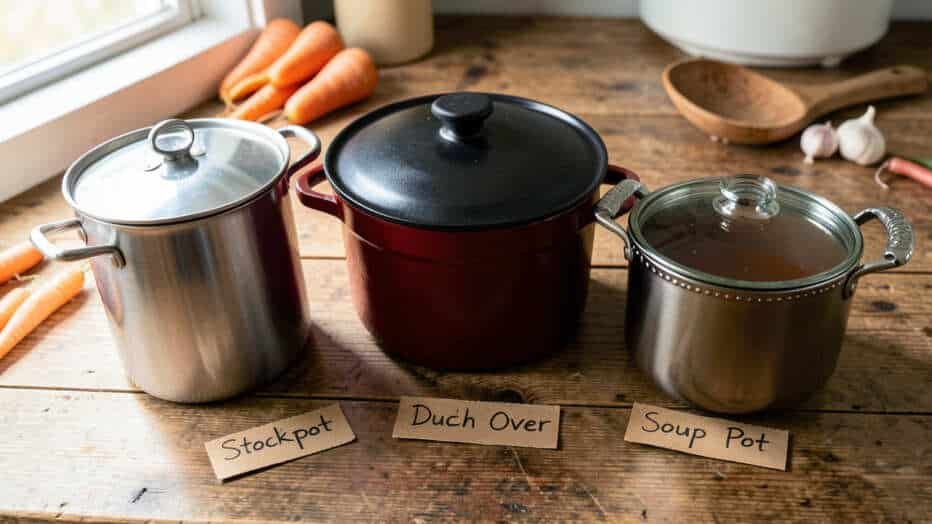
When choosing between a stockpot, Dutch oven, and soup pot, the main differences lie in height-to-width ratio, wall thickness, and material, which directly determine heat retention and cooking methods. A stockpot is tall and narrow for simmering stocks and boiling large volumes of liquid, while a Dutch oven’s thick cast iron or enameled construction excels at braising and baking with even heat distribution. The soup pot serves as an in-between solution with a wider base and medium height, ideal for stews and soups that require moderate heat and good liquid retention.
Choosing between a stockpot, Dutch oven, and soup pot can feel overwhelming when your kitchen needs a new large cooking vessel. Each has distinct shapes, materials, and uses that affect everything from heat distribution to meal results. This guide breaks down the differences so you can pick the right pot for your cooking style.
Simply put, stockpots are tall and thin for simmering stocks, Dutch ovens are thick-walled for braising and baking, and soup pots are in-between with medium height and wide bases suitable for stews and soups. Your choice depends on whether you need high heat searing, long simmering, or multi-purpose cooking.
Key Takeaways
- Stockpot vs Dutch Oven vs Soup Pot differ mainly in height-to-width ratio, wall thickness, and material — which determine their heat retention and cooking methods.
- Stockpots excel at boiling pasta, steaming shellfish, and making stock with tall sides that reduce evaporation.
- Dutch ovens are unmatched for braising, roasting, and baking thanks to heavy cast iron or enameled construction that holds heat evenly.
- Soup pots offer a compromise — lower sides than a stockpot but wider base than a Dutch oven, ideal for one-pot meals like chili or curry.
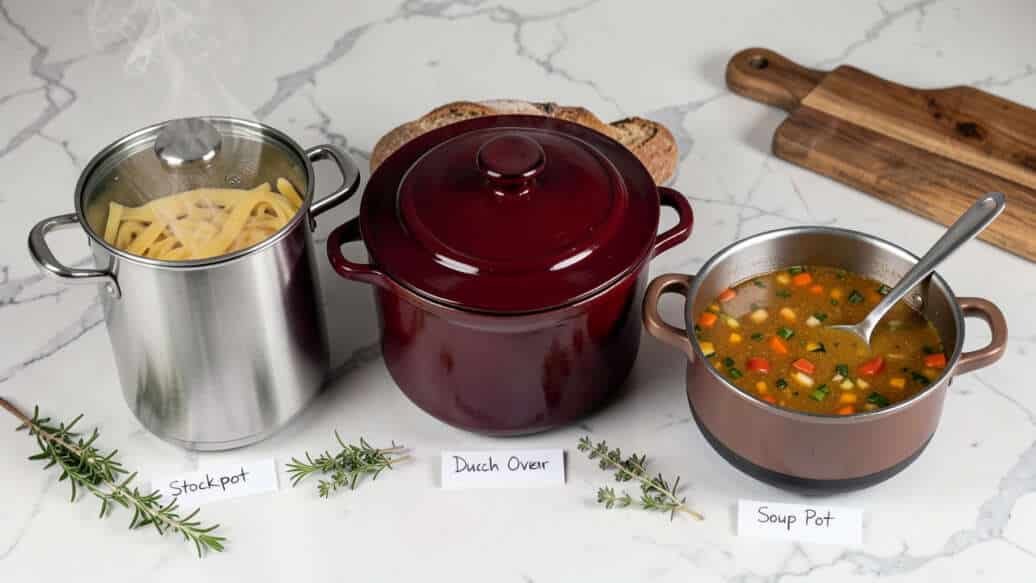
Quick Comparison: Stockpot vs Dutch Oven vs Soup Pot
| Feature | Stockpot | Dutch Oven | Soup Pot |
|---|---|---|---|
| Height vs Width | Tall, narrow | Short, wide | Medium height, moderate width |
| Wall Thickness | Thin (aluminum/steel) | Thick (cast iron) | Medium (stainless steel with aluminum core) |
| Heat Retention | Low | Excellent | Good |
| Best For | Stock, pasta, seafood boils | Braising, roasting, baking bread | Soups, stews, chilis, curries |
| Weight | Lightweight | Very heavy | Medium |
| Oven Safe | Often up to 350°F (handles matter) | Up to 500°F or higher | Usually up to 400°F |
| Price Range | $20–$80 | $50–$400+ | $30–$150 |
This table highlights the core structural and performance differences. Your cooking habits will determine which features matter most — for example, if you bake sourdough often, the Dutch oven’s high oven temperature rating makes it essential.
What Is a Stockpot? — Tall and Narrow for Liquids
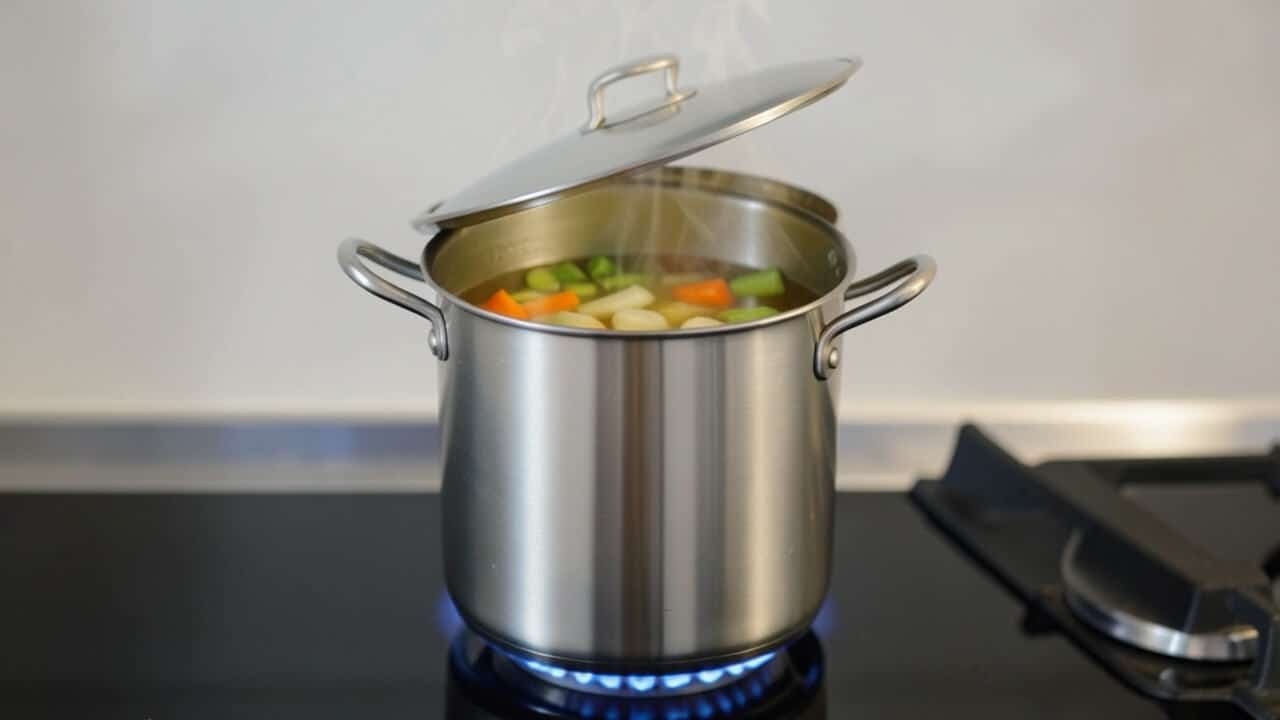
A stockpot is a tall, straight-sided pot with a diameter roughly equal to its height. Its thin walls heat up quickly and cool down fast, making it ideal for boiling large volumes of water or simmering broth over long periods.
Stockpots are typically made from stainless steel, aluminum, or aluminum-clad steel. Many come with a glass lid and two loop handles for easy lifting. Because the walls are thin, the pot won’t retain heat after you turn off the burner — that’s actually a plus when you need precise temperature control for delicate stocks.
Important: Stockpots are not designed for searing meat. The thin bottom and tall sides cause uneven heating when dry. Reserve them for boiling, steaming, and slow simmering.
Common Uses for a Stockpot
- Making chicken, beef, or vegetable stock
- Boiling pasta, potatoes, or corn on the cob
- Steaming shellfish like crab or clams
- Cooking large batches of chili or soup (though the narrow shape can make stirring difficult)
- Blanching vegetables for freezing or canning
- Frying turkeys (specialized turkey fryer pots are derived from stockpot designs)
- Mixing large quantities of marinades or brines
Pros and Cons of Stockpots
| Pros | Cons |
|---|---|
| Lightweight and easy to store | Thin walls cause hot spots |
| Quick heat-up and cool-down | Not oven safe above 350°F typically |
| Inexpensive | Poor for braising or browning |
| Tall sides reduce evaporation for stocks | Long stirring spoons required |
A standard 12-quart stockpot can handle a whole chicken for stock or a full bag of pasta. For everyday boiling tasks, it’s hard to beat its convenience and low price point.
What Is a Dutch Oven? — Thick-Walled Workhorse for Braising and Baking
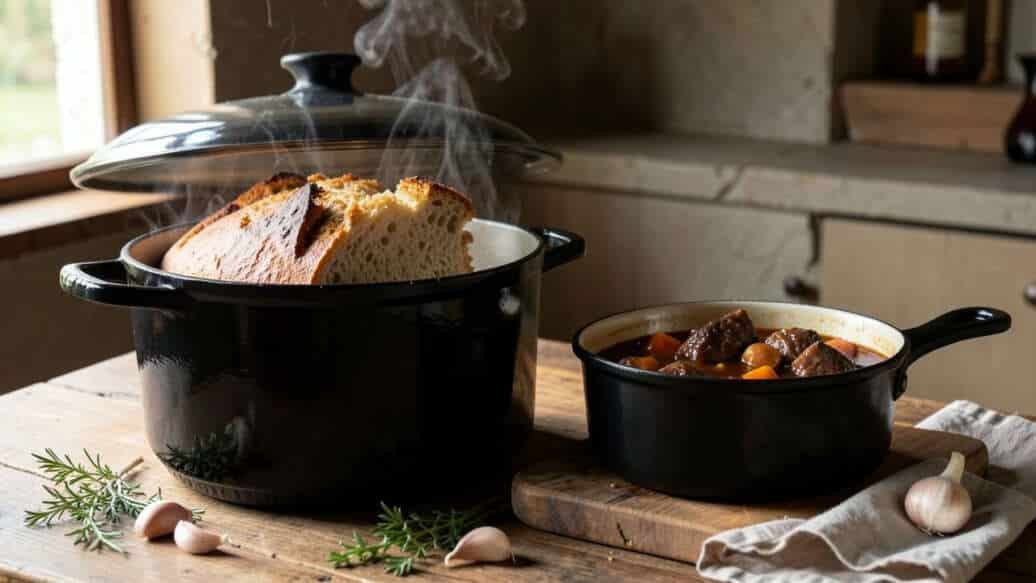
A Dutch oven is a heavy cooking pot made from cast iron (bare or enameled) with thick walls and a tight-fitting lid. Its weight and dense material distribute heat evenly and retain it for long periods, which is why it’s the go-to pot for slow-cooked meats, stews, and artisan bread.
Enameled Dutch ovens from brands like Le Creuset and Staub are non-reactive and easy to clean. Bare cast iron versions require seasoning but can reach extremely high temperatures. Most Dutch ovens have two short handles and a heavy lid that locks in moisture.
A survey by America’s Test Kitchen found that Dutch ovens perform 40% better than stockpots for browning meat due to the wide, heavy base. This makes them essential for any recipe that starts with a sear.
Best Cooking Techniques for Dutch Ovens
- Searing — High heat with oil creates a crust on meats before braising.
- Braising — Slow-cook in liquid at low temperature (300°F–325°F) for tender results.
- Roasting — The pot can go into the oven empty to preheat, then receive meat and vegetables.
- Baking sourdough bread — The preheated Dutch oven traps steam for a crispy crust.
- Deep-frying — Thick walls stabilize oil temperature better than a stockpot.
Tip: If you bake bread regularly, invest in a 5- or 6-quart enameled Dutch oven. It holds enough heat to create the steam needed for an artisan loaf without a separate steam pan.
Choosing a Dutch Oven: Size and Material
- Small (2–4 quarts) — Ideal for sides, sauces, or small batches of soup.
- Medium (5–6 quarts) — Best all-purpose size for families of 2–4 people.
- Large (7–9 quarts) — Great for large roasts or feeding a crowd.
- Enameled cast iron is easiest to maintain — no seasoning required and dishwasher safe (check manufacturer).
- Bare cast iron is cheaper but needs oil coating after each use to prevent rust.
What Is a Soup Pot? — The In-Between Solution
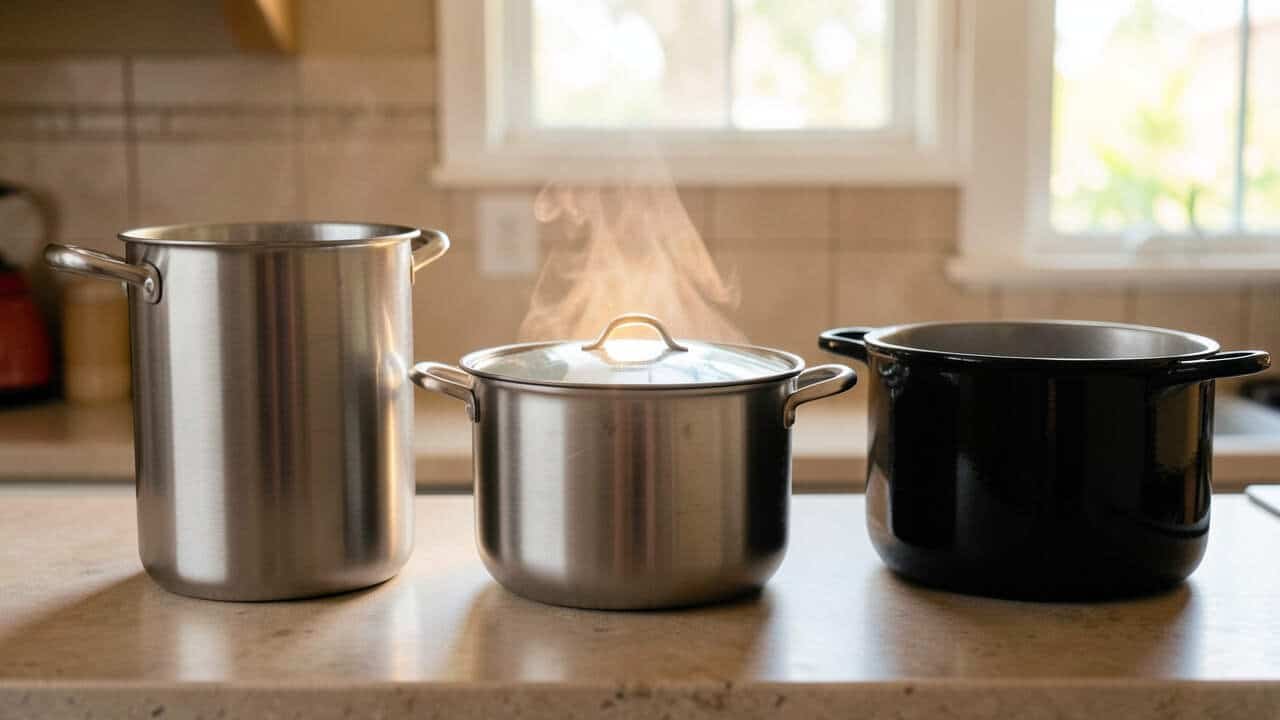
A soup pot is a mid-height pot with a wider base than a stockpot but thinner walls than a Dutch oven. It usually has a triple-ply or aluminum core for even heat, plus two side handles and a lid. Soup pots are designed for one-pot meals that require some browning followed by simmering.
The shape allows more surface area for sautéing aromatics like onions and garlic, then adding liquid without splashing. Compared to a stockpot, the lower height makes stirring easier; compared to a Dutch oven, the lighter weight and smaller price tag appeal to budget-conscious cooks.
Many home cooks find a 6- to 8-quart soup pot covers 80% of their daily cooking — from pasta sauce to chicken soup to chili. These pots typically handle oven temperatures around 400°F, enough for finishing casseroles or warming bread.
Key Characteristics of Soup Pots
- Height‑to‑width ratio around 1.5:1 — not as tall as a stockpot, not as squat as a Dutch oven.
- Materials: stainless steel with aluminum core, sometimes copper base or ceramic nonstick.
- Capacity range: 4–12 quarts, with 8 quarts being most common.
- Oven safe up to 400°F (check lid and handle materials).
- Often include measurement markings inside the pot for convenience.
Warning: Avoid nonstick soup pots if you plan to use high heat for searing. Nonstick coatings degrade above 450°F and release fumes that can be harmful to birds and pets.
How to Choose Based on Your Cooking Habits
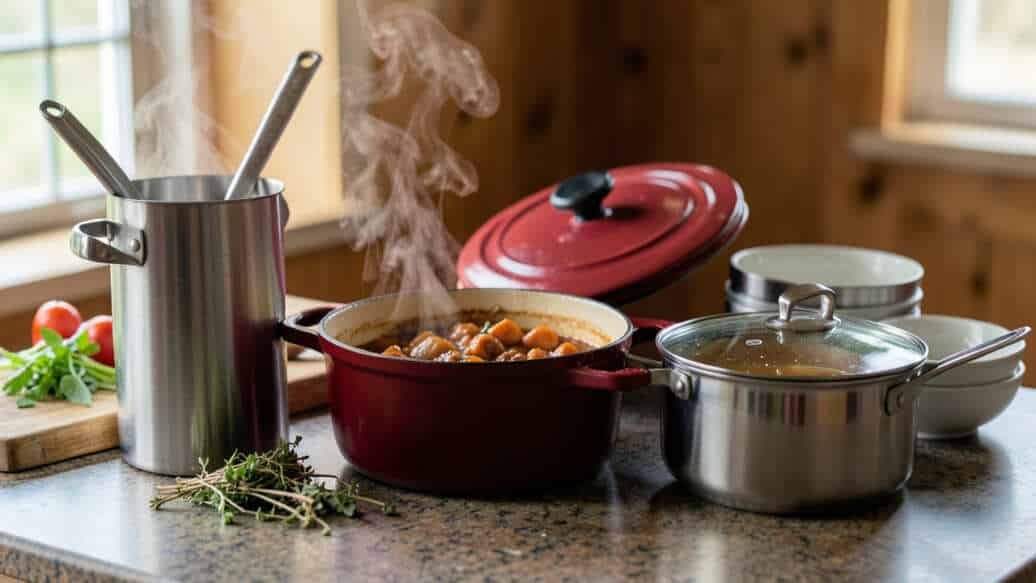
The right pot depends on the meals you cook most often. If you make large batches of pasta or stock every week, a stockpot is indispensable. If you love braised short ribs, no‑knead bread, or slow-simmered stews, a Dutch oven is non‑negotiable.
For versatile everyday meals like soups, chilis, and curries, a soup pot hits the sweet spot.
Consider your kitchen space and storage. A Dutch oven is heavy — lifting a 7‑quart one full of broth can be challenging. Stockpots store easily because they are tall and thin.
Soup pots are usually medium weight and stackable with a lid.
If budget allows, own two: a large stockpot for boiling jobs and a medium Dutch oven for braising. Alternatively, a single high‑end soup pot with a tri‑ply bottom can handle most tasks competently, though it won’t match the Dutch oven’s heat retention for baking.
Important: If you cook on induction, cast iron and magnetic stainless steel are required. Aluminum stockpots without a magnetic base will not work on induction cooktops.
Frequently Asked Questions
Can I use a stockpot as a Dutch oven?
You can use a stockpot for simmering liquids, but it won’t sear meat or bake bread effectively due to the thin walls and small base surface area. The results will be inferior for recipes that require even browning or oven heat retention.
What’s the difference between a soup pot and a stockpot?
A soup pot is shorter and wider than a stockpot, providing more bottom surface for browning aromatics before adding liquid. Stockpots are taller and narrower, ideal for simmering stocks where you want less evaporation and more clearance for bones.
Which is better for chili: Dutch oven or soup pot?
For chili, a Dutch oven gives better browning of the meat and deeper flavor, but a soup pot works well if you’re short on time. The Dutch oven adds 20–30% more flavor intensity according to professional chefs because of the Maillard reaction on the heavy bottom.
Can you put a stockpot in the oven?
Many stockpots are oven safe up to 350°F, but the handles often have silicone or plastic coatings that limit oven use. Always check the manufacturer’s specifications. In contrast, Dutch ovens with metal handles can usually go to 500°F.
What sizes are most useful for a home cook?
For a stockpot, 8–12 quarts. For a Dutch oven, 5–6 quarts. For a soup pot, 6–8 quarts.
These sizes handle family meals and can scale down for smaller batches without being too large to store.
Final Thoughts
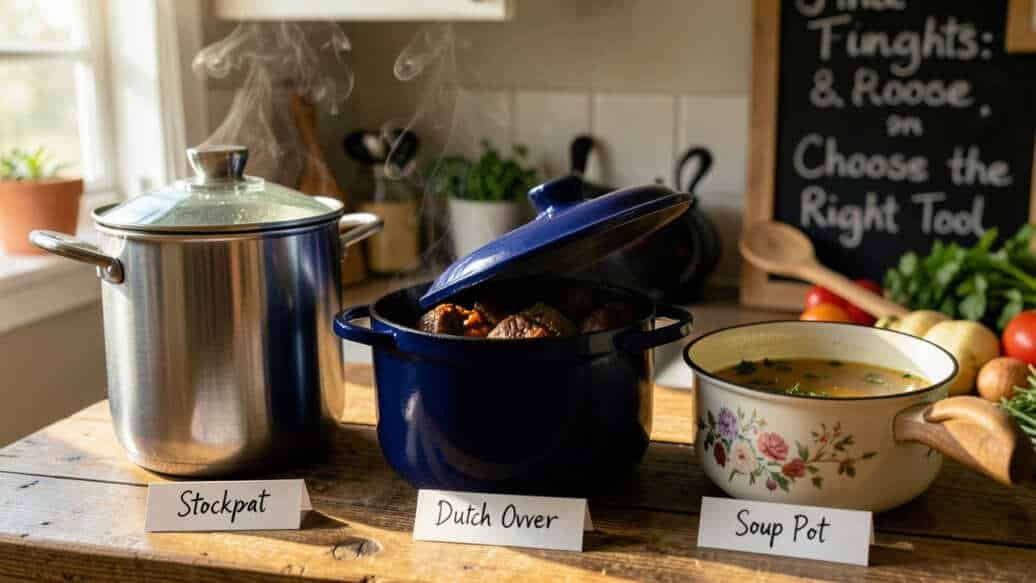
Understanding the stockpot vs Dutch oven vs soup pot differences helps you match the tool to the task. A stockpot excels at boiling and stock-making, a Dutch oven is unbeatable for braising and bread, and a soup pot offers a balanced middle ground for everyday cooking. Assess your most frequent recipes, storage space, and budget to make the right choice for your kitchen.

Leave a Reply