
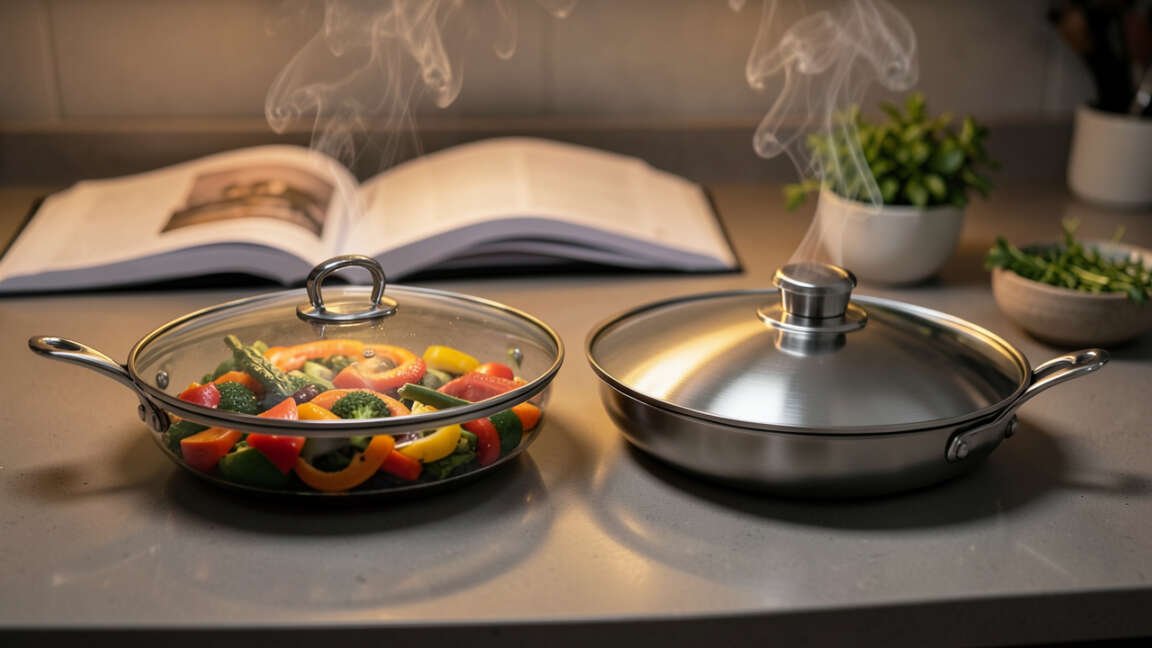
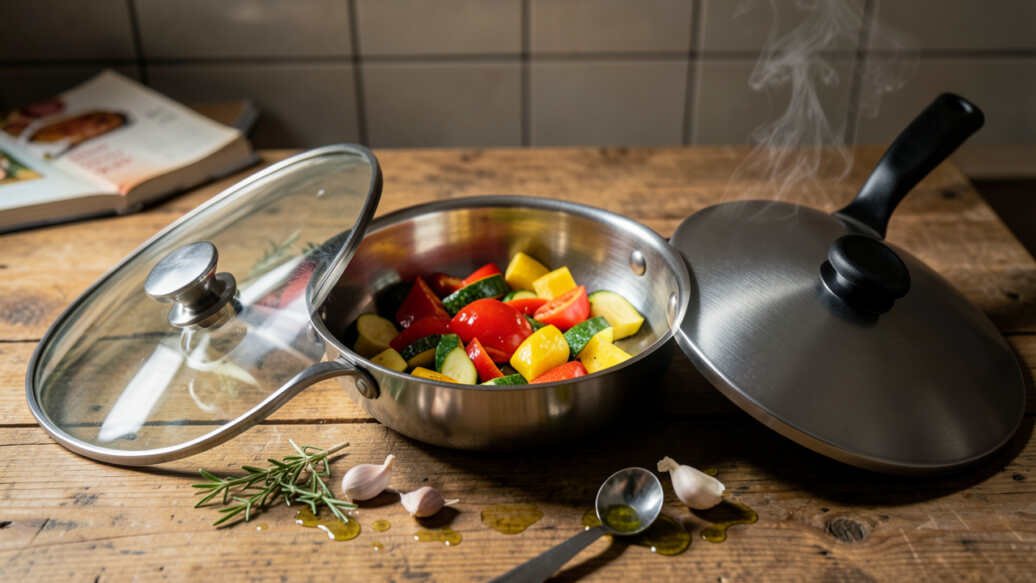
Choosing between a glass or metal sauté pan lid depends on whether your priority is monitoring cooking progress or maximizing heat retention. Use a glass lid when you need to watch liquid levels without releasing steam, and a metal lid when you require superior heat retention, oven safety above 400°F, or a tight seal for braising. For the best control, keep both types on hand to match the lid to your specific recipe’s demands.
Choosing the right lid for your sauté pan affects how heat and moisture behave during cooking. This guide compares glass and metal lids across specific use cases so you can match the lid to your recipe.
Simply put, use a glass lid when you need to watch liquid levels or check food without losing steam. Use a metal lid when you need maximum heat retention, oven safety above 400F, or a tight seal for braising. Both materials serve distinct roles, and having access to both gives you the most control over your cooking results.
- Glass lids let you monitor cooking progress without releasing steam, which maintains a consistent temperature inside the pan.
- Metal lids, usually made of stainless steel, provide superior heat retention and durability for high-heat cooking methods like searing.
- A tempered glass lid is generally oven-safe up to 350F to 400F, while a steel lid can often withstand 500F or higher.
- Cooking with the wrong lid type can lead to uneven heat distribution or condensation dripping back into the food.
- Choosing glass or metal depends entirely on whether you prioritize visual feedback or thermal performance for your specific recipe.
Quick Comparison Table of Sauté Pan Lid Materials
| Feature | Glass Lid | Metal Lid (Stainless Steel) |
|---|---|---|
| Visibility | Clear view of entire cooking surface | No visibility |
| Heat Retention | Moderate (reflects some heat away) | Excellent (absorbs and radiates heat) |
| Oven-Safe Temperature | Up to 350F – 400F | Up to 500F – 600F |
| Durability | Prone to chips, cracks, and shatters | Resistant to dents, lasts decades |
| Weight | Light to medium | Medium to heavy |
| Best Application | Simmering, poaching, monitoring sauces | Searing, braising, roasting, high heat |
Glass Lids Overview
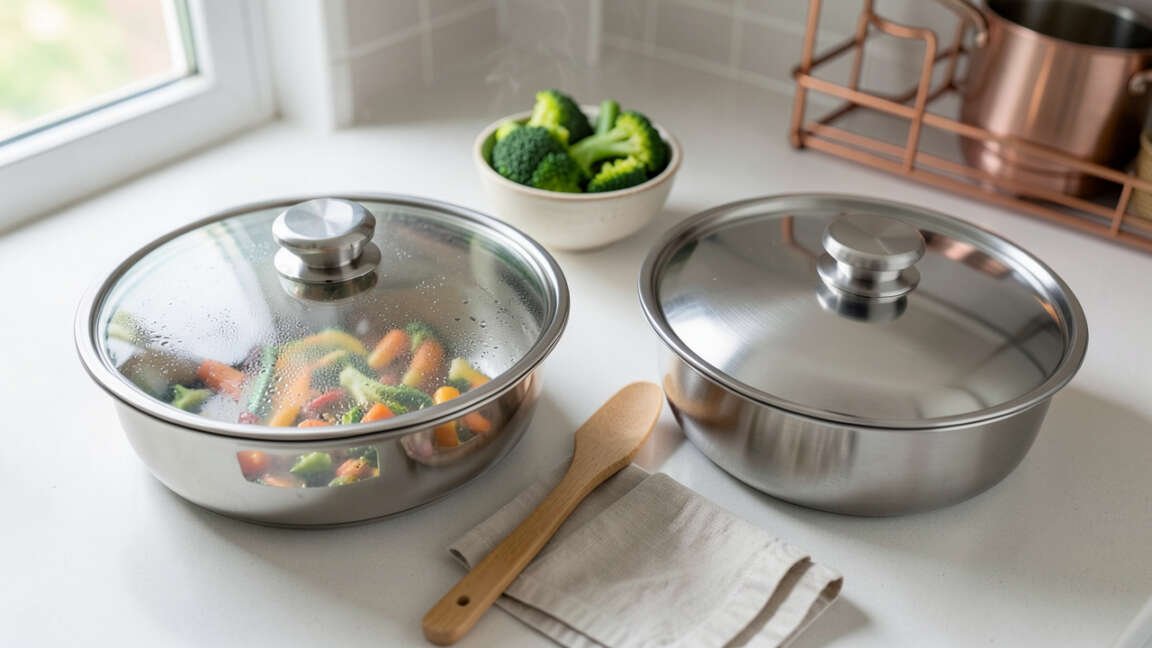
Glass lids are made from tempered glass, which is heat-treated for strength and safety. When shattered, tempered glass breaks into small, dull pieces rather than sharp shards. This material is transparent, which gives you a direct window into the pan.
Pros of Glass Lids
- You see the food without lifting the lid. This saves steam and energy by keeping the heat inside.
- They are usually lighter than metal lids, which makes them easier to handle for one-handed cooks.
- Glass does not react with acidic foods like tomatoes or wine, so it is safe for long simmers.
- Many glass lids fit well on nonstick pans without scratching the coating.
Cons of Glass Lids
- They are prone to thermal shock. A cold glass lid placed on a hot pan can crack instantly.
- They have a lower oven-safe limit. Most glass lids are only safe up to 350F or 400F.
- Condensation forms easily on glass, which can drip back into the food and dilute sauces.
- Dropping a glass lid usually means buying a replacement.
Tip: When using a glass lid, always let it warm up gradually. Place it on a low-heat pan first, then increase the temperature. This prevents the thermal shock that causes cracking.
Metal Lids Overview
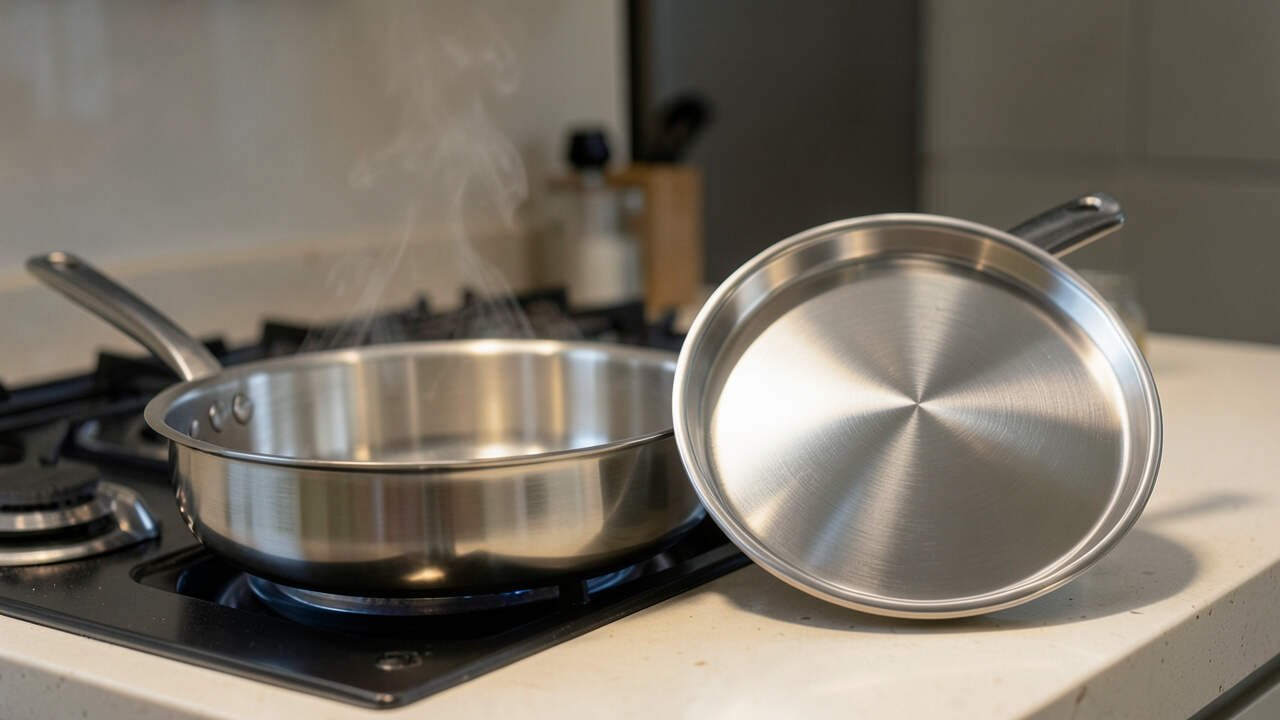
Metal lids are typically made from stainless steel, sometimes with an aluminum or copper core for better heat distribution. They are heavier, more durable, and designed for professional-grade cooking.
Pros of Metal Lids
- They retain and radiate heat extremely well. This creates a steady environment for braising and roasting.
- Metal lids are much more durable. They can handle drops, high heat, and heavy daily use.
- Most stainless steel lids are oven-safe up to 500F or more. The main limit is often the knob material.
- They create a tighter seal. This traps moisture and steam for efficient cooking.
Cons of Metal Lids
- You cannot see the food. You must lift the lid or use a thermometer to check doneness.
- They are heavier. A large metal lid can be awkward to hold while stirring or adding ingredients.
- Some metal lids have plastic or silicone handles that limit oven safety to lower temperatures.
- The tight seal can cause a vacuum, making the lid hard to lift after the pan cools.
Important: Check the knob on your metal lid. Riveted stainless steel knobs are safe for the highest oven temperatures. Knobs with plastic or silicone inserts may melt or warp above 400F. Refer to the manufacturer’s guidelines for exact limits.
Head-to-Head by Cooking Use Case
The right lid material depends on what you are cooking. Here is how glass and metal compare in specific cooking situations.
Searing and Browning
A metal lid is the clear winner for searing. It reflects thermal radiation back onto the food’s surface. This supports the Maillard reaction, which builds a flavorful crust. According to the American Meat Science Association, the Maillard reaction occurs optimally between 280F and 330F. A metal lid helps maintain that temperature range better than glass. Glass lids pass more heat through them, which warms the kitchen but not the food.
Tip: For a better sear, preheat your metal lid on the pan for 2 minutes before adding the food. This builds an even hotter cooking environment.
Simmering and Braising
Both materials work for simmering, but they perform differently. A glass lid is ideal for delicate simmering because you can see the bubbles. You can adjust the heat the moment you see a rapid boil starting. A metal lid is better for braising tough cuts of meat. The tight seal traps all the steam, which breaks down connective tissue faster.
- Glass Simmering: Best for rice, fish, and sensitive sauces. Visual feedback prevents overcooking.
- Metal Braising: Best for short ribs, chicken thighs, and stews. The sealed environment maximizes moisture.
Oven Transitions (Stovetop to Oven)
If your recipe starts on the stovetop and finishes in the oven, lid material matters significantly. Metal lids are almost always the safer choice. Most stainless steel lids can handle 500F oven heat. Glass lids have a strict limit, usually 350F to 400F. Exceeding this temperature can cause the glass to shatter. Check the specific guidelines from Cuisinart or your pan’s manufacturer for the exact rating.
Warning: Never put a cold glass lid directly into a preheated oven. The rapid temperature change is the most common cause of glass lid failure. Always let it preheat gradually inside the oven.
Monitoring Food Without Steam Loss
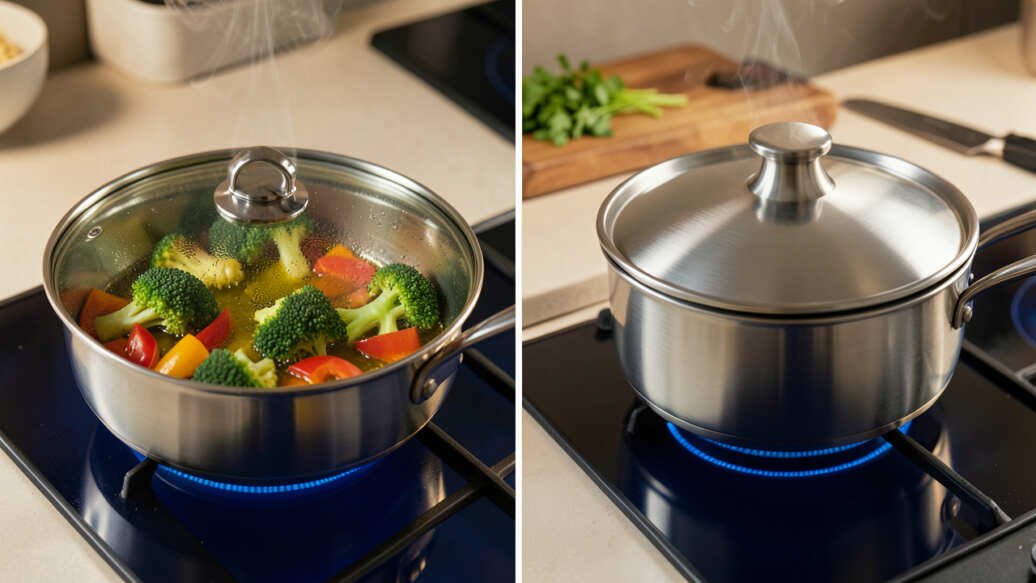
This is where glass lids shine. Lifting a metal lid releases a huge burst of steam and heat. Doing this repeatedly can double your cooking time. A glass lid lets you check the doneness of your food without breaking the cooking environment. This is especially useful for recipes that need a consistent temperature, like poached eggs or delicate rice pilaf.
How Does Lid Material Affect Cooking Performance
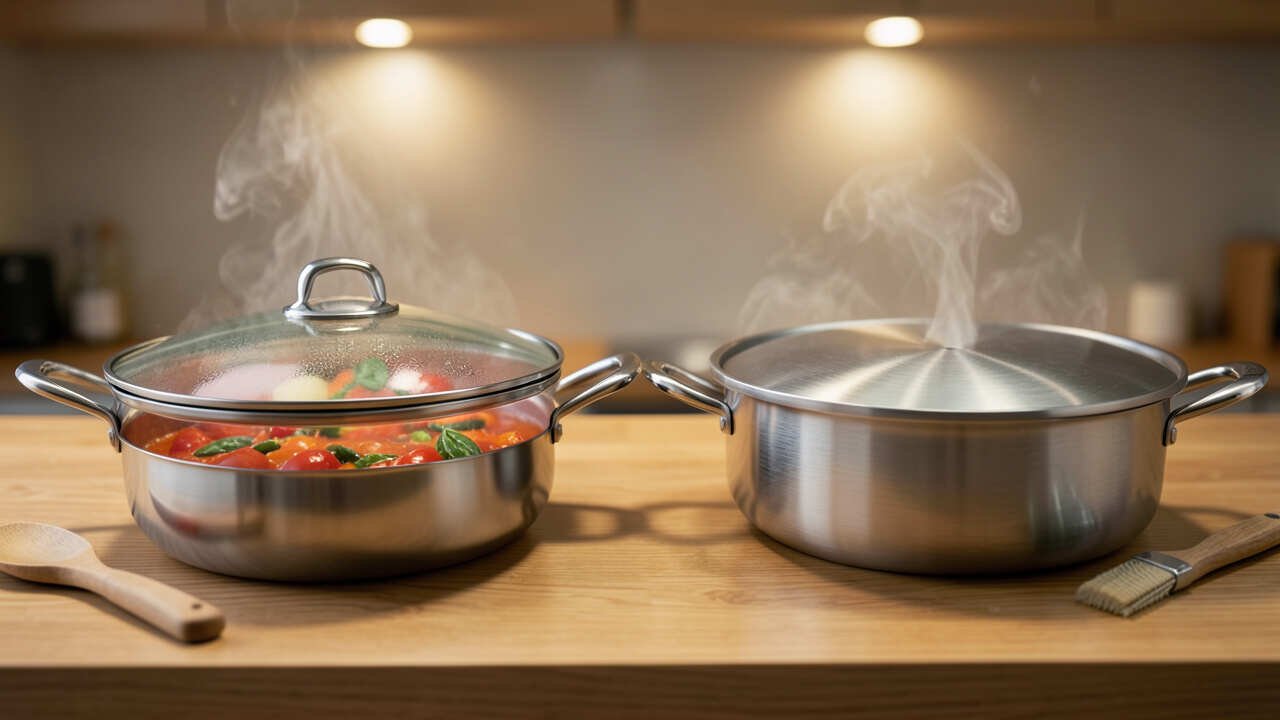
The material of the lid changes the physics inside the pan. Stainless steel is a poor conductor of heat compared to aluminum or copper, but it is excellent at radiating heat evenly across its surface. This means a metal lid heats up the top of the pan and the food from above. This is great for roasting but can overcook the surface of sensitive foods.
Glass lids are better insulators than conductors. They trap heat inside the pan without radiating it back down. This creates a gentler cooking environment. Glass also allows you to see the steam level. A fully fogged glass lid means the pan is sealed and pressurized. A clear glass lid means steam is escaping, and the pan may be running dry.
What Are the Best Materials for Each Lid Type
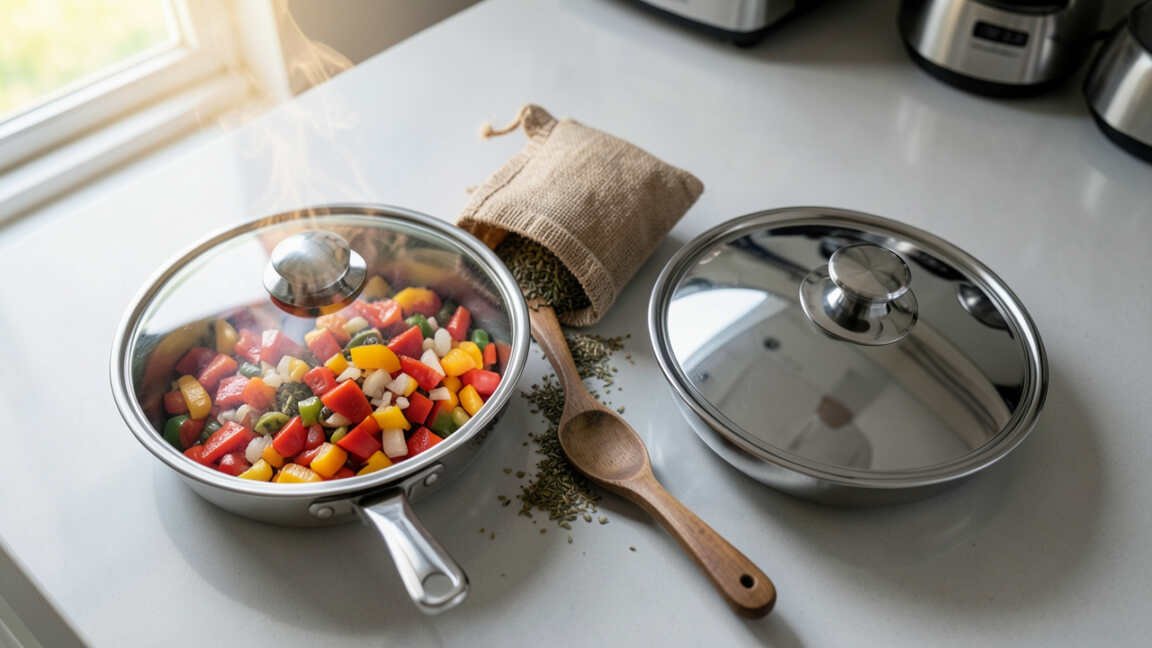
Not all glass lids are the same. Look for “tempered glass” or “borosilicate glass” on the label. Borosilicate glass handles thermal shock much better than standard soda-lime glass. For metal lids, 18/10 stainless steel is the highest quality. Some metal lids have a copper or aluminum disc bonded to the bottom. This improves heat distribution across the lid surface.
- Best Glass Lid: Tempered borosilicate glass with a stainless steel rim and silicone seal.
- Best Metal Lid: Tri-ply stainless steel with a riveted stainless steel knob.
- Most Versatile Kitchen: One of each type to match the recipe.
Common Myths vs Facts About Sauté Pan Lids
Myth: Glass lids are too fragile for everyday cooking.
Fact: Tempered glass is specifically designed to handle the heat of stovetop cooking. The real cause of breakage is thermal shock, which happens when you expose hot glass to cold water. Let the lid cool naturally to avoid this.
Myth: Metal lids are always completely oven safe.
Fact: The body of a stainless steel lid is almost always oven safe to high temperatures. However, the knob or handle may contain plastic, silicone, or acrylic. These materials have much lower heat tolerances. Always check the handle material, not just the lid body.
Myth: You cannot tell if food is cooking properly under a metal lid.
Fact: Professional chefs use multiple cues to judge doneness under a metal lid. They listen for the sound of the sizzle, feel the release of steam at the edge, and use instant-read thermometers. You do not need a glass window if you know these signs.
How to Choose Between a Glass Lid and a Metal Lid
Follow these simple rules to pick the right lid every time. When searing steak, metal lids for heat retention maintain a consistent high temperature.
- Choose glass when you are cooking foods that need visual monitoring. This includes fish, eggs, rice, and delicate sauces.
- Choose metal when you need maximum heat retention. This includes searing steak, braising meats, and roasting vegetables.
- Choose glass when your oven temperature will stay below 375F.
- Choose metal when you plan to finish the dish at a high oven temperature above 400F.
- Choose metal for long, slow braises where you want a tight seal to trap every drop of moisture.
Tip: If you only want to buy one lid, choose stainless steel. It handles more cooking methods and lasts longer. Use a digital thermometer to compensate for the lack of visibility.
Pro Tips for Using Sauté Pan Lids
- Match the lid to the heat source. Glass lids work well on gas and electric. Metal lids are better for induction because they handle high magnetic flux without distortion.
- Check the handle hardware. A loose knob makes a lid dangerous. Tighten screws regularly on metal lids. Glass lids with integrated handles are less likely to fail.
- Use the steam vent strategically. If your lid has a small steam hole, leave it open for reducing liquids. Cover it with a piece of foil to trap all the steam for braising.
- Store lids separately. Stacking pans with glass lids risks chipping the edges. Store glass lids upright in a lid rack or pot lid organizer.
- Season the rim. If your glass lid sticks to your stainless steel pan, it is due to a vacuum seal. Lightly oil the rim of the pan before cooking to create a thin barrier.
Frequently Asked Questions
Can I use a glass lid on a cast iron skillet?
Yes, you can use a glass lid on a cast iron skillet as long as the diameter matches. A glass lid helps prevent the reactive iron from affecting acidic foods. Check the lid’s oven-safe rating if you plan to move the skillet to the oven.
Is a metal lid better for reducing sauces?
Yes, a metal lid creates a tighter seal, which traps steam and heat. If you want to reduce a sauce quickly, leave the lid slightly ajar to allow steam to escape. For a slow reduction, use the metal lid fully closed to maintain even heat.
How do I clean a glass lid without breaking it?
Always let the glass lid cool down on the counter away from drafts before washing. Thermal shock happens when hot glass touches cold water. Rinse the lid with warm water first, then gradually cool it down with cooler water.
What is the standard size for a sauté pan lid?
The most common sizes for sauté pan lids are 10 inches and 12 inches. Always measure the inside diameter of your pan’s rim. Some brands have specific design fits that require their own branded lids. Reputable brands like All-Clad and Lodge have lid sizing charts on their websites.
Why does my glass lid get stuck on my stainless steel pan?
This happens because of a vacuum seal. As the pan cools, the contracting air inside creates suction. To release it, gently warm the pan again or carefully lift the edge of the lid with a silicone spatula to break the seal. Never force it, as this can crack the glass.
Final Thoughts
Glass and metal lids each serve essential roles in your kitchen. Choose glass when seeing the food saves time and energy. Choose metal when heat retention and durability matter more. Keeping both types on hand gives you the flexibility to handle any recipe with precision. For delicate sauces, visual monitoring with glass lids ensures perfect doneness.
Use a digital thermometer for temperature checking to ensure meat reaches safe internal temperatures.

Leave a Reply