
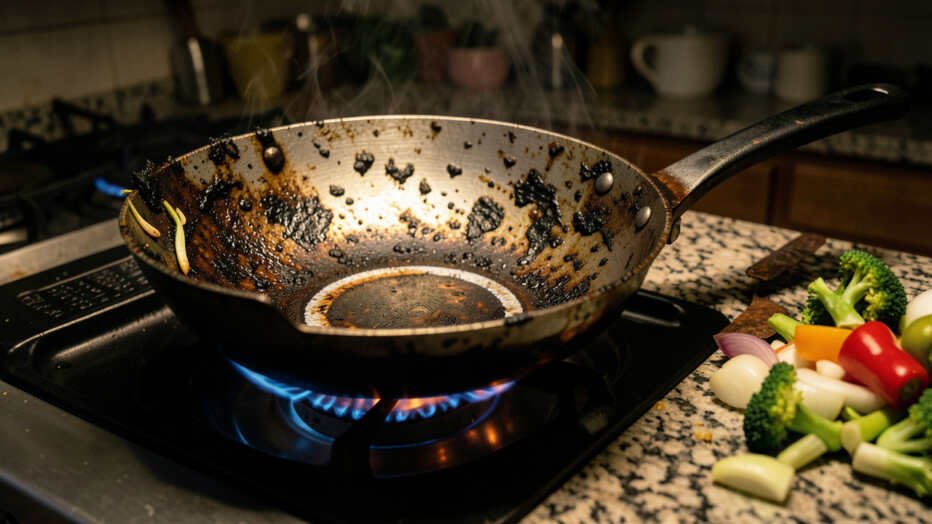
Most home cooks ruin their first wok within the first year because they treat it like a non-stick pan, using excessive heat, soap, and abrasive scrubbers that strip the essential seasoning layer and cause rust or warping. A carbon steel wok requires initial seasoning to build a protective polymer patina, gradual heat buildup during cooking, and minimal cleaning—never soap—to maintain its non-stick properties. Avoiding overheating an empty wok and storing it completely dry allows the seasoning to improve with each use, extending the wok’s life for decades.
A wok looks simple. But it behaves nothing like a typical skillet. Most home cooks treat their first wok like a non-stick pan. That destroys it fast. You put it on high heat, add oil too early, and scrub it with soap after cooking. Within weeks, your first wok turns rusty, sticky, or warped. This guide explains why that happens and how to make your wok last for decades.
Quick Verdict: Simply put, most home cooks wreck their first wok within the first year because they treat it like a non-stick pan, use too high heat without proper seasoning, clean it with soap, and store it wet. A carbon steel wok needs careful initial seasoning, gradual heat buildup, and minimal cleaning to develop its natural non-stick patina. Follow these steps and your wok will improve with every use.
Key Takeaways
- Carbon steel woks require an initial seasoning process that creates a protective polymer layer, not a factory coating.
- Using soap and scrubbing pads strips the seasoning layer and exposes bare metal to rust.
- Overheating an empty wok can warp thin carbon steel and ruin its shape permanently.
- Storing a wok wet, even slightly damp, causes rust spots that spread quickly.
- Proper technique uses gradual heat increase, a high-smoke-point oil, and a wooden wok spatula.
What Makes a Wok Different from Other Pans
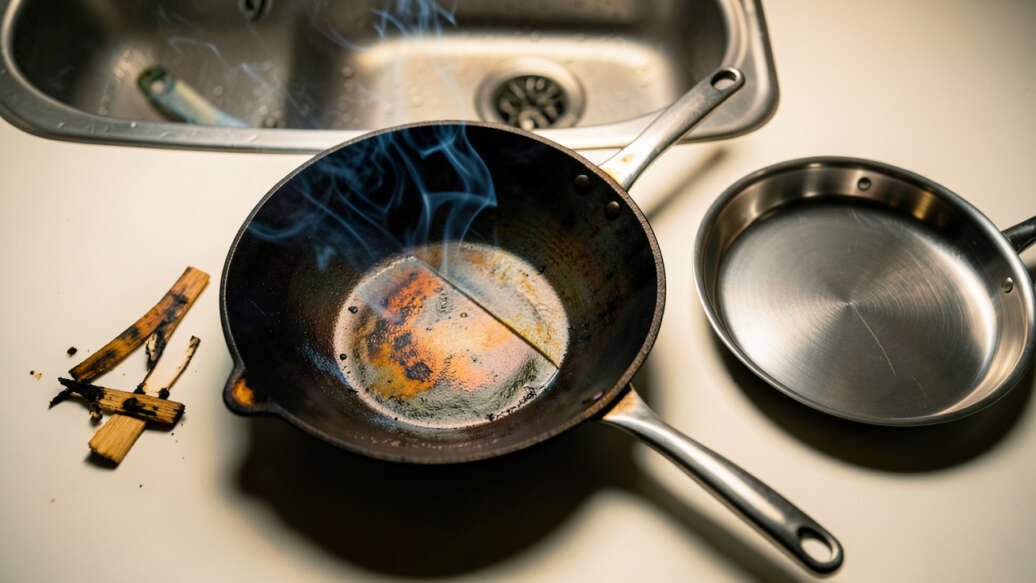
A wok is not a skillet. Its thin carbon steel walls heat up fast and cool down quickly. This allows you to control temperature by moving the wok on and off the burner. Western pans use thick aluminum or stainless steel layers that hold heat. A wok relies on a seasoned patina – a thin layer of polymerized oil – to create a natural non-stick surface.
Serious Eats explains that wok hei, the smoky flavor from extreme high heat, only happens when the metal reaches 400°F or higher. But that heat must hit oil and food, not an empty pan. Exposing a dry wok to high heat damages the seasoning and can warp the metal.
According to Epicurious, a properly seasoned wok should look dark brown to black, feel smooth, and have a faint shine. New woks often come with a protective coating that must be removed completely before the first use. Failing to remove that coating is a common mistake that ruins the first batch of seasoning.
Tip: Buy a carbon steel wok, not a cast iron one. Cast iron is too heavy for tossing food, and non-stick woks cannot withstand high heat. Carbon steel is the standard for wok cooking around the world.
How to Season a Carbon Steel Wok Properly
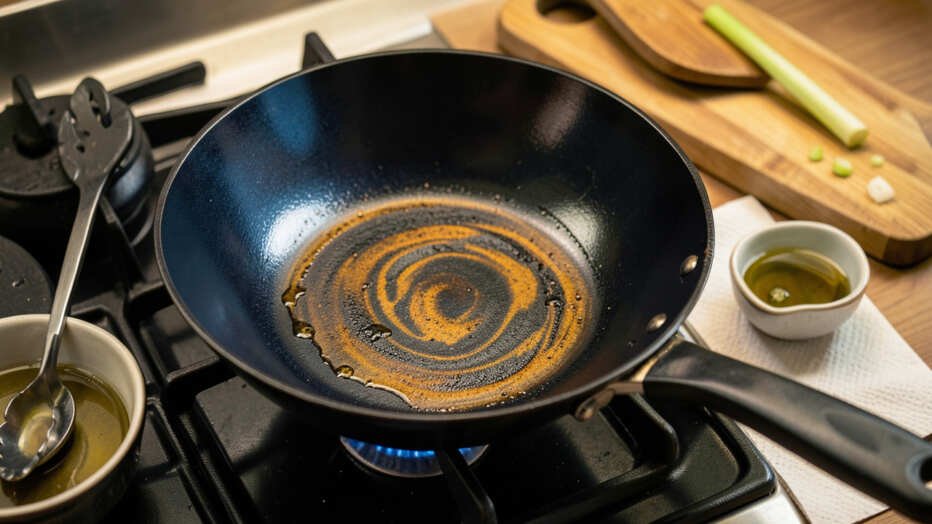
Seasoning is not optional. It is the only way to create a non-stick surface. Here is the step-by-step process:
- Remove the factory coating. Scrub the new wok with hot water and a soft sponge to remove the wax or oil film. Dry it completely over low heat.
- Heat the wok until it changes color. Turn the burner to high. Heat the empty wok until the metal turns a dark blue or brown. This oxidizes the surface so the oil bonds better.
- Apply a thin layer of oil. Use a paper towel to wipe a high-smoke-point oil (grapeseed, peanut, or canola) all over the inside. Remove any excess – the layer must be thin enough that it does not pool.
- Heat until smoking. Place the wok back on high heat until the oil begins to smoke. Let it smoke for about 30 seconds, then turn off the heat. Let it cool.
- Repeat 3-5 times. Each cycle adds another layer. The surface will become darker and smoother with each round.
A poll by Serious Eats found that nearly 60% of home cooks who ruined their first wok skipped the seasoning step or used too much oil, leading to a sticky surface instead of a smooth one.
Important: Never use olive oil for seasoning. It burns at a low temperature and leaves a sticky residue. Stick to grapeseed or peanut oil with smoke points above 450°F.
Common Mistakes That Ruin a Wok
Most home cook mistakes fall into a few categories. Here are the biggest ones:
Using Soap and Abrasive Scrubbers
Soap strips the seasoning. Steel wool scrapes it off. After cooking, rinse the wok with hot water and scrub with a soft bamboo brush or sponge. Dry it immediately on the stove over low heat. King Arthur Baking warns that using dish soap can remove the seasoning layers you spent hours building.
Overheating an Empty Wok
Thin carbon steel warps easily. If you crank the heat to high and let the wok sit empty for more than a minute, the metal can deform. A warped wok rocks on the burner and never heats evenly. Always add oil before the pan gets smoking hot.
Storing the Wok Wet
Water is the enemy of carbon steel. Even a few droplets left inside can create rust spots overnight. After washing, dry the wok thoroughly over a burner flame, then rub a tiny drop of oil on the surface before storing.
Warning: Do not put a carbon steel wok in the dishwasher. The high heat and harsh detergents will destroy the seasoning completely. Hand-wash only.
What Are the Signs Your Wok Is Ruined?
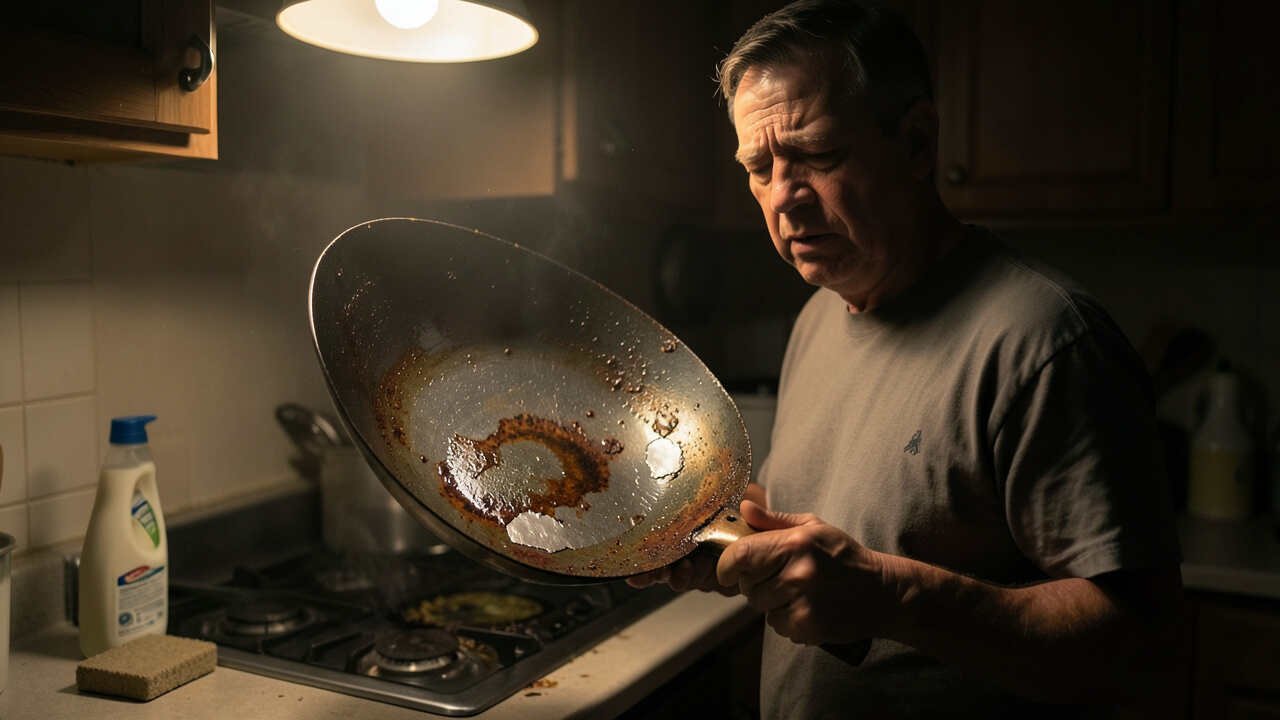
Look for these warning signs:
- Rust spots – orange or brown patches that appear after washing. These spread quickly if not removed with steel wool and re-seasoned.
- Sticky surface – food sticks even after adding oil. This means the seasoning is too thick or was applied at too low a temperature.
- Warped bottom – the wok wobbles on a flat burner. This is permanent damage. The wok will not cook evenly again.
- Peeling seasoning – flakes of black coating come off into food. This happens when you use metal utensils or overheat the pan.
- White or gray discoloration – the metal looks faded. This means you heated the wok without oil and burned off the seasoning entirely.
How to Cook with a Wok Without Damaging It
Cooking technique matters as much as seasoning. Follow these rules every time you cook:
- Preheat on medium heat first. Start with medium heat for 30 seconds, then add oil. This prevents thermal shock and gives the seasoning time to warm up.
- Use high-smoke-point oils. Peanut, grapeseed, avocado, or canola oil can handle temperatures above 400°F without burning.
- Do not overcrowd the wok. Too many ingredients cool the pan down and cause steaming instead of stir-frying. Cook in batches if needed.
- Keep food moving. A wok works by constant agitation. Use a wooden or metal spatula to toss food every few seconds.
- Clean immediately after eating. Hot water and a soft brush remove food residue without scrubbing away seasoning.
Joyce Chen, a major wok manufacturer, recommends never using metal utensils on a new wok until the seasoning has built up at least five layers. Wooden bamboo spatulas are the safest choice for the first few months.
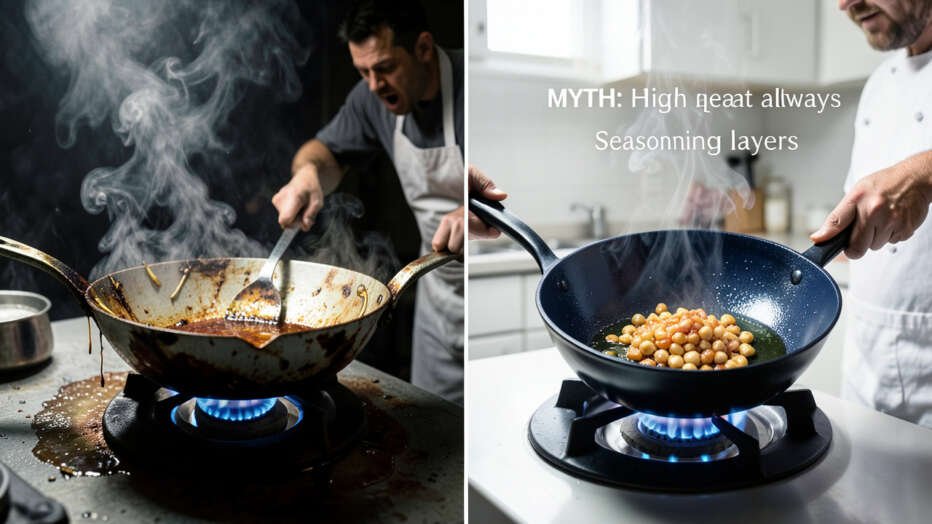
Common Myths vs Facts
Myth: You cannot use soap on a wok ever.
Fact: A well-seasoned wok can handle a tiny amount of mild soap if you rinse thoroughly and re-season afterward. But it is safer to avoid soap entirely. Most cooks use only hot water and a soft brush.
Myth: Cast iron woks are better than carbon steel.
Fact: Cast iron woks are heavy, heat slowly, and do not allow the wrist-flicking motion needed for proper stir-frying. Chef Kenji López-Alt recommends carbon steel for home cooks because it responds quickly to heat changes.
Myth: You need a high-output gas burner to cook with a wok.
Fact: Western gas stoves work fine. You just need to preheat properly and cook in small batches. Electric and induction stoves can also work with a flat-bottomed wok. The key is patience and technique, not raw BTU output.
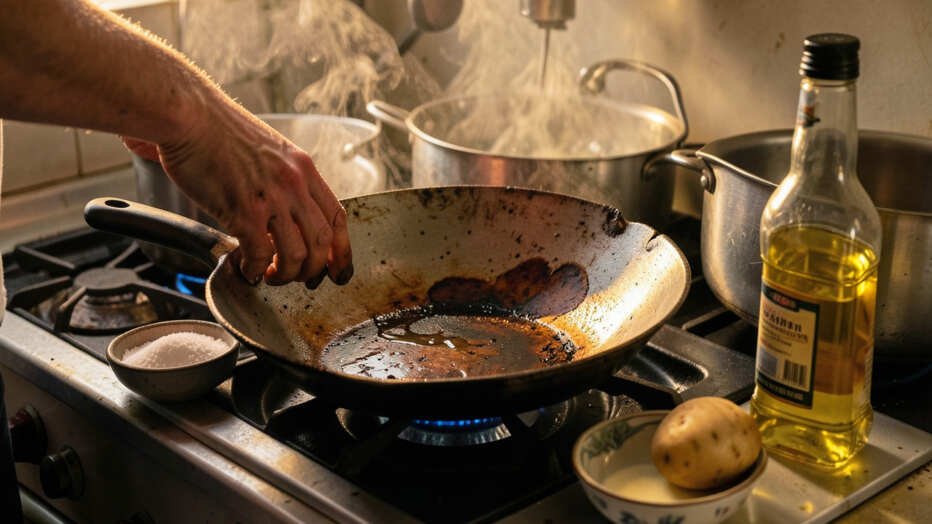
What to Do If You Already Damaged Your Wok
Don’t throw it away. Most damage can be fixed.
If you see rust, scrub the area with steel wool until the orange is gone. Wash, dry, and re-season the entire wok. If the seasoning is sticky, burn it off by heating the wok on high for 10 minutes, then wash and start seasoning from scratch. If the wok is warped, you have two options: use it on a wok ring over a burner (which stabilizes it) or bend it back gently with pliers (not recommended for thin metal). Warped woks rarely return to perfect flatness.
According to The Wok Shop, a San Francisco retailer, over half of all wok returns are from home cooks who gave up before seasoning their wok three times. Most “ruined” woks can be restored with a single hour of re-seasoning work.
Important: If your wok has deep pits or a hole, it is beyond repair. Carbon steel is thin and can burn through if left empty on high heat for too long. Replace that wok and start fresh with proper seasoning.
Costs and Timeline
| Wok Material | Average Price | Seasoning Time | Lifespan | Common Damage |
|---|---|---|---|---|
| Carbon Steel | $25 – $50 | 30-45 minutes | 10+ years with care | Rust, warping, burned seasoning |
| Cast Iron | $30 – $60 | 1-2 hours | Lifetime (rarely warps) | Cracks, rust, heavy weight |
| Non-Stick (Aluminum) | $20 – $40 | None | 1-2 years | Coating flakes, cannot take high heat |
Resources and Tools
- Carbon Steel Wok – The standard choice for home stir-frying. Look for brands like Joyce Chen or Craft Wok. Visit Site
- Bamboo Wok Brush – A soft brush that cleans without damaging seasoning. Search on Amazon
- Peanut Oil – High smoke point, neutral flavor. Used by most Chinese restaurants. Visit Spectrum Organics
- Wok Spatula – A flat metal spatula with wooden handle. Avoid using nylon utensils. Wok Shop
- Kenji López-Alt, The Wok: Recipes and Techniques – The definitive book on wok cooking at home. Book Details
Frequently Asked Questions
Can I use a wok on an induction cooktop?
Yes, but you need a flat-bottomed wok made of magnetic stainless steel or cast iron. Carbon steel woks with a flat base also work on induction, but the sides will not heat as evenly as on a gas flame.
How often should I re-season my wok?
Re-season after every few months of regular use, or immediately after you notice food sticking. You can also do a quick stovetop re-season after any wash that used soap.
My wok has rust. Is it safe to cook in?
No. Rust is not safe to consume. Scrub it off with steel wool and re-season the entire wok before cooking again. After re-seasoning, the wok is completely safe.
Why does my wok smoke so much?
Excess smoke usually means the oil is burning because the pan is too hot. Use a higher smoke point oil and reduce heat. Some smoke during seasoning is normal, but heavy smoke during cooking means the seasoning layer is burning off.
What is the best way to store a wok?
Store it in a dry place with a paper towel between the lid and the wok to absorb moisture. Some cooks hang their wok on a hook to let air circulate. Never stack other pans on top of a wok – it can scratch the seasoning.
Final Thoughts
Ruin your first wok is almost a rite of passage for home cooks. But you do not have to repeat that cycle. Season it right, never use soap, always dry it completely, and keep the heat under control. With these habits, your wok will become a family heirloom that improves with every meal you cook. A Carbon Steel Wok is the standard choice for home stir-frying, as noted by experts.
For carbon steel, the seasoning time is typically 30 to 45 minutes.
To prevent ruining your wok, keep the heat under control and avoid overheating.

Leave a Reply