
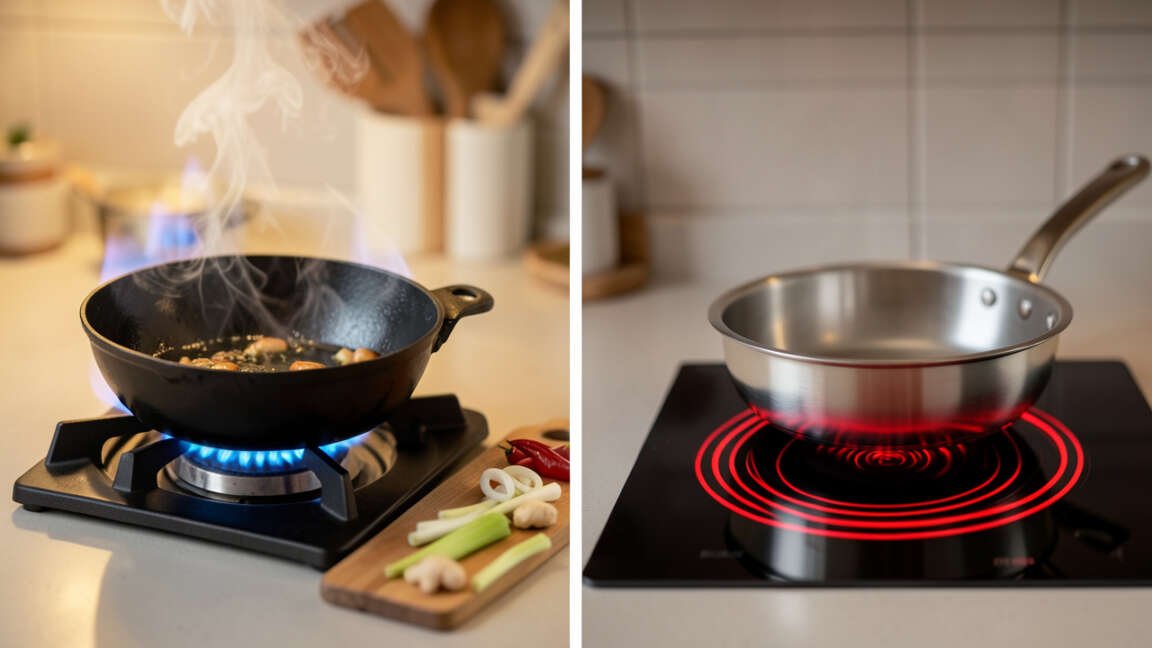
The choice between a round-bottom and flat-bottom wok depends on your stove type, as round-bottom woks concentrate heat for authentic wok hei on gas burners while flat-bottom woks offer stability for glass-top and induction ranges. A round-bottom wok requires a wok ring for stability, making it ideal for gas stoves, but flat-bottom woks are the only safe option for electric and induction cooktops. Matching the wok base to your heat source ensures either superior heat control or essential stability for effective stir-frying.
Your stove type determines which wok base works best. The main difference between a round-bottom and flat-bottom wok is stability versus heat control.
Quick Verdict: In short, a round-bottom wok delivers better heat concentration and authentic wok hei for gas stoves. A flat-bottom wok offers stability on modern glass-top and induction ranges. Your stove dictates the right choice. For gas, choose round with a ring. For electric or induction, choose flat.
Traditional round woks concentrate heat at the base. This creates the high temperatures needed for stir-frying. Modern flat-bottom woks trade some heat control for safety and ease of use.
Both designs offer great cooking results. You just need to match the base to your heat source.
Key Takeaways
- Round-bottom woks require a wok ring or a dedicated gas burner to stay stable during cooking.
- Flat-bottom woks are the only safe and effective choice for induction and glass-top electric stoves.
- Round-bottom woks provide more concentrated heat and better wok hei for authentic stir-fry dishes.
- Flat-bottom woks are easier to use for beginners and fit standard Western kitchen setups without extra accessories.
- Carbon steel is the preferred material for both styles due to its high heat capacity and fast response time.
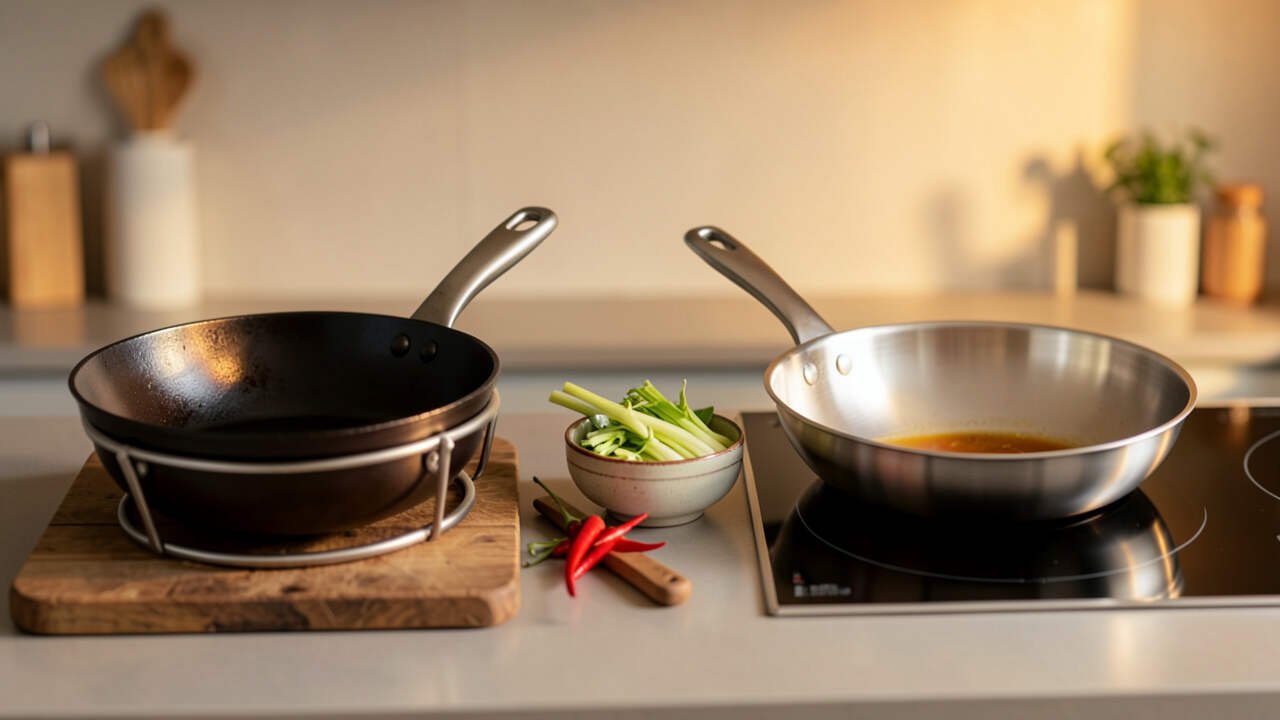
Quick Comparison Table: Round-Bottom vs Flat-Bottom Wok
| Feature | Round-Bottom Wok | Flat-Bottom Wok |
|---|---|---|
| Best Stove Type | Gas (with wok ring) | Electric, Induction, Gas |
| Heat Distribution | Excellent (heat pools at base) | Good (flat surface heats evenly) |
| Stability | Low (needs ring or burner) | High (sits flush on stove) |
| Wok Hei Potential | High (traditional design) | Moderate (good, not perfect) |
| Ease of Use | Moderate (requires technique) | Easy (beginner friendly) |
| Typical Price Range | $30 – $100 (Carbon Steel) | $25 – $80 (Carbon Steel) |
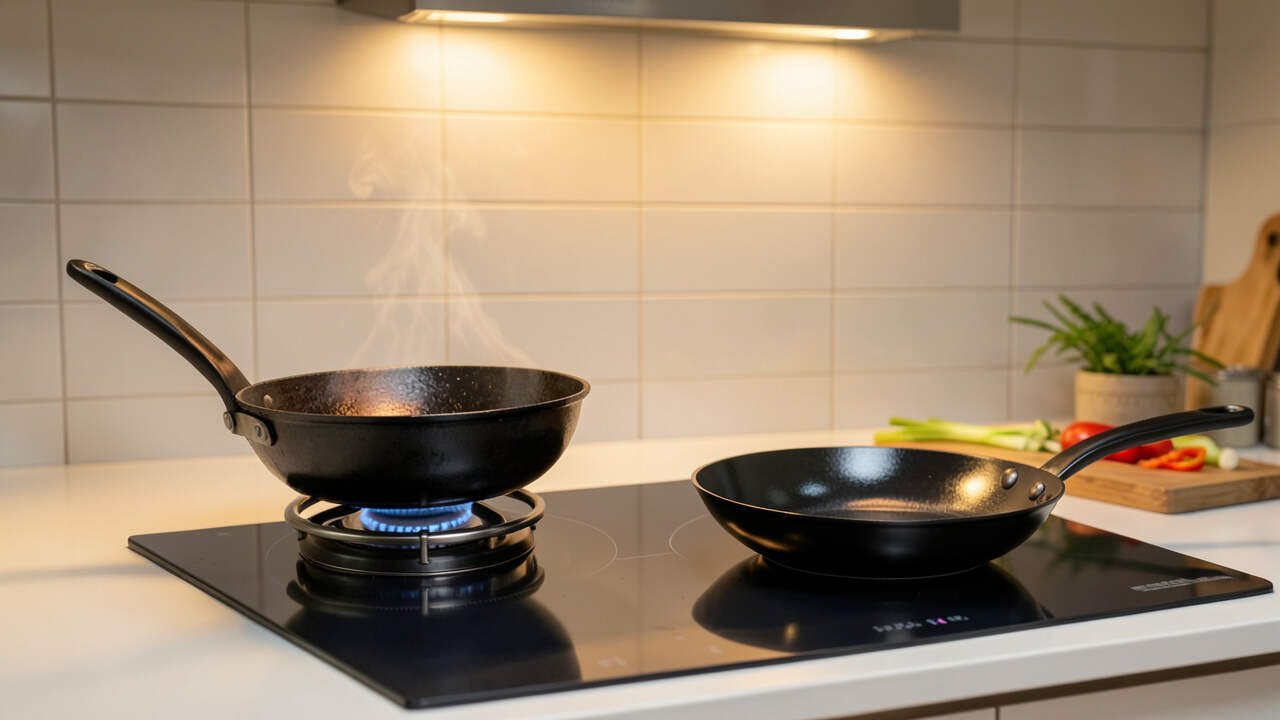
Round-Bottom Wok Overview
A round-bottom wok is the traditional design. It has roots in Chinese cooking. The rounded base allows heat to pool at the very bottom. This creates a hot spot perfect for searing.
As you toss ingredients, they slide up the cooler sides. This technique cooks food evenly. It prevents burning while giving you that smoky wok hei flavor.
Tip: A carbon steel round-bottom wok weighs less than cast iron. It heats up fast. It cools down fast too. This gives you precise control over cooking temperature.
Pros of Round-Bottom Woks
- Round-bottom woks concentrate heat at the base for high-temperature searing.
- They allow for the tossing and flipping motion that defines stir-fry cooking.
- They are the most authentic choice for achieving wok hei at home.
- Carbon steel round woks are lightweight and respond quickly to heat changes.
Cons of Round-Bottom Woks
- They require a wok ring or special gas burner for stability.
- They do not work on induction or glass-top stoves without a flat adapter.
- They can tip over easily if you are not careful with the handle.
- They take up more space on a standard stove grate.
When to choose a round-bottom wok: You have a gas stove. You want authentic results. You are willing to buy a wok ring. You enjoy the challenge of mastering a traditional tool.
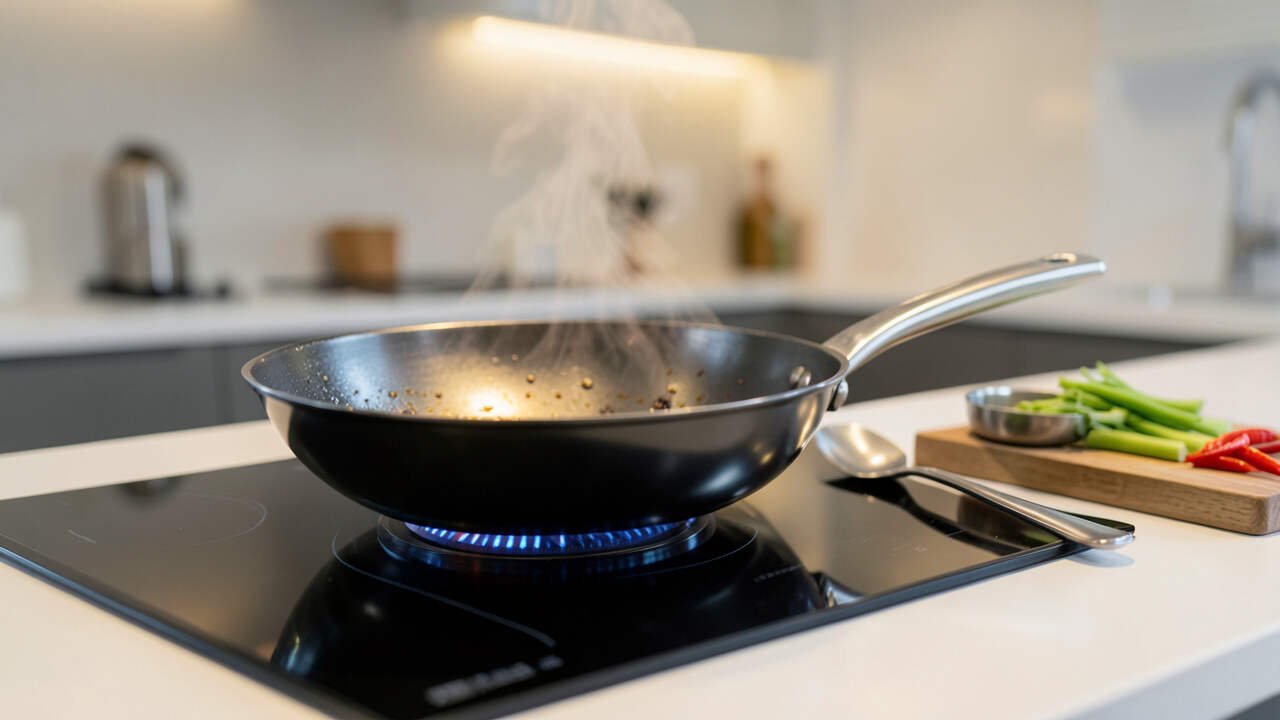
Flat-Bottom Wok Overview
A flat-bottom wok is a modern adaptation. It solves the stability problem. The flat base sits flush on any stove surface. This makes it the safest option for many home cooks.
Flat-bottom woks are very popular in Western kitchens. They work on electric coils. They work on glass-top stoves. They even work on induction cooktops. The flat surface makes direct contact with the heating element.
According to Serious Eats, a flat-bottom wok is the best choice for most American households. The site notes that the performance difference is small for home cooks. The added stability is a bigger benefit.
Pros of Flat-Bottom Woks
- Flat-bottom woks sit stable on all stove types without extra accessories.
- They are the only choice for induction cooktops due to magnetic contact needs.
- They are easier to use for beginners who cannot toss food yet.
- They have a larger surface area touching the heat source on electric stoves.
Cons of Flat-Bottom Woks
- Heat distribution is less concentrated compared to a round bottom.
- They cannot achieve the same level of wok hei as a properly used round wok.
- The tossing motion is less effective because the walls are usually shorter.
- They are slightly heavier in some designs to maintain the flat base.
When to choose a flat-bottom wok: You have an electric or induction stove. You want convenience and safety. You are a beginner. You need a wok that works on multiple heat sources.
How to choose the right wok bottom for your stove
Your stove is the most important factor. The wrong base leads to poor performance. The wrong base can also damage your cooktop.
Here is a breakdown of which wok base works best for each stove type.
Gas Stoves
Gas stoves work with both bases. A round-bottom wok with a wok ring is the best option. It allows flames to wrap around the sides. This creates that intense wok hei.
You can use a flat-bottom wok on a gas stove. Just know you lose some heat concentration. The flat base sits on the grate. Flames escape around the sides instead of hugging the wok.
Electric Coil Stoves
Flat-bottom woks are the clear winner here. Electric coils need direct contact to transfer heat. A round bottom will only touch a small part of the coil. This leads to uneven cooking and hot spots.
A flat-bottom wok sits flush on the coils. It heats evenly. It cooks food predictably.
Warning: Do not use a round-bottom wok on an electric coil stove. The uneven contact can overheat the coil. This may damage your stove and your wok.
Induction Cooktops
Induction cooktops require a magnetic base. They also require full surface contact. Flat-bottom woks are mandatory for induction cooking.
Some round-bottom woks claim to be induction compatible. They have a magnetic flat ring welded to the bottom. These often perform poorly. The heat transfer is not as good as a fully flat base.
According to induction cooking guides, a flat-bottom carbon steel wok is the top choice. It heats fast and responds well to temperature changes.
Glass-Top Stoves
Glass-top stoves need flat, smooth cookware. Round-bottom woks can scratch the glass. They can also cause the glass to crack from uneven pressure.
Always use a flat-bottom wok on a glass top. Lift the wok instead of sliding it. This prevents scratches from food debris trapped under the base.
| Stove Type | Recommended Bottom | Why |
|---|---|---|
| Gas | Round + Ring | Best heat and wok hei |
| Electric Coil | Flat | Full contact with coil |
| Induction | Flat | Magnetic contact required |
| Glass Top | Flat | Safety and stability |
| Outdoor Burner | Round | Best heat containment |
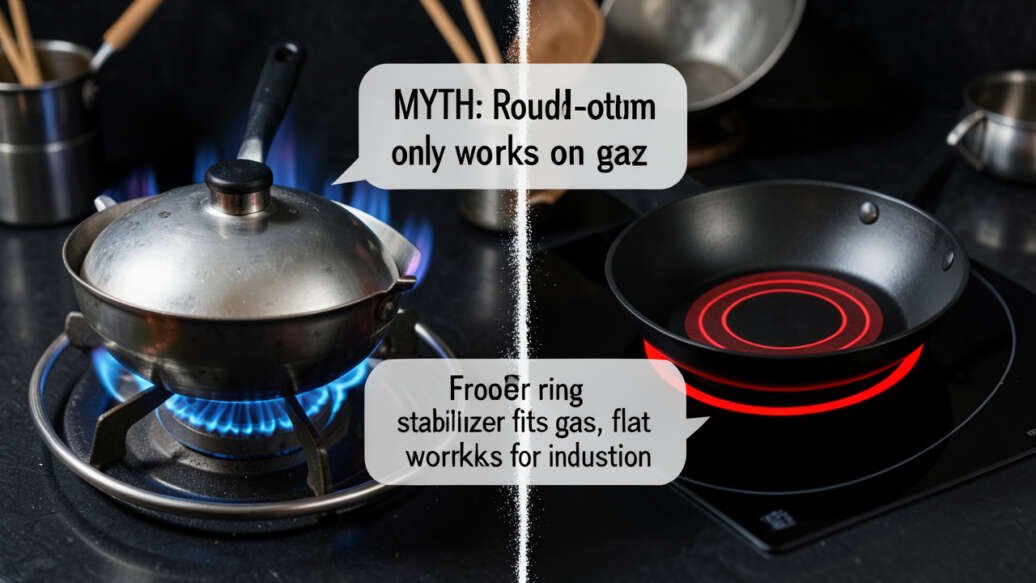
Common Myths vs Facts About Wok Bottoms
Many people have wrong ideas about wok bases. Let us clear up the confusion.
Myth 1: A flat-bottom wok is just as authentic as a round-bottom wok.
- Fact: The flat-bottom wok is a Western invention from the 1970s. Traditional Cantonese cooking uses round bottoms. The round shape allows chefs to spread heat in a specific way. Flat bottoms work well, but they are not traditional.
Myth 2: You cannot use a round-bottom wok on a standard gas stove.
- Fact: You can use a round-bottom wok. You just need a wok ring. The ring stabilizes the wok. It also lifts the wok closer to the flame. This improves heat distribution on weaker home gas burners.
Myth 3: Carbon steel woks are too difficult to maintain.
- Fact: Carbon steel is actually very easy to maintain. You season it once. You wash it with hot water and a sponge. You dry it immediately. That is it. A well-seasoned carbon steel wok becomes naturally non-stick over time.
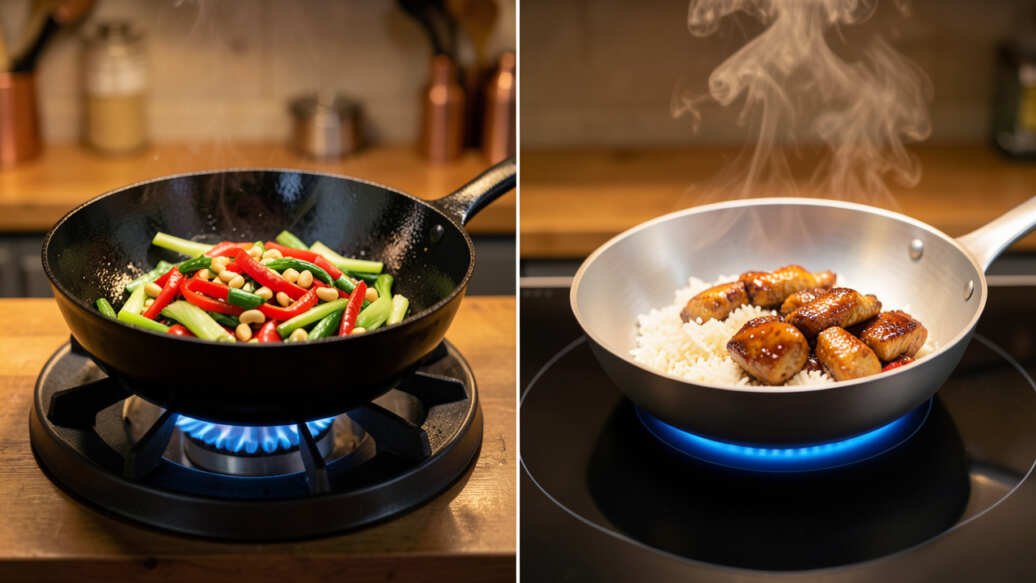
Pro Tips for Using Both Wok Types
- Season your wok immediately. Wash off the factory coating. Dry it over low heat. Rub a thin layer of oil all over the surface. Heat it until it smokes. Repeat this process 2-3 times before cooking.
- Use a wok ring for round bottoms. The ring should fit snugly on your gas grate. It should lift the wok about 2 inches off the grate. This allows air to flow and improves flame contact.
- Control the oil smoke point. Use oils with a high smoke point like peanut, avocado, or grapeseed. These oils do not burn at high wok temperatures. They keep your food clean and tasty.
- Preheat the wok before adding oil. Heat the wok until a drop of water beads up and dances on the surface. Then add your oil. This prevents food from sticking to the metal.
- Lift the wok on induction stoves. Do not slide the wok. Lifting prevents scratches on the glass surface. It also protects the induction coil from pressure damage.
Resources and Tools
The Wok Shop – A top retailer for both round and flat bottom woks. They offer carbon steel, cast iron, and non-stick options. Visit Site Induction cooktop compatibility is crucial when choosing a flat-bottom wok for energy-efficient cooking.
Serious Eats Wok Buying Guide – In-depth testing and reviews from culinary experts. They compare heat performance across different stove types. Visit Site
Wok Ring for Gas Stoves – This simple accessory makes a round-bottom wok usable on standard gas burners. It improves heat and stability. Visit Site Many recipes emphasize stir frying with a wok for authentic results, linking technique to wok choice.
Frequently Asked Questions
Can I use a round-bottom wok on an induction stove?
Most round-bottom woks do not work on induction stoves. Induction requires a flat, magnetic surface. Some brands sell round woks with a welded flat magnetic ring, but they often perform poorly. A flat-bottom carbon steel wok is the best choice for induction.
What size wok should I buy for my stove?
A 14-inch wok is the standard size for most households. It fits well on standard gas and electric burners. If you have a small stove, look for a 12-inch wok. Make sure the flat-bottom version fits within your burner’s heating zone.
Is a cast iron wok better than a carbon steel wok?
Carbon steel is better for stir-frying. It heats faster and is much lighter than cast iron. Cast iron woks are heavier. They take longer to heat. They are great for deep frying, but less ideal for tossing vegetables.
Do I need to season a flat-bottom wok?
Yes. All carbon steel and cast iron woks need seasoning. Seasoning creates a non-stick patina. It also protects the metal from rust. The process is the same for both round and flat bottoms.
Can I use a round-bottom wok on a glass top stove?
It is not recommended. Round-bottom woks can scratch glass tops. They also create uneven pressure points. This pressure can crack the glass over time. Use a flat-bottom wok on glass top stoves for safety.
Final Thoughts
Your stove type is the deciding factor between a round-bottom and flat-bottom wok. Round-bottom woks shine on gas stoves with a wok ring. Flat-bottom woks are safer and more effective on electric and induction ranges. Focus on carbon steel material and proper seasoning for the best cooking results. The right wok base will give you years of delicious stir-fries. Understanding wok design and stovetop compatibility is essential for selecting the right wok.

Leave a Reply