
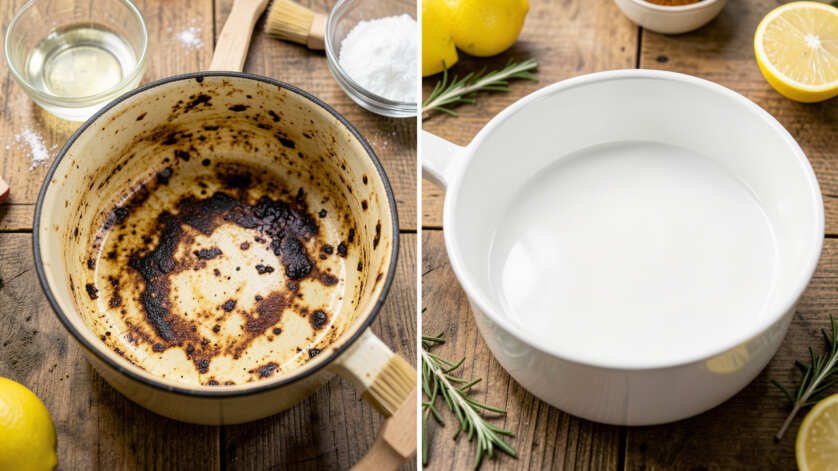
Discoloration on an enameled Dutch oven is typically caused by mineral deposits or polymerized oils, not damage, and can be safely removed with common kitchen items like baking soda, hydrogen peroxide, or Bar Keepers Friend. These methods cost under $10 and take less than an hour, lifting stains without scratching the glass surface. Staining indicates residue buildup, not worn enamel, so restoring the pot’s appearance is straightforward with these household cleaners.
That yellow or brown stain inside your Le Creuset or Staub pot is frustrating, but it is completely normal. This guide shows you safe methods to restore an old enameled Dutch oven without damaging the glass surface.
Simply put, most discoloration comes from mineral deposits or polymerized oils bonding to the enamel. You can remove these stains using common kitchen items like baking soda, hydrogen peroxide, or Bar Keepers Friend. These gentle methods cost under $10 and take less than an hour to complete.
Key Takeaways
- Discoloration on enameled Dutch ovens is typically caused by mineral deposits from water or polymerized fats, not by damage to the cookware itself.
- Baking soda and hydrogen peroxide create a gentle fizzing paste that lifts stains without scratching the enameled surface.
- Bar Keepers Friend, a mild oxalic acid cleaner, is one of the most effective tools for removing deep brown stains from enamel interior surfaces.
- Boiling a solution of water and baking soda or white vinegar for 10 to 15 minutes can loosen stubborn, baked-on discoloration inside the pot.
- Avoid using bleach, metal scrubbers, or abrasive pads, as these can permanently damage the glass-like enamel coating.
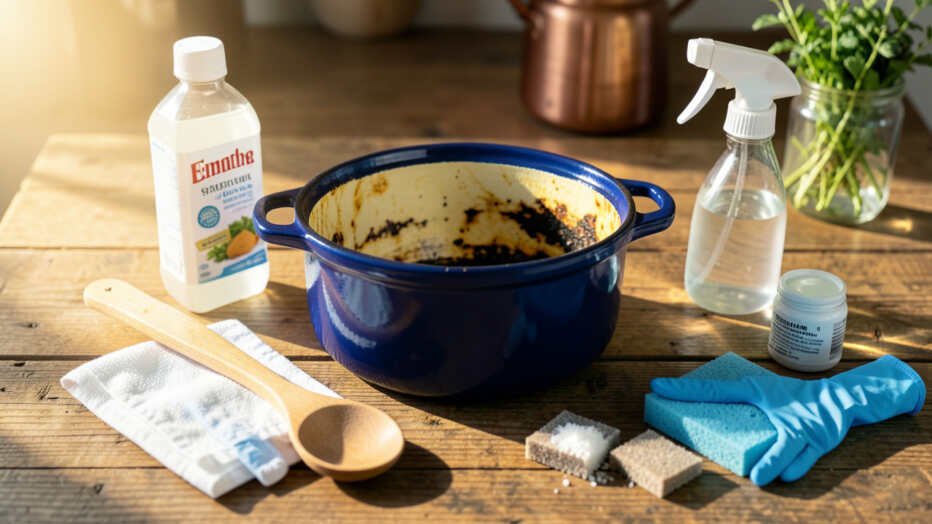
What You Need Before You Start
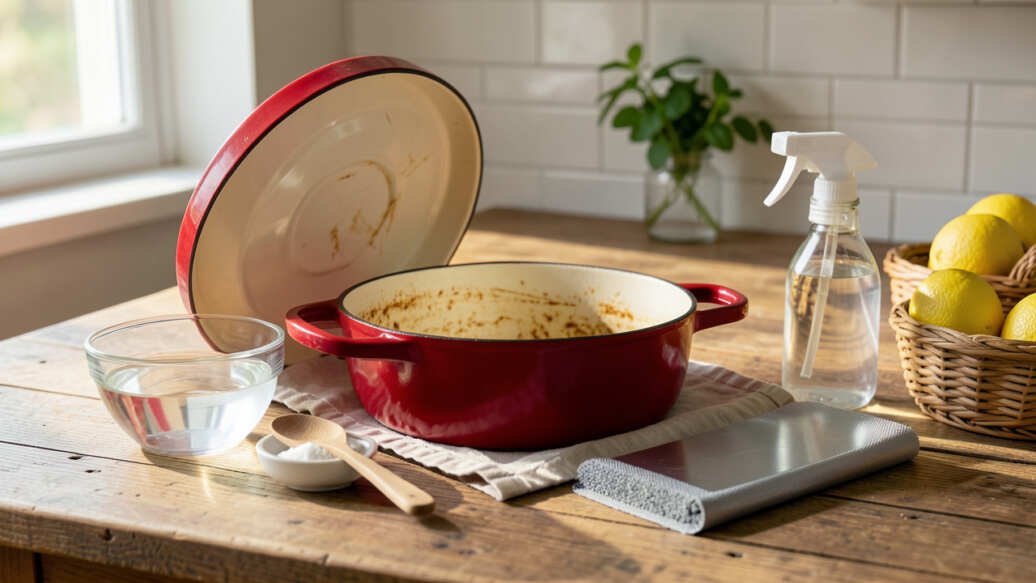
Gathering the right supplies before you start saves time and prevents damage to your pot. Most items are already in your kitchen pantry.
- Baking soda – A gentle alkali that breaks down grease and polymerized oils without scratching enamel.
- Hydrogen peroxide (3%) – Works with baking soda to create an oxidizing paste that lifts stains.
- White vinegar – Excellent for removing hard water spots and mineral scale from the enamel.
- Bar Keepers Friend or Bon Ami – Mild oxalic acid cleaners that tackle deep, set-in brown stains.
- Soft sponge or nylon brush – Non-abrasive tools that clean without dulling the glossy enamel finish.
- Microfiber cloth – For drying the pot immediately after cleaning to prevent new water spots.
Important: Let your Dutch oven cool completely before you attempt any cleaning method. Thermal shock from hot enamel meeting cold water can cause the glass surface to crack or chip.
How to Remove Discoloration Step by Step
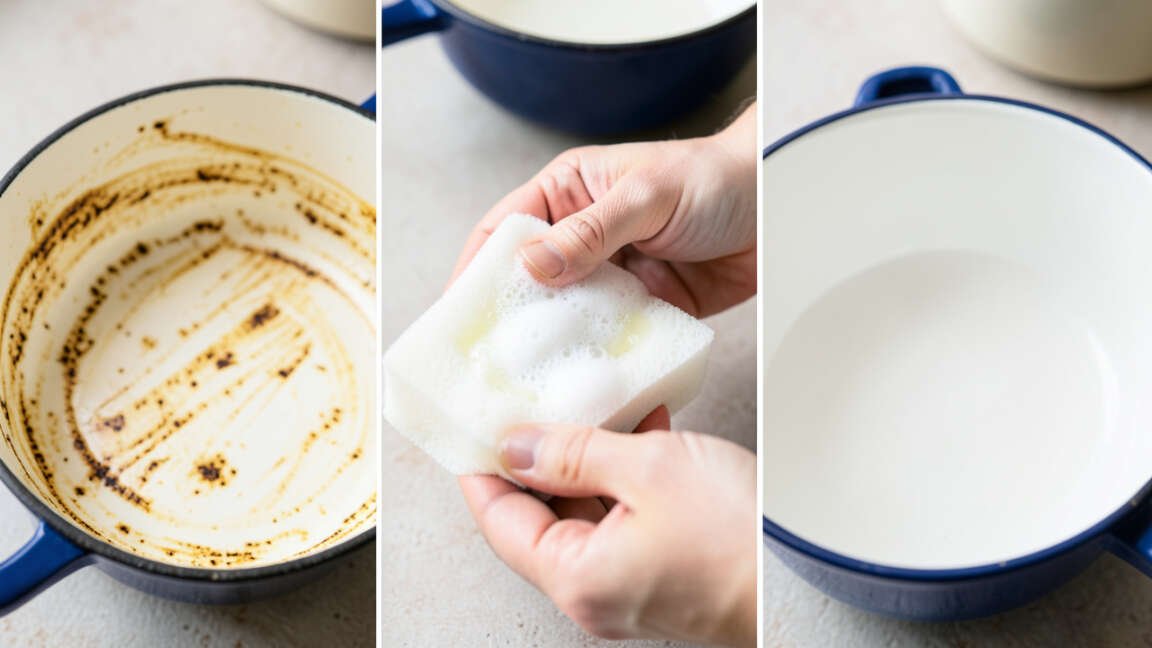
Follow these three methods in order from gentlest to strongest. Stop when the stain is gone to avoid unnecessary scrubbing.
Method 1 – Baking Soda and Hydrogen Peroxide Paste
This is the safest method for regular maintenance and light yellow stains. It works well on egg protein buildup and light mineral film.
- Sprinkle a generous layer of baking soda over the damp stained areas. Use about 2 tablespoons for a standard 5.5-quart pot.
- Drizzle hydrogen peroxide over the baking soda until it forms a thick, spreadable paste. It will fizz slightly as it activates.
- Let the paste sit for 30 to 60 minutes. For deeper stains, let it sit for up to 2 hours. Do not let it dry out completely.
- Scrub gently in circular motions using a soft sponge or nylon brush. The paste acts as a gentle abrasive that lifts stains from the enamel pores.
- Rinse thoroughly with warm water and dry immediately with a microfiber cloth to prevent water spots.
Method 2 – Boiling Baking Soda or Vinegar Solution
This method is ideal for brown polymerized oil stains that have built up over time from searing meat or simmering stews.
- Fill your Dutch oven with enough water to completely cover the stained areas. Do not fill it past the rivets of the handles.
- Add 1 cup of baking soda or 1 cup of white vinegar to the water. Do not combine baking soda and vinegar for this method as they neutralize each other.
- Bring the solution to a full boil, then reduce to a gentle simmer. Let it simmer for 10 to 15 minutes. The heat loosens the bond between the oil polymers and the enamel.
- Turn off the heat and let the water cool completely. Pour out the water and scrub the interior with a soft sponge and a small amount of liquid dish soap.
- Rinse well and dry immediately. Repeat the process if any brown residue remains.
Tip: Add a few lemon peels to the boiling baking soda solution. The citrus oils help cut through grease and leave your Dutch oven smelling fresh.
Method 3 – Bar Keepers Friend for Stubborn Stains
Bar Keepers Friend contains oxalic acid, which is very effective against deep discoloration and metallic looking stains from acidic foods. Use this method only when gentler options have failed.
- Wet the interior surface of your cool Dutch oven with warm water. Sprinkle a small amount of Bar Keepers Friend powder directly onto the damp enamel.
- Rub the powder gently in a circular motion using a soft, damp sponge. You will see a thin, creamy paste form as the oxalic acid activates.
- Let the paste sit for 5 to 10 minutes. Do not let it dry on the surface as this can leave a chalky residue.
- Rinse thoroughly with warm water. Wipe the interior with a clean, damp cloth to remove all traces of the cleaner.
- Wash the pot with regular dish soap and warm water, then dry it completely.
Warning: Wear rubber gloves when using Bar Keepers Friend. Oxalic acid can irritate sensitive skin. Keep the cleaner away from children and pets.
What to Expect – Time and Cost Comparison
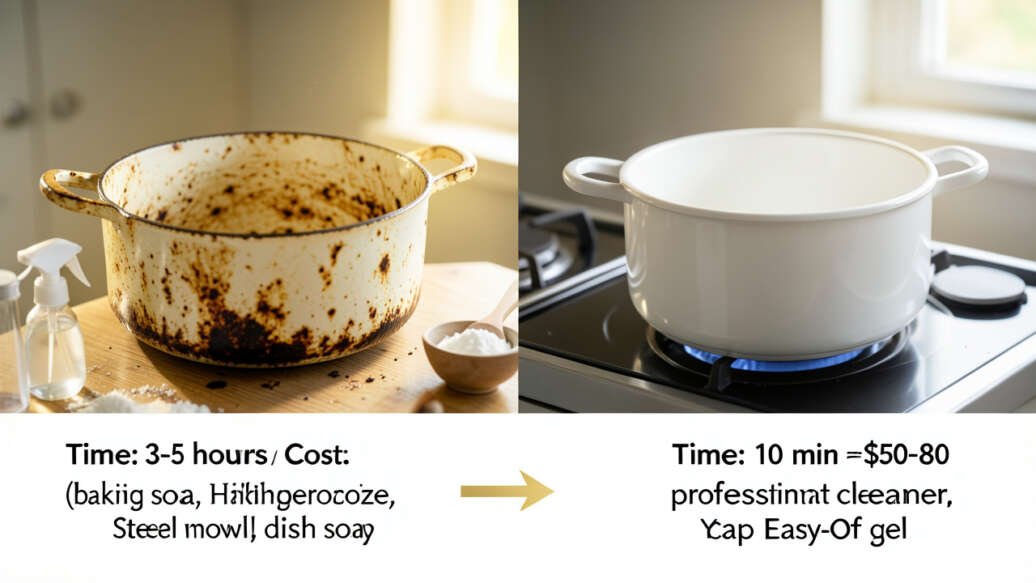
Different stains respond to different treatments. Use the table below to choose the best method for your specific type of discoloration.
| Method | Time Needed | Best For | Cost | Risk Level |
|---|---|---|---|---|
| Baking Soda + Peroxide | 30-60 mins | Yellow stains, light mineral film | Under $2 | Very low |
| Boiling Baking Soda | 15-20 mins | Brown polymerized oil stains | Under $1 | Very low |
| Bar Keepers Friend | 5-10 mins | Deep-set brown stains, rainbow marks | $5 | Low (wear gloves) |
| White Vinegar Soak | 30 mins | Hard water spots and mineral scale | Under $2 | Very low |
Common Mistakes to Avoid
Using the wrong technique can turn a simple cleaning job into a costly repair. Avoid these common errors to keep your enamel intact.
- Do not use metal scouring pads. Steel wool and copper scrubbers leave permanent micro-scratches on the enamel that trap food and worsen staining over time.
- Do not use heavy chlorine bleach. According to Le Creuset’s official care guide, bleach can seep through microscopic scratches and react with the exposed cast iron core, causing rust and pitting.
- Do not use the self-cleaning cycle on your oven. The extreme heat of a self-cleaning cycle exceeds 800 degrees Fahrenheit and will permanently damage the enamel by causing it to craze and crack.
- Do not soak the pot for more than 24 hours. Prolonged soaking can seep past the enamel edges on the rim and into the porous cast iron body, leading to rust formation under the coating.
- Do not use abrasive powders without water. Scouring powders like Ajax or Comet are too harsh for enameled surfaces. Stick to cleaners specifically formulated for enamel or glass.
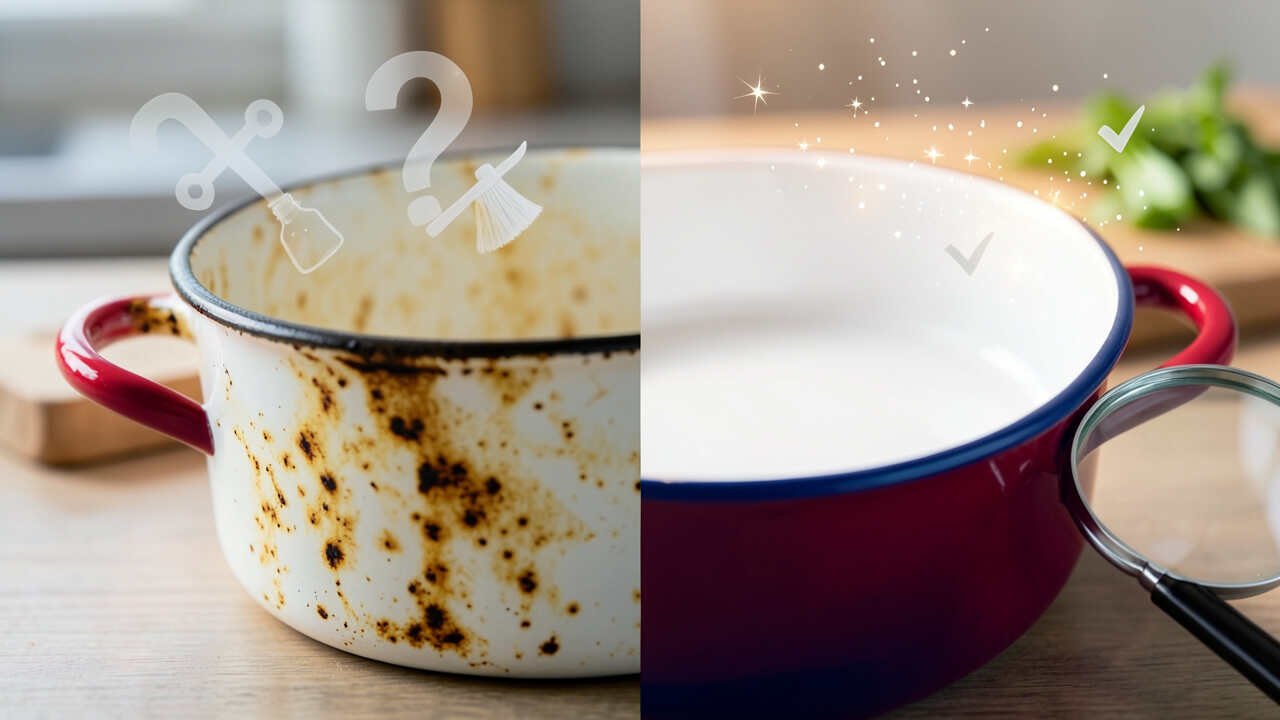
What Discoloration Is Not – Common Myths vs Facts
Many home cooks worry that staining means their expensive Dutch oven is ruined. Understanding what discoloration actually is helps you clean with confidence.
Myth 1 – Staining means the enamel is worn away.
Fact: True enamel wear shows as dullness, deep chipping, or a rough texture. Yellow or brown staining is almost always polymerized oil sitting on top of the smooth glass. The stain is on the enamel, not in it. America’s Test Kitchen confirms that a stained interior does not affect cooking results.
Myth 2 – You must use harsh chemicals to fix discoloration.
Fact: Most stains respond perfectly to baking soda and hydrogen peroxide. These gentle ingredients create a chemical reaction that lifts stains without damaging the enamel finish. Harsh chemicals like lye oven cleaners are unnecessary and can strip the gloss from the enamel surface.
Myth 3 – A stained pot is unsafe to cook in.
Fact: Enamel is glass that has been fused to cast iron at very high temperatures. It is non-porous and chemically inert. According to Staub’s care instructions, staining is a cosmetic issue only and does not affect the safety or function of your cookware.
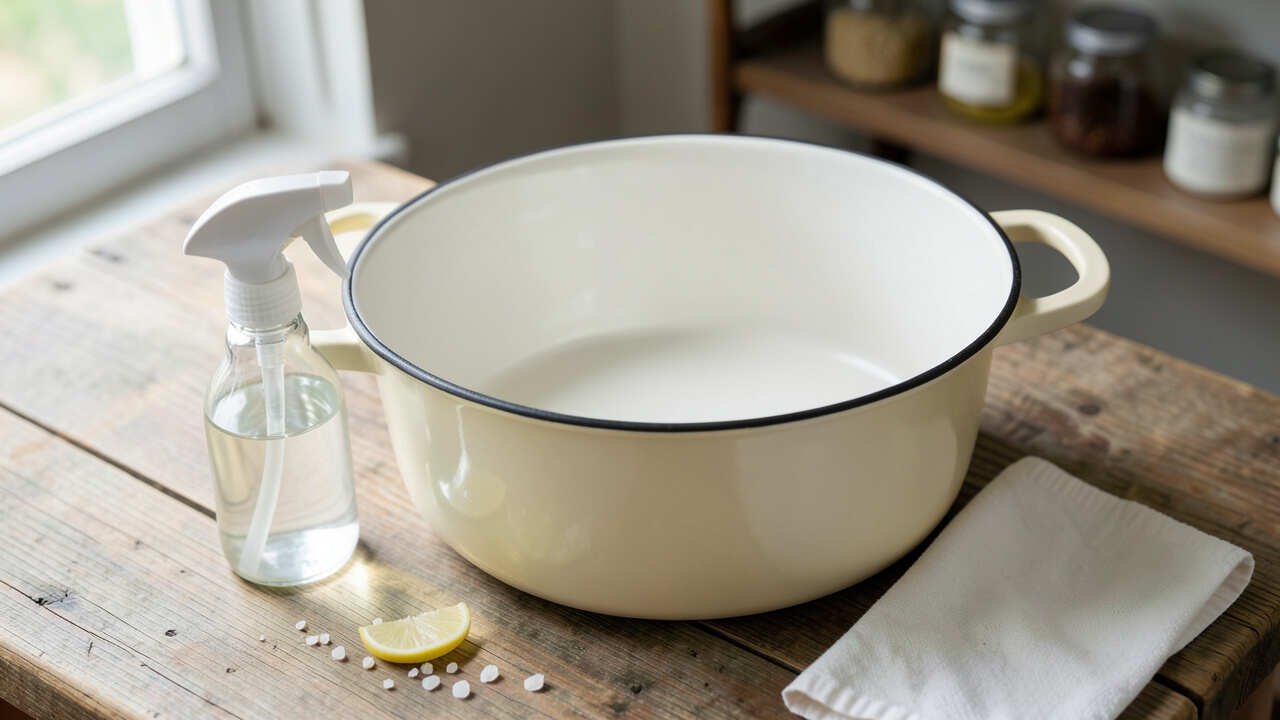
Pro Tips for Keeping Your Dutch Oven Stain-Free
Preventive care is the best way to reduce how often you need to deep clean. Follow these pro tips to keep your white enamel looking bright between deep cleans.
- Dry your pot immediately after washing. Hard water contains calcium and magnesium that leave white spots on enamel. A quick towel dry prevents these mineral deposits from bonding to the surface.
- Use wooden, silicone, or nylon utensils. Metal utensils can leave gray marks on enamel surfaces. These marks are usually just metal transfer and are easy to clean, but they can dull the gloss over time.
- Store the pot with the lid slightly ajar. Trapped moisture inside a closed Dutch oven can cause mildew and musty odors. Place a paper towel between the pot and the lid to absorb any excess humidity.
- Deglaze the pan after searing meat. Before the brown residue hardens into a stubborn polymer, add a splash of water, wine, or broth to the hot pan. Scrape up the browned bits with a wooden spoon and pour them out.
- Do a quick baking soda scrub after each use. A paste of baking soda and water takes 30 seconds to apply. This simple habit prevents oil buildup from ever turning into hard, polymerized stains.
Frequently Asked Questions
How do I remove blue or purple discoloration from my enameled Dutch oven?
Blue or purple marks usually come from chromium oxidation in the enamel itself. This often happens when you cook acidic foods like tomatoes or wine. A gentle scrub with baking soda and water usually removes it within a minute.
Can I use Easy-Off oven cleaner on enameled cast iron?
Le Creuset and Staub strongly advise against using lye-based oven cleaners like Easy-Off. These harsh chemicals can damage the glossy enamel finish and weaken the glass structure over time. Stick to baking soda or oxalic acid cleaners instead.
Does white vinegar damage enameled cast iron?
No, white vinegar is safe for enamel in moderation. Use a 1 to 1 ratio of water and vinegar for soaking or boiling. Do not let full-strength vinegar sit on the enamel for more than 30 minutes as it can dull the finish if used repeatedly.
My Dutch oven has a chip on the interior. Can I still use it?
No, stop using it immediately if the interior enamel is chipped. The exposed cast iron core can rust, and glass shards can end up in your food. Check if your pot is under warranty. Both Le Creuset and Staub offer limited lifetime warranties.
How often should I deep clean my enameled Dutch oven?
Deep cleaning is only needed when the discoloration bothers you. For most home cooks, 2 to 3 deep cleans per year are enough to maintain a bright white interior. Regular dish soap and water is sufficient for daily cleaning.
Resources and Tools
- Le Creuset Care and Use Guide – Official recommendations for cleaning and maintaining enameled cast iron. Visit Site
- Staub Care and Maintenance – Manufacturer instructions for preserving the enamel finish on your pot. Visit Site
- Bar Keepers Friend Official Site – The most effective commercial cleaner for tough enamel stains. Visit Site
- Bon Ami Polishing Cleaner – A gentle, non-toxic alternative to Bar Keepers Friend for light stains. Visit Site
- Wikipedia – Enameled Cast Iron – Background on how enameled cookware is made and why it stains. Visit Site
Final Thoughts
You do not need to replace a stained Dutch oven. The discoloration is cosmetic and easy to fix with items from your pantry. Use gentle cleaning methods, and your cookware will stay in great shape for many years. Focus on prevention with quick cleanups after each use.

Leave a Reply