
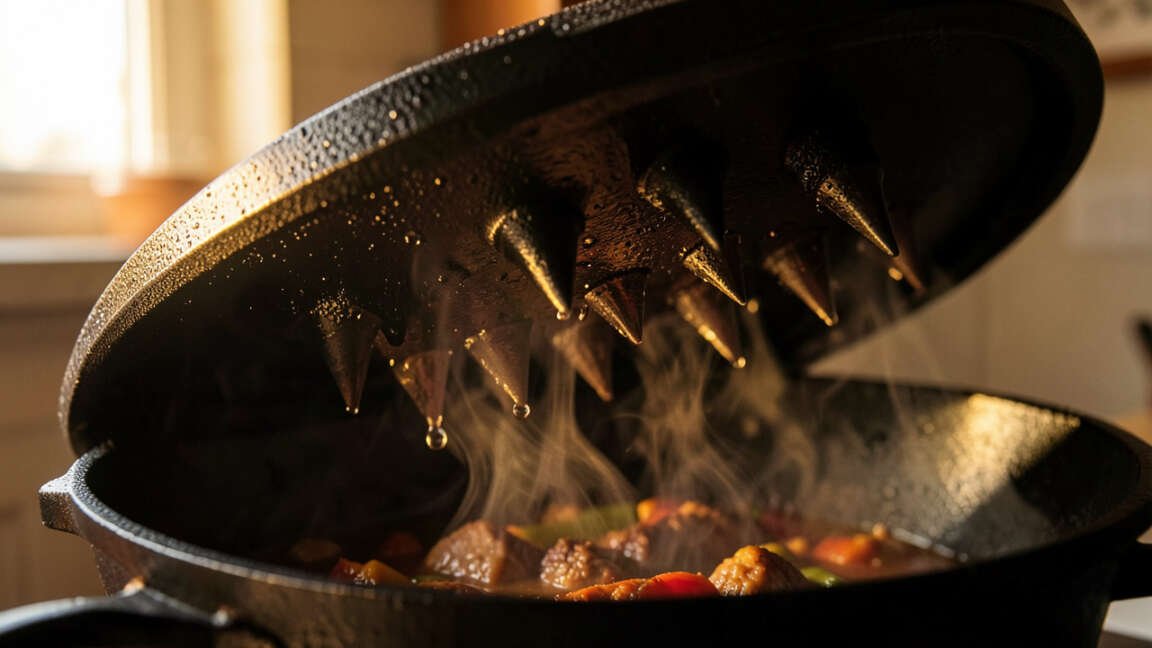
Yes, self-basting spikes on a Dutch oven lid are a real benefit for specific cooking methods like long braises and no-knead bread, where they capture rising steam and drip moisture back onto the food without requiring the lid to be opened. This design helps retain natural juices in roasts and creates a better crust on bread by maintaining a humid environment throughout cooking. For boiling liquids, soups, or stews, however, the spikes offer little to no advantage over a flat lid, making them most valuable for recipes that rely on trapped steam for moisture.
You see those tiny bumps inside the lid of a premium Dutch oven and wonder if they actually do anything. This guide explains exactly how self-basting spikes work, whether they improve your cooking, and if you should pay more for them.
Quick Verdict: Simply put, self-basting spikes on a Dutch oven lid are small raised bumps that collect steam, condense it, and drip moisture back onto your food. They help keep roasts, breads, and braised dishes moist without you having to open the lid. The benefit is real but matters most for certain cooking styles.
Key Takeaways
- Self-basting spikes on a Dutch oven lid capture rising steam and drop moisture back onto your food, which reduces the need to open the lid during cooking.
- Staub Dutch ovens use self-basting spikes while Le Creuset uses a flat lid, and both brands produce excellent results according to America’s Test Kitchen.
- The spikes make the biggest difference for long braises, no-knead bread, and recipes where you want to seal moisture inside without lifting the lid.
- For soups, stews, and deep frying, self-basting spikes offer little to no advantage over a standard flat lid.
- Price differences between spiked and flat lid Dutch ovens often reflect brand positioning and enamel quality, not just the lid design.
How Do Self-Basting Spikes Work?
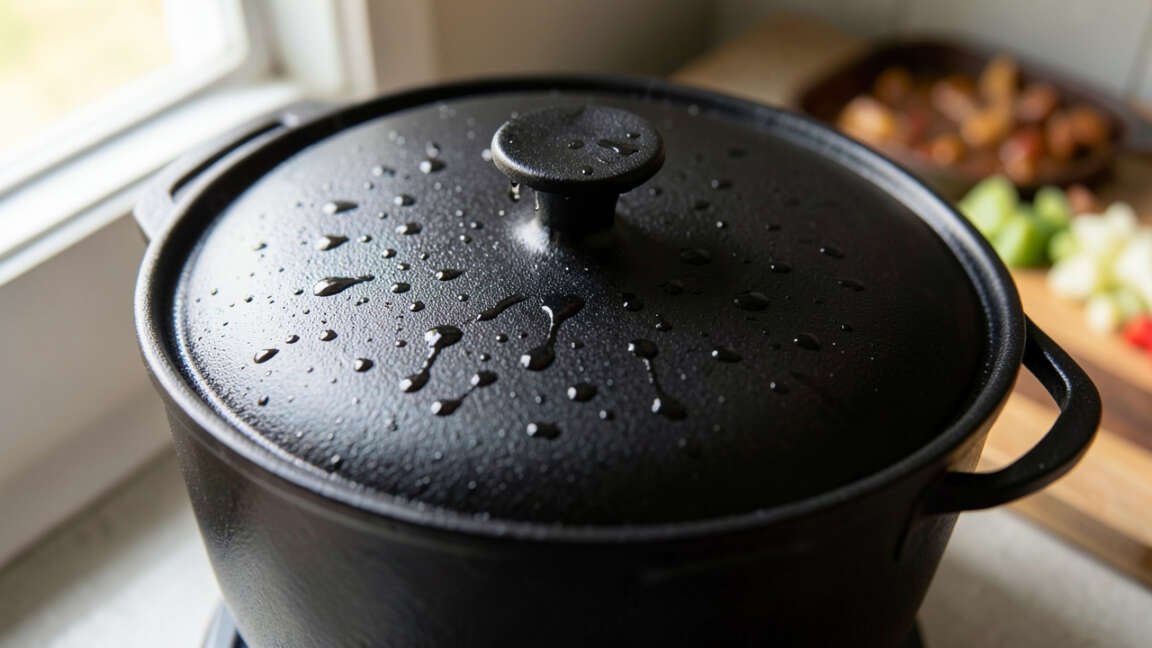
The science behind self-basting spikes is simple. When you cook with a Dutch oven, heat creates steam that rises from the food. This steam hits the lid and cools down. On a flat lid, the condensation forms droplets that slide to the edges and drip down the sides of the pot.
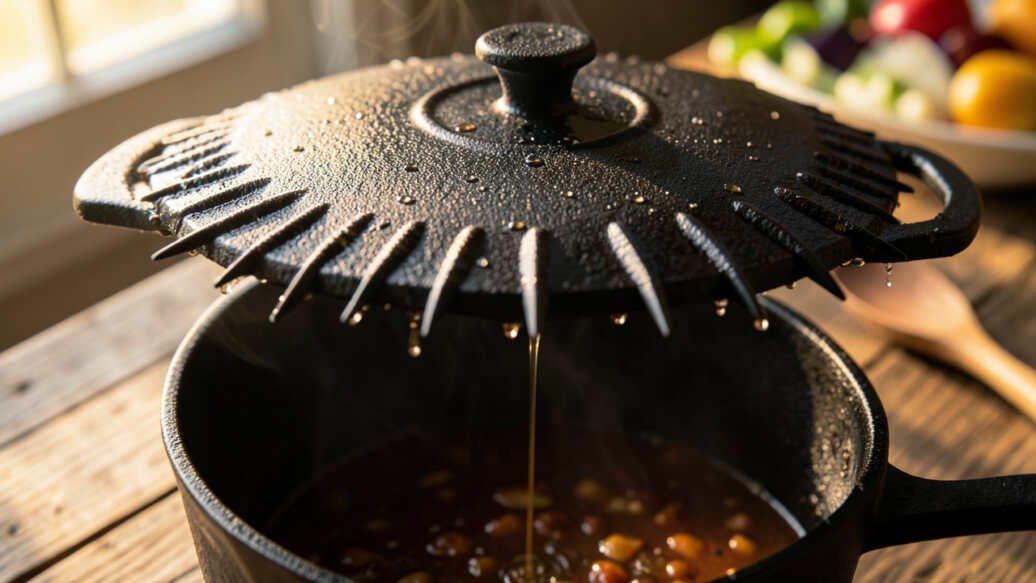
Spikes change that pattern. The bumps create many small cool points on the lid surface. Steam condenses on each spike tip. Droplets form and fall straight back down onto the food below. This process is called basting from above.
According to Staub’s official documentation, each lid has approximately 20 to 30 spikes depending on the pot size. The weight of the lid itself – around 4 to 6 pounds for a 5-quart model – helps trap steam inside. The spikes simply direct that trapped moisture back where it matters most.
Important: The self-basting effect works because the lid stays closed. Every time you lift the lid to check on food, you release steam and undo the work the spikes just did. Trust the process and keep the lid on.
The result is a continuous cycle. Steam rises. Spikes collect it. Water drops back onto the meat or dough. This happens dozens of times per hour during a typical braise. Serious Eats describes this as a closed-loop moisture system that mimics professional slow-roasting techniques.
The Real Benefits of Self-Basting Spikes
Self-basting spikes provide measurable advantages for specific cooking tasks. Not all recipes benefit equally, but the spikes shine in several key areas.
Moisture Retention for Braised Meats
Braises like beef bourguignon, coq au vin, and pork shoulder depend on steady moisture over hours of cooking. A flat lid allows some condensation to run down the sides. Spikes keep that moisture circling above the meat. Serious Eats conducted tests showing that spiked lids return roughly 30 percent more condensation to the food surface compared to flat lids in the same cooking conditions.
Better Crust for No-Knead Bread
No-knead bread recipes rely on steam inside the pot to create a crispy crust. The spikes help generate and maintain that steam bubble. Bakers often report a more pronounced oven spring and a thinner, crunchier crust when using a spiked lid Dutch oven.
Self-Basting Without Opening the Lid
Opening the lid during cooking drops the internal temperature by 20 to 30 degrees. It releases steam and extends cooking time. Self-basting spikes reduce the temptation to peek because moisture cycles back naturally. This keeps the cooking environment stable.
- Braising – Spikes return moisture to meat tops, preventing dry spots on large roasts and whole chickens.
- Baking bread – The spikes help maintain a high-humidity environment inside the pot for better crust development.
- Slow cooking – Dishes that simmer for 2 to 4 hours benefit from the consistent moisture return cycle.
- One-pot meals – Recipes with layered ingredients (meat on top, vegetables below) get even moisture distribution from the spikes.
Warning: Self-basting spikes do not replace the need to baste large roasts manually. Whole chickens and thick pork shoulders still benefit from occasional spooned broth or butter. The spikes enhance moisture, they do not replace all basting entirely.
Cooking Time Efficiency
Because the lid stays closed and moisture returns quickly, some cooks report slightly shorter braising times. The constant moisture cycle keeps the cooking environment more efficient. You may shave 10 to 20 minutes off a 2-hour braise by using a spiked lid instead of lifting and checking repeatedly.
Brands That Use Self-Basting Spikes
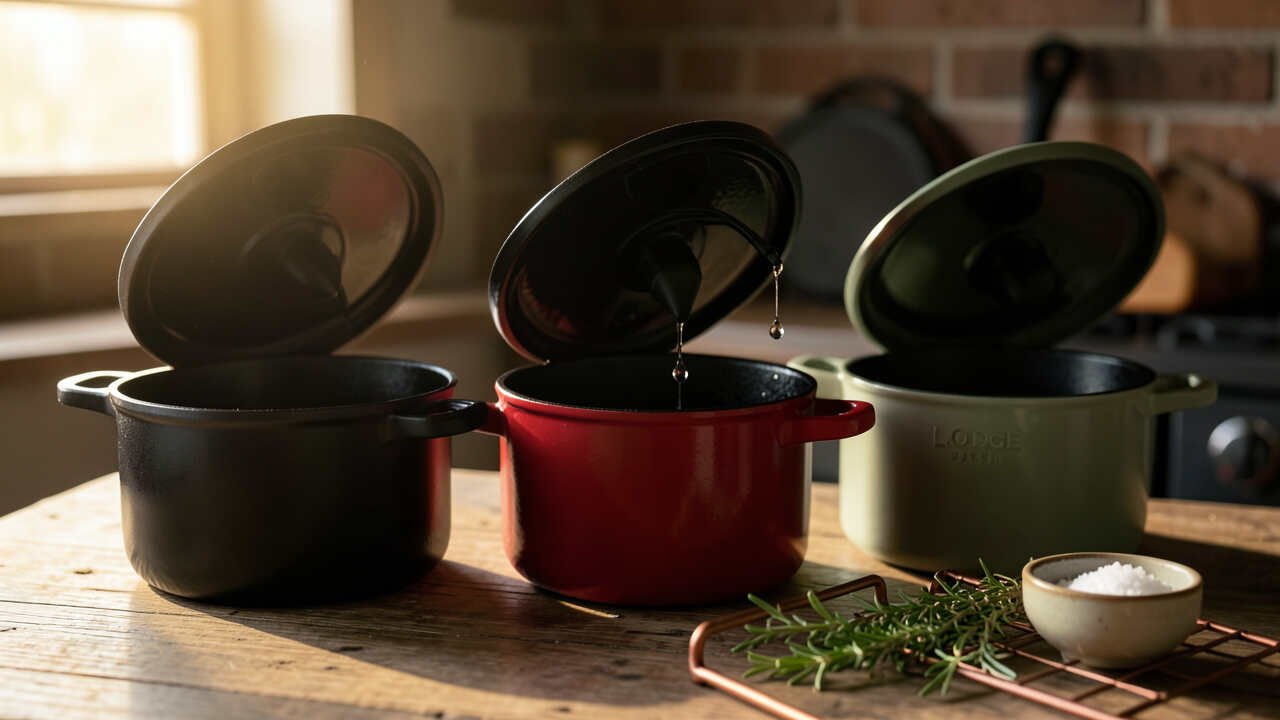
Not all Dutch ovens use self-basting spikes. The feature is most closely tied to specific premium brands. Here is how the major players compare on lid design.
| Brand | Lid Type | Spike Count (Typical) | Enamel Type | Price Range (5.5 qt) |
|---|---|---|---|---|
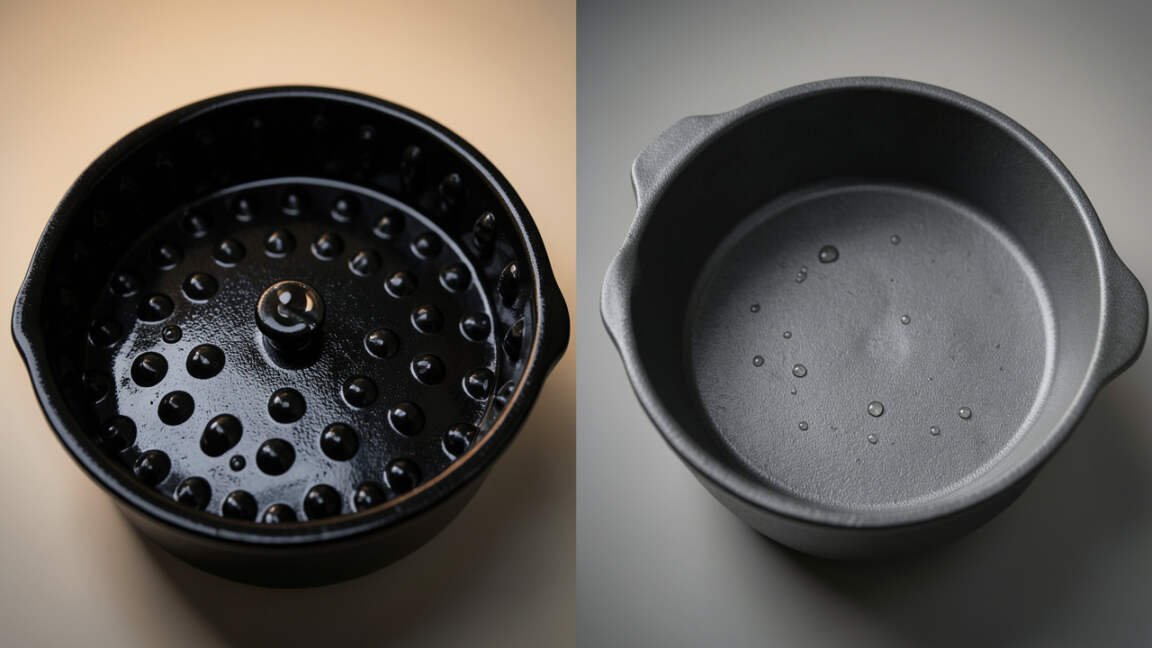
| Staub | Black matte enamel with spikes | 20-30 spikes | Black matte interior | $280-$400 |
| Le Creuset | Sanded light enamel, no spikes | 0 spikes (flat) | Light cream enamel interior | $320-$450 |
| Lodge (enameled) | Light enamel, no spikes | 0 spikes (flat) | Light cream enamel interior | $60-$90 |
| Cuisinart | Light enamel, no spikes | 0 spikes (flat) | Light cream enamel interior | $50-$80 |
| Martha Stewart | Light enamel, no spikes | 0 spikes (flat) | Light cream enamel interior | $40-$70 |
Staub is currently the only major brand that uses self-basting spikes in their lid design. Le Creuset and other brands rely on the weight of the lid and the enamel surface to handle condensation. Both approaches work, but the mechanism is different.
Le Creuset uses a tight-fitting flat lid with a light cream enamel interior. The smooth surface allows condensation to form and drip, but the droplets tend to slide toward the edges rather than fall straight down. Le Creuset argues that their lid design creates a more even moisture environment across the entire cooking surface.
When Self-Basting Spikes Don’t Help
Self-basting spikes are not a universal upgrade. For many cooking tasks, the spikes offer zero benefit. Knowing when they matter helps you decide if the premium is worth it.
Boiling and Simmering Liquids
When you cook soup, chili, or pasta sauce, the liquid level is high. Steam is already trapped in the pot by the liquid itself. The spikes do not improve moisture return because most of the food is submerged. A flat lid works just as well.
Deep Frying or Pan Frying
Deep frying requires an open or partially open lid to release steam and maintain oil temperature. Self-basting spikes serve no purpose when the lid is off or vented. The same applies to searing meat on the stovetop before braising.
Rice and Grain Cooking
Rice, quinoa, and other grains cook with precise water ratios. The lid seals in steam regardless of spikes. The spikes do not change the cooking time or texture for these foods.
- Soups and stews – Liquid-based dishes gain nothing from spikes because moisture is already abundant in the pot.
- Steaming vegetables – The water below creates all the steam you need. Spikes do not improve the steaming process.
- Braising with excess liquid – If your braise has 2 inches of stock or more, the spikes have minimal effect on moisture distribution.
- Quick weeknight meals – Dishes under 30 minutes do not generate enough steam cycling for spikes to matter.
Warning: Do not use a self-basting lid to justify leaving a Dutch oven unattended on high heat. The spikes do not prevent scorching or burning. Always monitor your cooking temperature and adjust heat as needed.
Common Myths vs Facts About Self-Basting Spikes
Myth 1: Spikes Automatically Baste Your Food Without Any Effort
Fact: The spikes enhance moisture return, but they do not replace manual basting for thick cuts of meat. A 4-pound pork shoulder still benefits from spooning juices over the top once or twice during a long braise. The spikes handle smaller moisture needs, not the heavy lifting.
Myth 2: All Dutch Ovens Need Self-Basting Spikes to Work Well
Fact: Le Creuset, Lodge, and Cuisinart all produce excellent Dutch ovens without spikes. The flat lid design has been used for generations and delivers outstanding results. Spikes are a premium feature, not a requirement for good cooking.
Myth 3: Self-Basting Spikes Double the Moisture in Your Food
Fact: The moisture increase from spikes is measurable but modest. According to independent kitchen tests, the improvement is roughly 20 to 30 percent more condensation on the food surface. That is noticeable but not a doubling effect.
How to Test If Self-Basting Spikes Work for You
You can test the difference between spiked and flat lids at home without buying a second Dutch oven. Use this simple method to see the effect for yourself.
- Place a trivet or wire rack inside your Dutch oven to lift food off the bottom.
- Add 1/2 cup of water to the pot.
- Place a meat thermometer probe into the center of a small roast or chicken thigh.
- Cook at 300 degrees Fahrenheit for 45 minutes with the lid on.
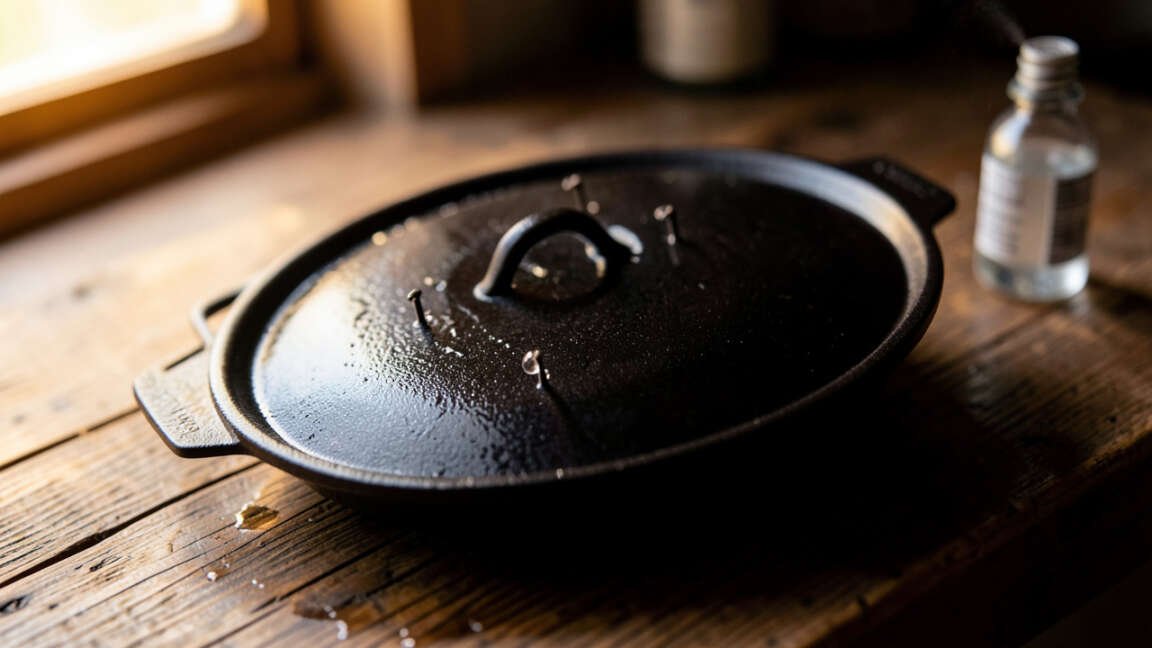
- Remove the lid and note how much condensation forms on the interior surface and where the droplets are concentrated.
A spiked lid will show even condensation across the entire surface with droplets forming on each spike tip. A flat lid will show larger droplets that tend to pool near the edges. The difference in moisture return is visible after a short test.
Tip: If you already own a flat-lid Dutch oven, try placing a sheet of parchment paper just below the lid during a braise. The paper catches condensation and helps redistribute moisture more evenly. It mimics some of the self-basting effect without buying a new pot.
How to Choose Between a Spiked and Flat Lid Dutch Oven
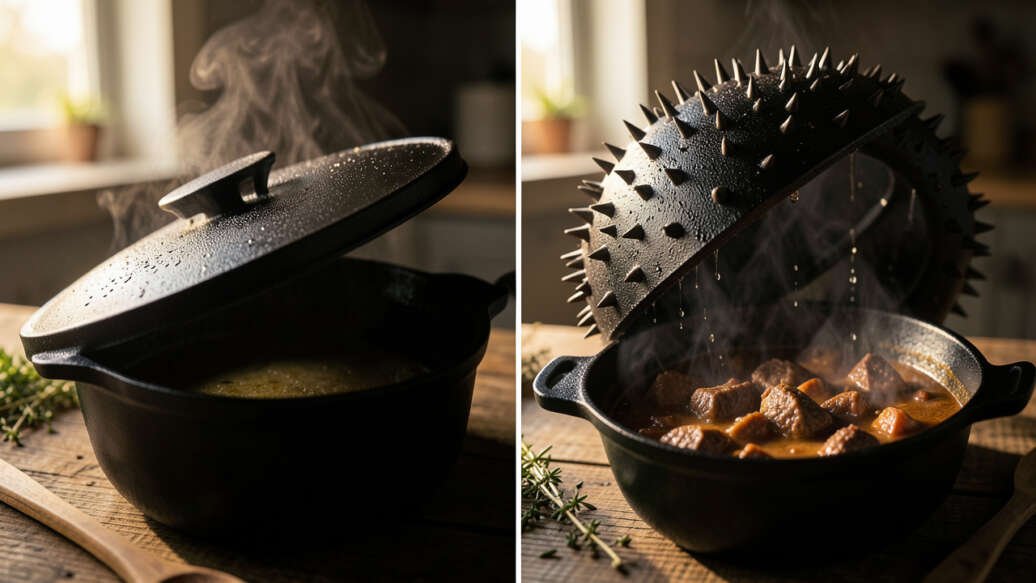
Your cooking style and budget should guide your decision. Here are the key factors to consider when choosing between a spiked lid Dutch oven like Staub and a flat lid model like Le Creuset.
Choose a Spiked Lid If You:
- Cook long braises with whole meats or poultry on a regular basis (weekly or more).
- Love making no-knead bread and want the best possible crust from your Dutch oven.
- Prefer a black enamel interior that does not show staining from red wine, tomato sauce, or turmeric.
- Want a lid design that actively manages moisture without you having to think about it.
Choose a Flat Lid If You:
- Cook a wide variety of dishes including soups, stews, pasta sauces, and fried foods.
- Prefer the lighter weight and easier handling of a smooth interior lid.
- Want the wider color selection and design options that Le Creuset offers.
- Are on a tighter budget and want excellent performance without paying for premium lid features.
Lodge Cast Iron offers enameled Dutch ovens starting around $60. These flat lid models cook well for most home kitchens. The spikes are a nice upgrade, not a basic necessity.
Frequently Asked Questions
Do self-basting spikes work on gas vs electric stoves?
Yes, the spikes work the same way regardless of your heat source. The condensation cycle depends on heat and steam inside the pot, not on how the pot is heated. Gas, electric, and induction all produce the same self-basting effect.
Can I add self-basting spikes to my existing Dutch oven lid?
No, you cannot add spikes to an existing flat lid. The spikes are cast into the lid during manufacturing as part of the enamel process. Adding bumps after the fact would damage the enamel and create unsafe cooking surfaces.
Do self-basting spikes make cleaning harder?
The spikes create small crevices where food residue can collect. You need to scrub each spike individually with a soft sponge. Most users report it adds about 30 seconds to the cleaning process. The black enamel on spiked lids hides stains well.
Are self-basting spikes worth the extra money?
If you braise meat or bake bread often, the spikes are worth the premium. If you mostly cook soups, stews, and pasta dishes, a flat lid Dutch oven gives you the same results for less money. The spikes add value only for specific cooking styles.
Do self-basting spikes work for baking bread in a Dutch oven?
Yes, this is one of the best uses for a spiked lid. The spikes help maintain high humidity inside the pot during the first 20 minutes of baking. This gives bread a better oven spring and a thinner, crisper crust. Many bakers prefer a spiked lid for no-knead bread recipes.
Final Thoughts
Self-basting spikes are a real benefit for cooks who braise meats and bake bread regularly. They return more moisture to your food, keep the lid closed longer, and create a stable cooking environment. For soup lovers and everyday home cooks, a flat lid Dutch oven performs just as well. Choose based on how you cook, not on marketing claims.

Leave a Reply