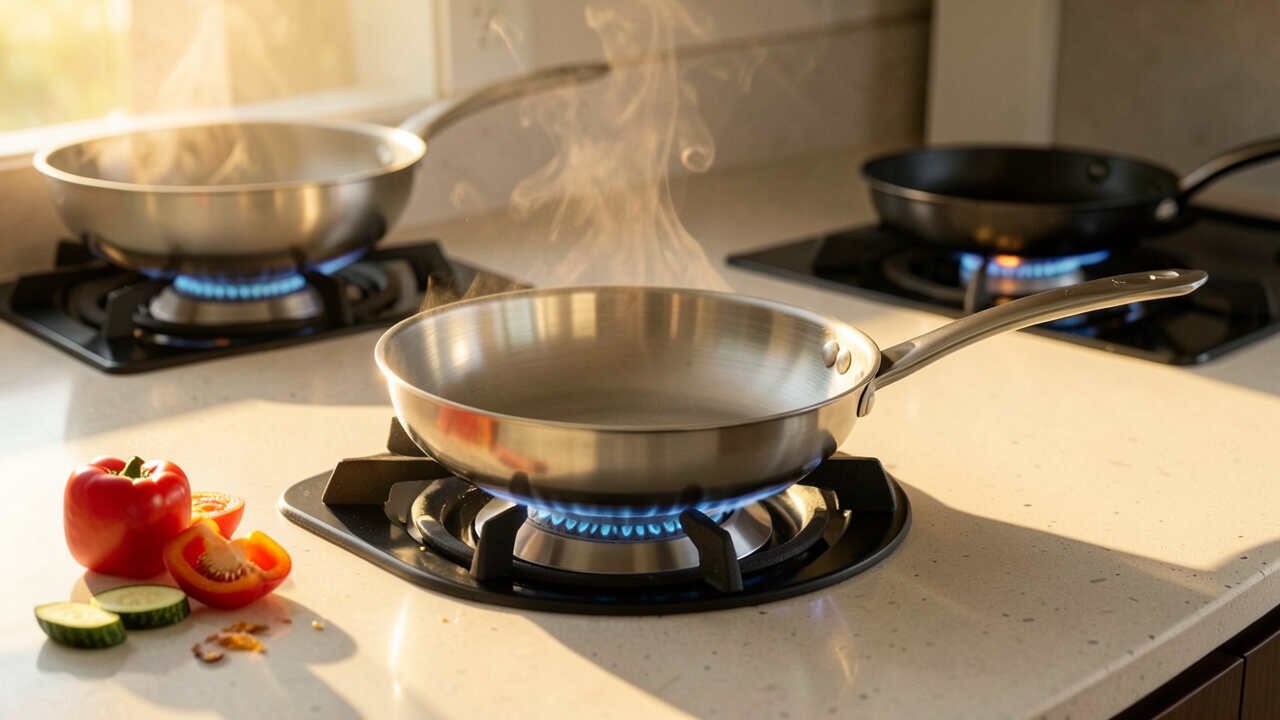
Matching frying pan size to burner size is essential for achieving even heat distribution and avoiding hot spots or wasted energy. For gas stoves, the pan base should be no more than one inch wider than the burner grate; for electric coil and smooth-top stoves, the pan base should match the burner ring diameter closely; induction requires full contact between the pan’s magnetic base and the induction zone. Correctly matching pan and burner sizes improves cooking results, saves energy, and prevents scorching or undercooking.
You want your food to cook evenly every time. But if your frying pan is too big or too small for your burner, you get hot spots and cold spots. That leads to burned edges or undercooked centers.
The trick is to How to Match Frying Pan Size to Burner Size for Even Heat. This simple guide shows you how to choose the right pan size for your stove so your meals turn out perfect. You will save time, avoid frustration, and cook with confidence.
Key Takeaways
- Pan size should match burner diameter for even heat distribution.
- Too large a pan on a small burner wastes energy and causes uneven cooking.
- Too small a pan on a large burner risks burning the sides and overheating.
- Measure both your pan base and burner ring to find the best fit.
- Different stove types like gas, electric, and induction have unique matching rules.
- Correct matching improves cooking results and saves you time and money.
Why Pan and Burner Size Matter for Even Heat
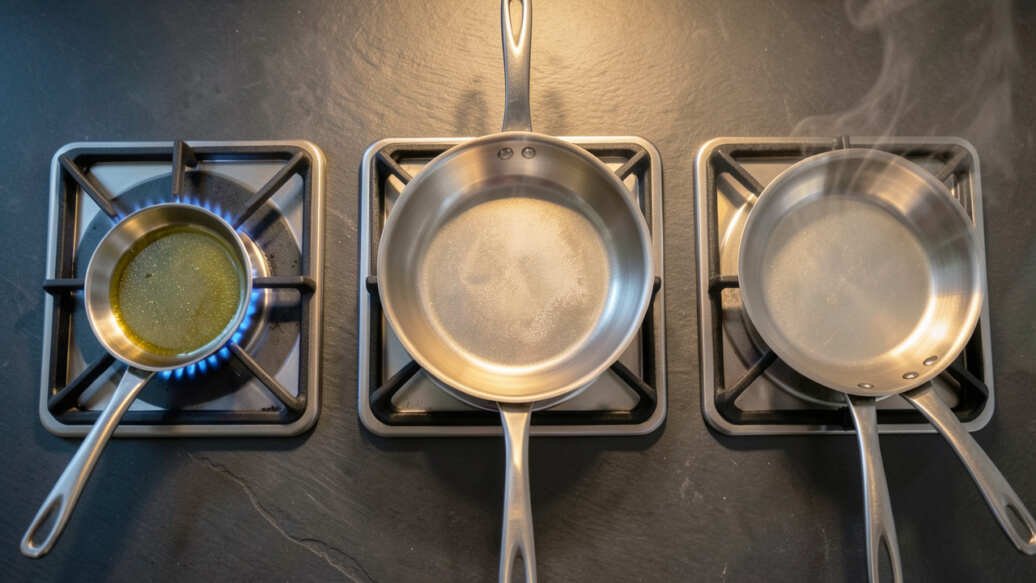
Heat does not spread the same way on every burner. When you place a frying pan on a stove, the burner creates a heat zone. If your pan is much wider than that zone, the outer edges stay cool.
Your food in the center cooks faster while the sides lag behind. This is why How to Match Frying Pan Size to Burner Size for Even Heat is so important. A good match lets the heat travel evenly across the whole pan bottom.
On the flip side, a pan that is too small for a large burner gets blasted by heat from all sides. The flame or element wraps around the pan edges. That can burn your food quickly and create dangerous hot spots.
You want the burner to heat the pan evenly, not just the edges. Matching sizes helps you control the cooking temperature better. It also saves energy because less heat escapes into the air.
Think about a typical 10-inch frying pan on a standard 8-inch gas burner. The flame only reaches the center of the pan bottom. The outer inch or two of the pan stays cooler.
That is why pancakes or eggs cook unevenly. By learning How to Match Frying Pan Size to Burner Size for Even Heat, you fix this problem. Your dishes turn out the same doneness all over.
Simple Ways to Measure Your Pan and Burner
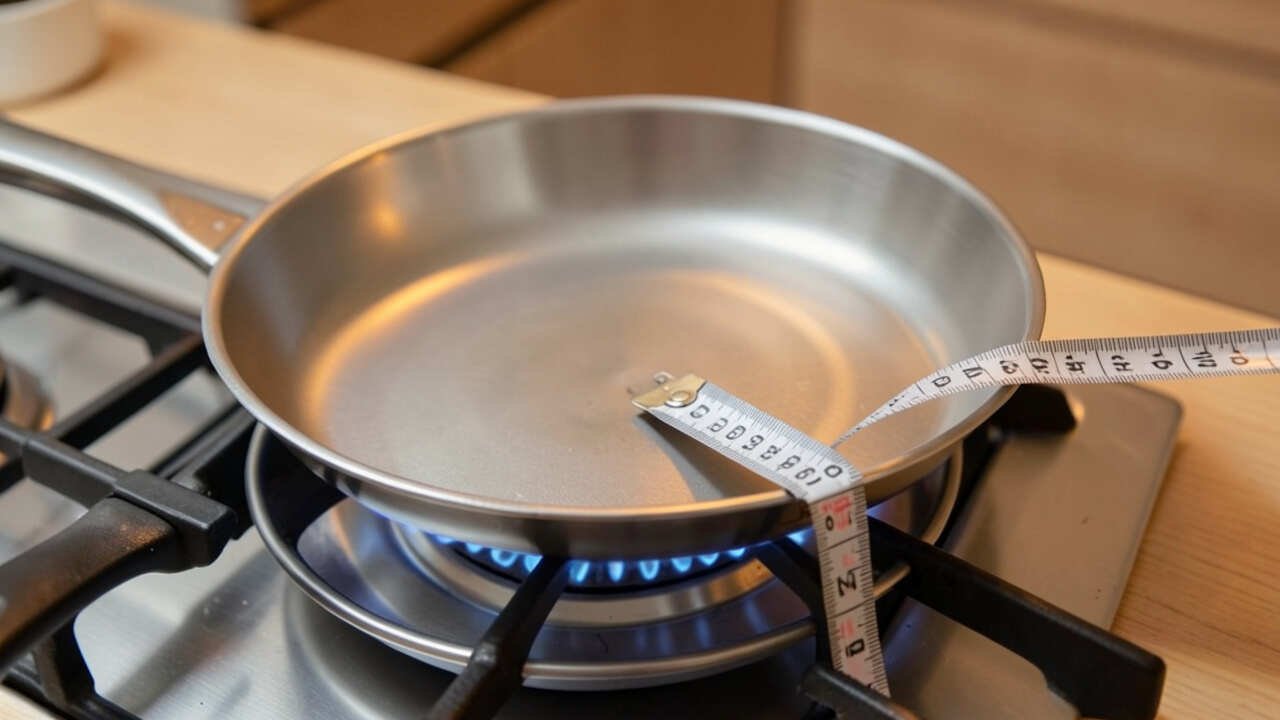
Do not guess the sizes. Use a ruler or measuring tape to get exact numbers. First, flip your frying pan over and measure the flat bottom part.
Do not measure the top rim because that is wider. Next, measure the burner. For gas stoves, measure the diameter of the grate ring where the flame comes out.
For electric coil stoves, measure the coil itself. For smooth-top glass or induction stoves, measure the marked ring on the cooktop.
Then, compare the two numbers. A good rule of thumb is the pan bottom should be no more than one to two inches wider than the burner ring. If the pan is exactly the same size, that is ideal.
If the pan is smaller, make sure the burner does not stick out past the pan edges. Below is a simple table to show common matches.
Use this table as a quick reference when you shop for pans or choose a burner. Knowing these numbers makes How to Match Frying Pan Size to Burner Size for Even Heat easy. Finally, write down your stove’s burner sizes so you can match pans correctly later.
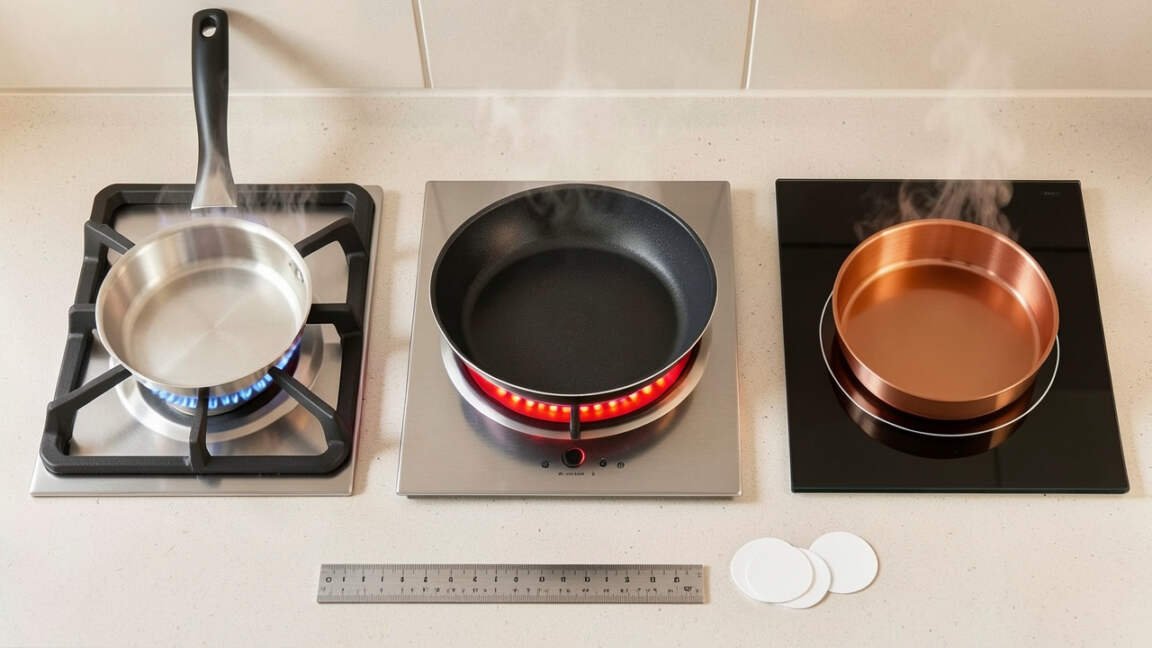
Matching Rules for Gas, Electric, and Induction Stoves
Different stove types need slightly different matching rules. If you follow these, you get better cooking results every time.
Gas Stoves
Gas burners spread heat in a ring pattern. The flame should not extend past the pan bottom. If the flame licks up the sides of the pan, the pan is too small.
If the flame is small and the pan is huge, the pan edges stay cold. How to Match Frying Pan Size to Burner Size for Even Heat on a gas stove means keeping the flame under the flat bottom only. Use a pan that is about the same width as the flame ring or slightly larger.
Electric Coil Stoves
Electric coils heat up the full coil area. The pan bottom should cover the entire coil. If the coil sticks out, it wastes energy and can create hot spots.
A pan that is larger than the coil is fine as long as the coil is fully under the pan. But if the pan is smaller than the coil, the coil heats the air and can damage the pan. Measure the coil diameter and pick a pan with a bottom that matches or exceeds it by an inch or two.
Smooth-Top Glass and Induction Stoves
These stoves have marked rings for each burner. The pan bottom must sit completely inside the ring for good heat transfer. Induction stoves need a magnetic pan that covers the element area.
If the pan is too small, the stove may not detect it. If the pan is too large, the outer part stays cold. For induction, How to Match Frying Pan Size to Burner Size for Even Heat is critical because the magnetic field only works where the pan touches the glass.
Comparison of Stove Types
The table below shows key differences for each stove type when matching pan and burner.
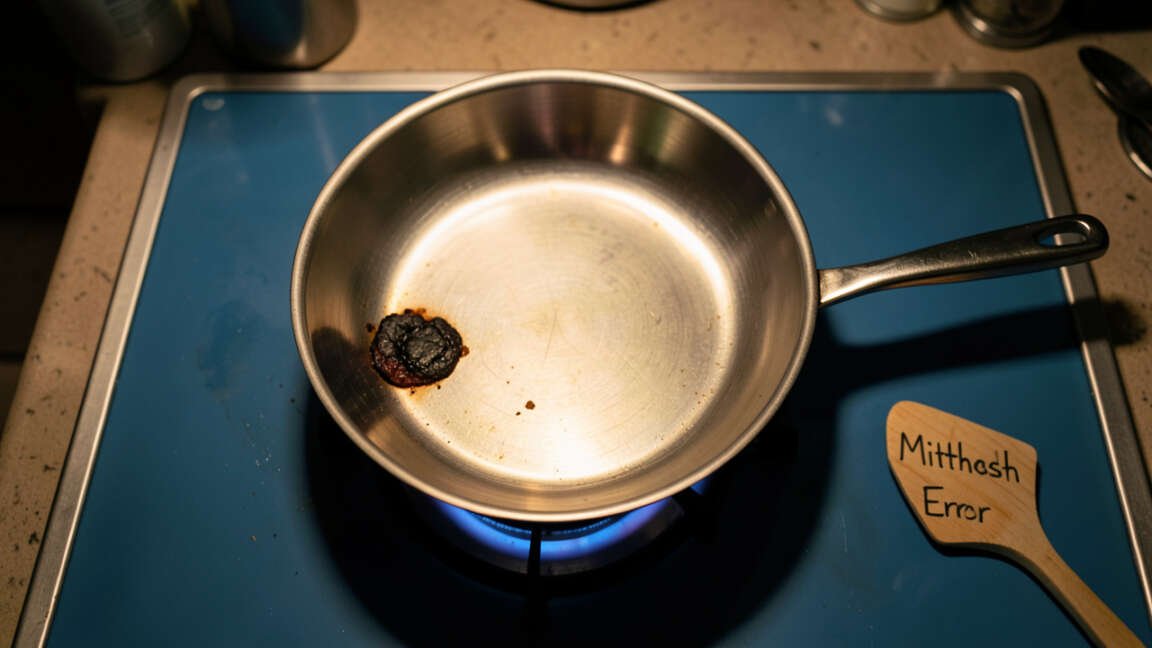
Common Mistakes and How to Avoid Them
Many home cooks make simple errors when matching pans and burners. Here are the most common mistakes and what to do instead.
- Using a pan that is too large on a small burner. This leaves cold edges and uneven cooking. Fix by using a smaller pan or a larger burner.
- Using a pan that is too small on a large burner. Heat wraps around the pan and burns food. Fix by moving to a smaller burner or using a larger pan.
- Ignoring pan warping. A warped pan has an uneven bottom that does not touch the burner fully. This causes hot spots. Replace warped pans for even heat.
- Not preheating the pan. Even a properly matched pan needs time to heat up. Always preheat on medium heat before adding food.
- Forgetting about pan material. Thin pans heat up fast but cook unevenly. Thick, heavy pans (like stainless with aluminum core) spread heat better. This helps How to Match Frying Pan Size to Burner Size for Even Heat work well.
Avoid these mistakes and you will see better cooking results right away. Check your pan and burner sizes before you start cooking.
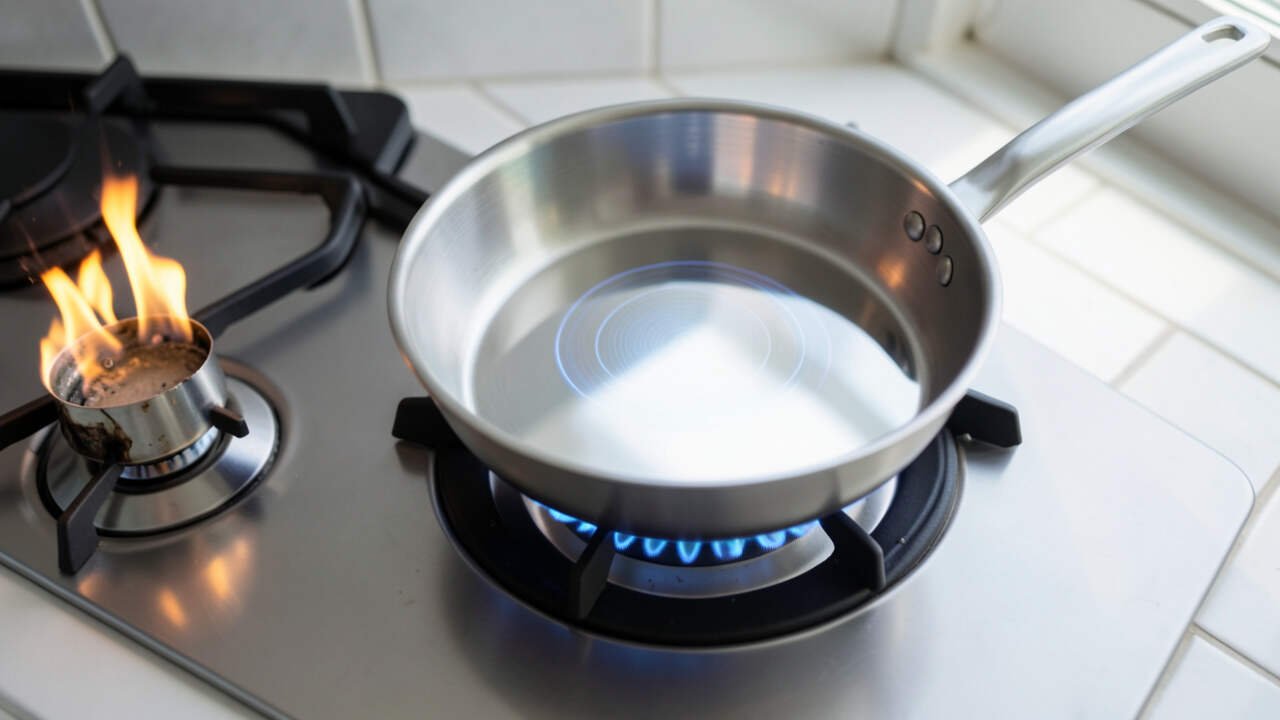
Quick Tips for Better Heat Distribution
Even after you match sizes, a few extra steps can make your food cook more evenly. The key to even heat is careful matching pan size to burner diameter.
- Always use a flat-bottom pan. A curved or dented bottom creates air gaps and uneven heat.
- Center the pan on the burner. Even a slight shift can change heat distribution.
- Use a lid when possible. Lids trap heat and help the edges cook more
Final Thoughts
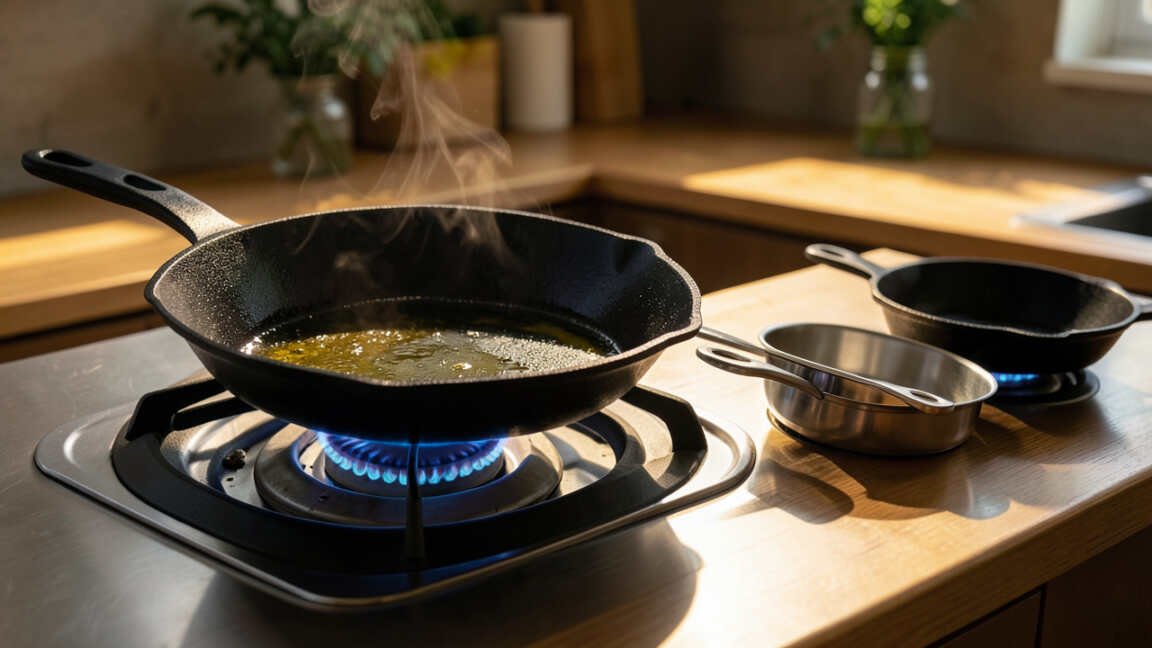
Matching your pan’s base diameter to the burner’s flame or coil size is the key to even heat. A pan slightly wider than the burner prevents hot spots and wasted energy, while a pan too large or small leads to uneven cooking. Choose accordingly. Always use a flat-bottom pan to ensure maximum contact with the burner.

Leave a Reply