
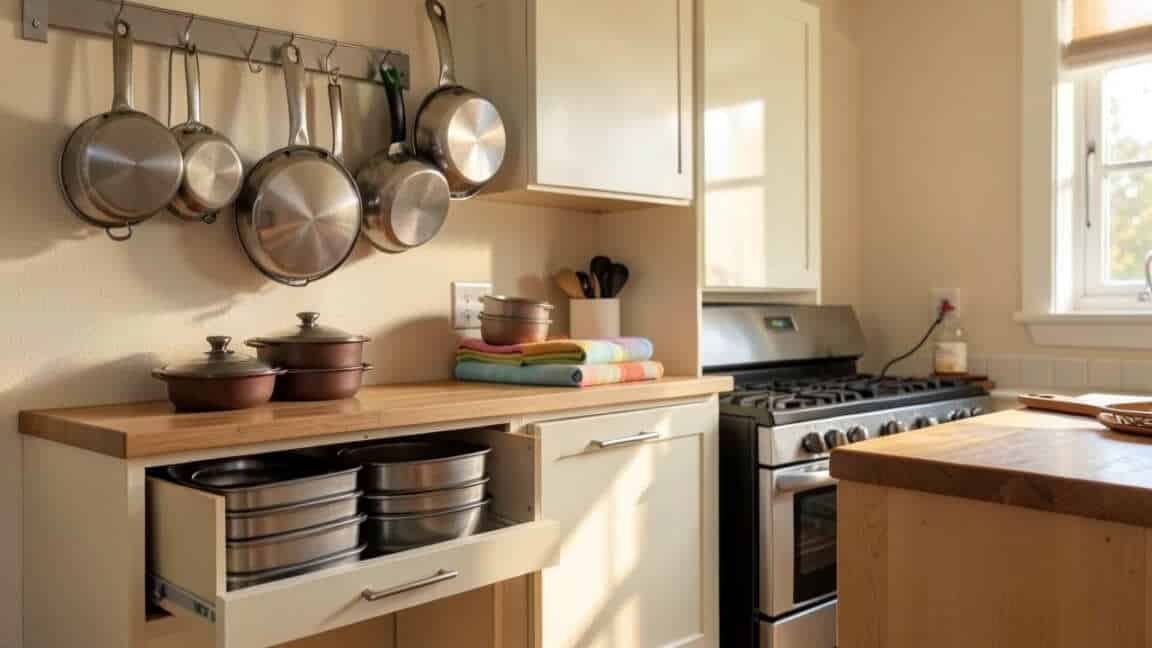
Storing pots and pans in a small kitchen is best accomplished by combining vertical dividers for frying pans, a hanging rack for heavy stockpots, and nesting with protective pads for cookware sets. This approach doubles cabinet capacity, prevents scratching of non-stick and copper surfaces, and frees up valuable counter space. Prioritizing separate lid storage and using tension rods inside base cabinets further reduces clutter and makes cooking faster and more enjoyable.
Storing pots and pans in a small kitchen often feels like a losing battle against clutter and scratched cookware. This guide walks you through practical solutions to maximize every inch of space while keeping your pots and pans in perfect condition.
Simply put, the best way to store pots and pans in a small kitchen is to combine vertical dividers for frying pans, a hanging rack for heavy stockpots, and nesting with protective pads for sets. Prioritizing lid storage and wall space clears your base cabinets immediately.
Key Takeaways
- Storing pots and pans vertically with dividers can double your cabinet capacity and prevent scratching.
- Nesting cookware with felt or silicone protectors is essential for protecting non-stick and copper surfaces.
- Hanging pot racks are the ultimate space-saving trick for small kitchens with limited base cabinets.
- Separate lid storage dramatically reduces clutter and makes cooking faster and more enjoyable.
- Base cabinet reorganization with tension rods and shelf risers is a low-cost, high-impact solution.
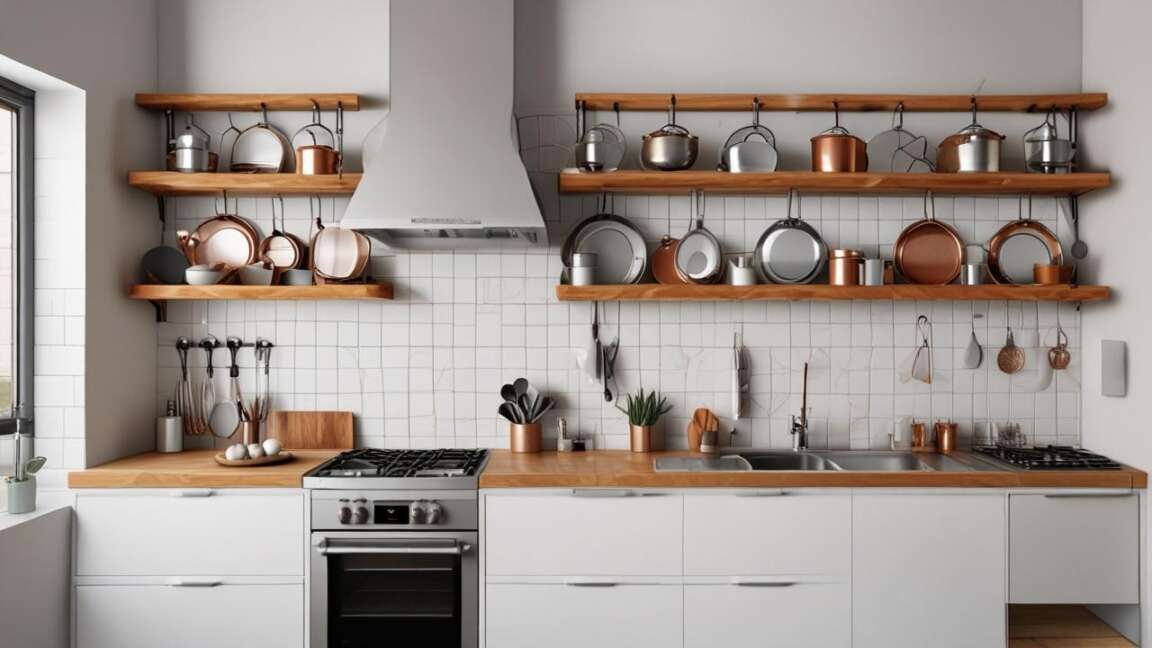
What Are the Best Storage Solutions for Pots and Pans?
Limited square footage forces you to think creatively about cookware storage. The best solutions for a small kitchen focus on vertical space, separation of lids, and surface protection.
Each storage method offers distinct advantages depending on your cabinet layout and cookware materials. Here is a breakdown of the most effective approaches:
| Method | Space Used | Best For |
|---|---|---|
| Vertical Dividers | Base Cabinets | Frying pans, baking sheets, cutting boards |
| Hanging Racks | Ceiling or Wall | Stockpots, skillets, colanders |
| Nesting with Protectors | Deep Cabinets | Nested cookware sets, mixing bowls |
| Drawer Inserts | Deep Drawers | Lids, small saucepans, utensils |
Vertical dividers work exceptionally well for cast iron and stainless steel because they prevent heavy pans from sliding into each other. Hanging racks are ideal for high-traffic cooking areas near the stove. Nesting with protectors is the go-to strategy when your base cabinet depth is too shallow for dividers.
- Vertical dividers reduce retrieval time by eliminating the need to unstack pans.
- Hanging racks add a professional chef aesthetic to your kitchen.
- Nesting requires soft protectors to avoid scratching non-stick surfaces.
- Drawer inserts work best for lightweight aluminum or non-stick pans.
Tip: Always measure your cabinet height and depth before buying dividers. Standard base cabinets are 24 inches deep, but some apartment kitchens only offer 22 inches of usable space.
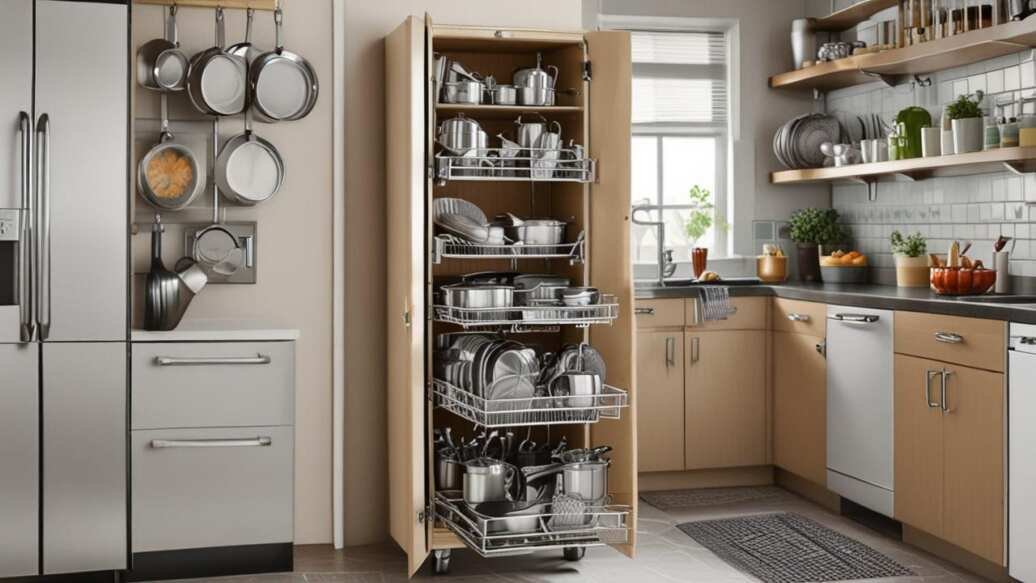
How to Organize Pots and Pans Inside Base Cabinets
Base cabinets are the primary real estate for cookware. Without a system, they become a chaotic pile of metal and glass. Follow this step-by-step process to transform your base cabinet into an efficient storage zone.
- Remove everything and group items by type: pots, pans, lids, and accessories like steamer baskets.
- Install vertical dividers or tension rods to create individual slots for each pan. This prevents stacking and scratching.
- Place the heaviest items such as cast iron skillets and Dutch ovens on the bottom shelf near the floor for stability.
- Store lids separately using a tension rod mounted vertically inside the cabinet or a dedicated lid organizer on the door.
- Use shelf risers to double your vertical space if your cabinets are taller than standard 12-inch shelving.
- Group by frequency of use — keep your daily skillet and saucepan at the front, and holiday stockpots toward the back.
This method prevents the dreaded “pan avalanche” every time you open the cabinet door. According to a survey by the National Association of Professional Organizers, the average person saves 12 minutes per day by implementing a logical kitchen storage system.
Important: If your base cabinet has a fixed shelf in the middle, consider removing it. Creating one tall vertical space allows you to store tall stockpots and flexible dividers more effectively.
A 2023 report from Houzz indicated that 35% of kitchen remodelers prioritize better pot and pan storage over decorative upgrades. The trend confirms that functional organization is becoming a top concern for homeowners in compact homes.
Why Vertical Dividers Outperform Traditional Stacking
Vertical dividers have become the gold standard for storing pots and pans in small kitchens. Traditional stacking forces you to lift everything off the top just to reach the pan at the bottom. This wastes time and increases the risk of drops or scratches.
Here is a direct comparison between the two storage methods:
| Feature | Vertical Dividers | Traditional Stacking |
|---|---|---|
| Accessibility | Easy — grab one pan from its slot | Hard — unstack everything to reach the bottom |
| Scratch Risk | Very low — pans do not touch each other | High — metal slides against metal |
| Space Efficiency | High — uses vertical height upward | Medium — air gaps remain between uneven stacks |
| Weight Distribution | Even — each pan sits on the shelf edge | Poor — bottom pan supports the entire weight |
| Cost to Implement | $15 – $40 per set of dividers | $0 — no equipment needed, but costly damage |
Vertical dividers are especially effective for non-stick and copper pans, where any surface contact leads to visible wear. They also allow better air circulation around pans, reducing moisture buildup inside cabinets. In humid climates, this can prevent the growth of mold or bacteria on wooden handles.
- Dividers protect expensive non-stick coatings by preventing contact with other metal surfaces.
- They allow you to store lids vertically right next to their matching pan.
- Dividers are adjustable and can be repositioned as your cookware collection changes.
Warning: Do not use plastic dividers in cabinets located near the dishwasher or sink. Heat and humidity can warp plastic, causing your pans to lean and fall over.
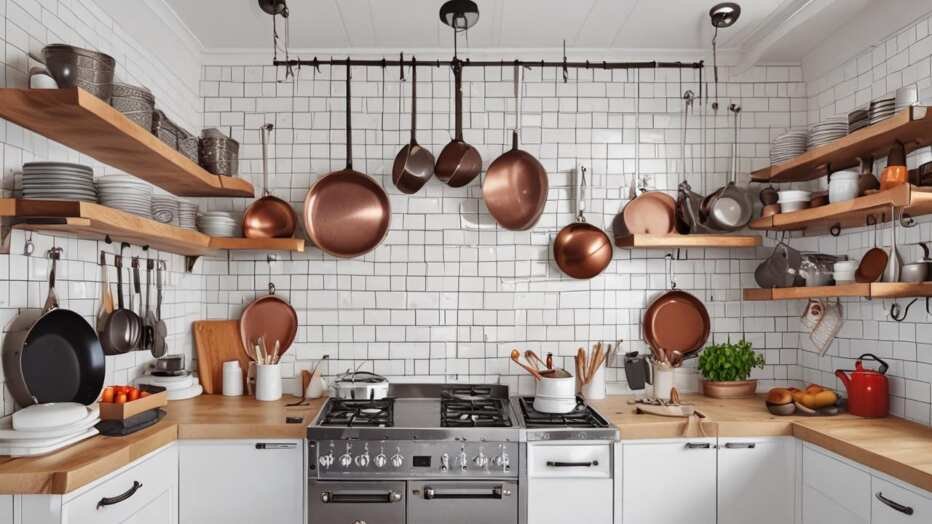
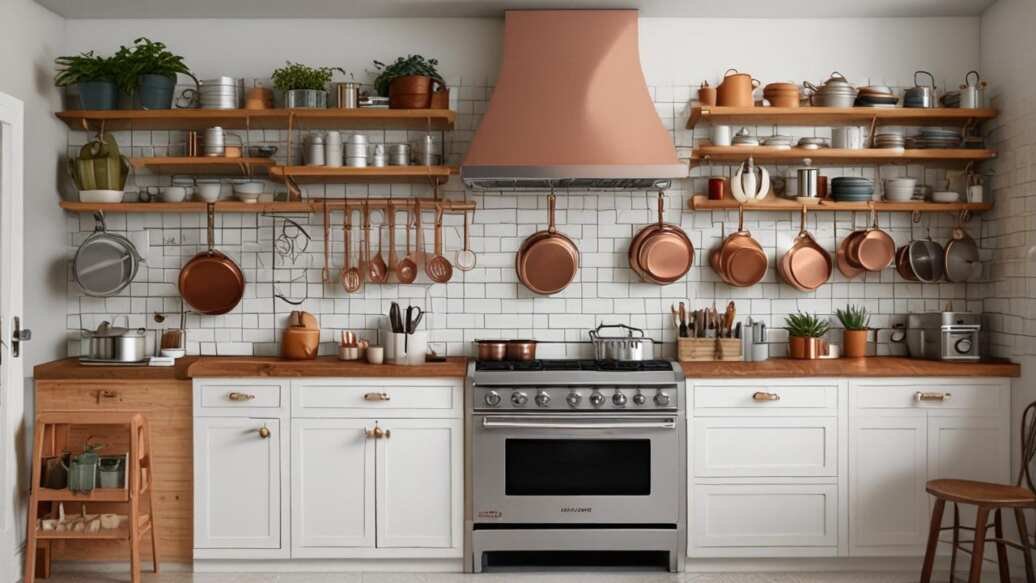
How to Hang Pots and Pans Without Damaging Walls
Hanging your cookware is one of the most effective ways to free up cabinet space in a small kitchen. However, improper installation can lead to damaged drywall, broken tiles, or even injuries. Follow these steps for a secure installation.
- Find the studs using a reliable stud finder. Never hang a heavy pot rack on drywall alone without anchors rated for at least 75 pounds.
- Choose the right hardware — toggle bolts work for drywall without studs, but masonry bits are required for tiled backsplashes.
- Install a ceiling rack over your kitchen island or near the stove if you have a sturdy ceiling joist. Avoid attaching to popcorn ceilings.
- Use a wall-mounted rail with S-hooks for lighter pans like non-stick skillets and lids. Keep heavy stockpots on the lower rail.
- Distribute weight evenly across the rack to prevent bowing. Place the heaviest pots closest to the mounting brackets.
- Keep frequently used pans at chest level and reserve high hooks for pans you use less than once a week.
Warning: A fully loaded pot rack can weigh over 50 pounds. If you skip the studs, you risk the entire rack crashing down during cooking. Always use hardware rated for at least double your expected load.
Hanging racks add a professional chef aesthetic to your kitchen and keep your most-used cookware within arm’s reach. The National Kitchen and Bath Association (NKBA) reports that hanging pot racks are included in approximately 18% of modern kitchen remodels, especially in apartments and small homes.
Tip: If you are renting, use a freestanding pot rack that leans against the wall or a tension rod system that does not require drilling. These options are fully removable without leaving marks.
What Are the Best Tools for Pot and Pan Storage?
You do not need a full kitchen renovation to store pots and pans effectively. Several affordable tools can instantly upgrade your existing cabinet space. Here are the top options for small kitchens:
- Vertical Pan Dividers: Adjustable metal or wood racks that sit on your cabinet shelf. Metal dividers are thinner and save more space, while bamboo adds a natural look.
- Hanging Lid Organizers: These attach to the inside of cabinet doors or walls to hold lids vertically. They keep lids visible and accessible at all times.
- Expandable Tension Rods: A budget-friendly alternative to dividers. Install them vertically between shelves to create slots for lids and baking sheets.
- Shelf Risers: Ideal for doubling shelf space. Place smaller saucepans on the riser and larger pots underneath.
- Nesting Pan Protectors: Felt or silicone pads placed between stacked pans. Felt is better for heavy cast iron, while silicone works well with non-stick surfaces.
- Magnetic Knife Strips: Use these for lightweight stainless steel pans if you are out of cabinet space. Mount them on a wall or inside a pantry door.
Below is a quick comparison of storage tools to help you choose based on your budget and kitchen layout:
| Tool | Price Range | Ease of Installation | Best For |
|---|---|---|---|
| Vertical Dividers | $15 – $30 | Very Easy — no tools needed | Frying pans and baking sheets |
| Hanging Lid Rack | $10 – $20 | Easy — screws into cabinet door | All lids, especially glass lids |
| Ceiling Pot Rack | $50 – $150 | Moderate — requires stud drilling | Heavy stockpots and skillets |
| Pan Protectors (set) | $8 – $15 | Very Easy — just place between pans | Non-stick and copper cookware |
Investing in just two of these tools can dramatically change how your kitchen functions daily. A lid organizer plus vertical dividers will cost you less than $40 and save you hours of frustration each year.
Important: When buying pan protectors, choose felt for cast iron and silicone for non-stick. Felt compresses over time but provides better shock absorption. Silicone lasts longer but can mark shiny pans.
Common Mistakes When Storing Cookware in Small Spaces
Even with good intentions, homeowners make critical errors that damage their cookware or waste precious cabinet space. Avoid these common pitfalls to keep your kitchen organized and your pans in good condition.
- Stacking non-stick pans without protectors: This ruins the coating within months. Non-stick surfaces are soft and scratch easily. Always place a protector between each pan.
- Storing lids in a different cabinet than the pots: You waste valuable time hunting for matches. Store lids next to or directly with their corresponding pot.
- Ignoring vertical space above stacked pans: Leaving a 12-inch gap above a stack of pans is wasted potential. Use a shelf riser or stack smaller pans on top.
- Overloading hanging racks beyond their weight limit: Exceeding weight limits stresses walls and ceilings. Check the manufacturer’s weight rating before loading.
- Storing cast iron in cabinets with high humidity: Rust can form quickly without air circulation. Store cast iron with the lid slightly ajar to allow airflow.
- Using metal dividers without rubber ends: Bare metal can scratch your pans and the cabinet surfaces. Look for dividers with rubber or silicone tips.
Warning: Never store cast iron lids directly on top of cast iron pans without a protective layer. The rough surfaces will scrape against each other, creating metal dust and damaging the seasoning. A simple paper towel works in a pinch.
According to a 2023 kitchen organization survey by The Spruce, 40% of homeowners reported scratched cookware due to improper stacking. Another 25% admitted they had to replace pans sooner than expected because of storage-related damage. Avoiding these mistakes keeps your cookware in top condition for years and makes your daily cooking routine smoother.
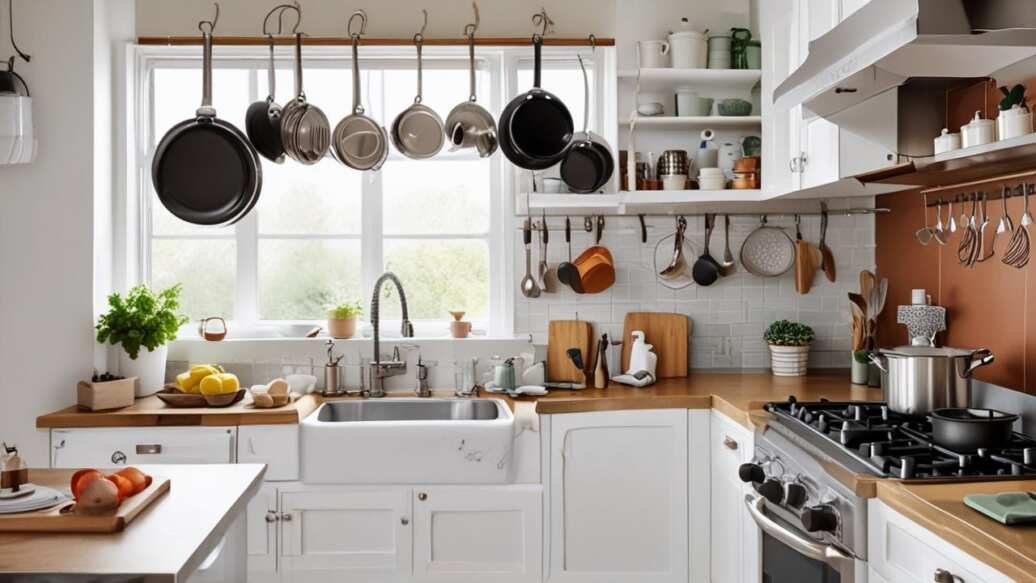
How to Maintain and Protect Your Cookware While Storing
Proper maintenance during storage extends the life of your pots and pans significantly. Different materials require different care routines to prevent scratches, rust, and tarnishing.
Non-stick pans need soft cloth or silicone protectors between them. Stack no more than three non-stick pans on top of each other to prevent weight pressure from deforming the coating. Avoid placing heavy cast iron on top of non-stick for any reason.
Stainless steel can be stored with paper towels between pans to prevent water spots and minor scratches. Copper cookware tarnishes faster in humid cabinets, so store it in a dry area or use anti-tarnish strips inside the cabinet.
- Cast iron: Store with the lid slightly ajar to allow airflow. If the cabinet is humid, place a silica gel packet inside the pot. Never stack cast iron directly — always use a cloth or paper towel layer.
- Copper: Tarnish occurs faster in humid cabinets. Wipe copper dry before storing and place it on a high shelf away from steam sources like the kettle or rice cooker.
- Aluminum: Aluminum can oxidize and leave dark marks on cabinets. Use bamboo dividers for a natural, scratch-free surface that does not react with the metal.
- Hard-anodized: These pans are durable but heavy. Store them vertically in deep dividers to avoid scratching the anodized surface.
- Ceramic: Ceramic coatings are brittle. Store them individually or with very soft padding. Never stack ceramic pots on top of each other without protection.
Important: Silicone protectors are heat-resistant up to 500°F, but felt ones are better for heavy pans because they do not flatten over time like silicone can. For cast iron, felt is the clear winner.
Taking these extra steps during storage prevents costly replacements and keeps your cookware performing like new. A four-piece non-stick set typically costs $80 to $200, and proper storage can extend its lifespan from two years to five years or more.
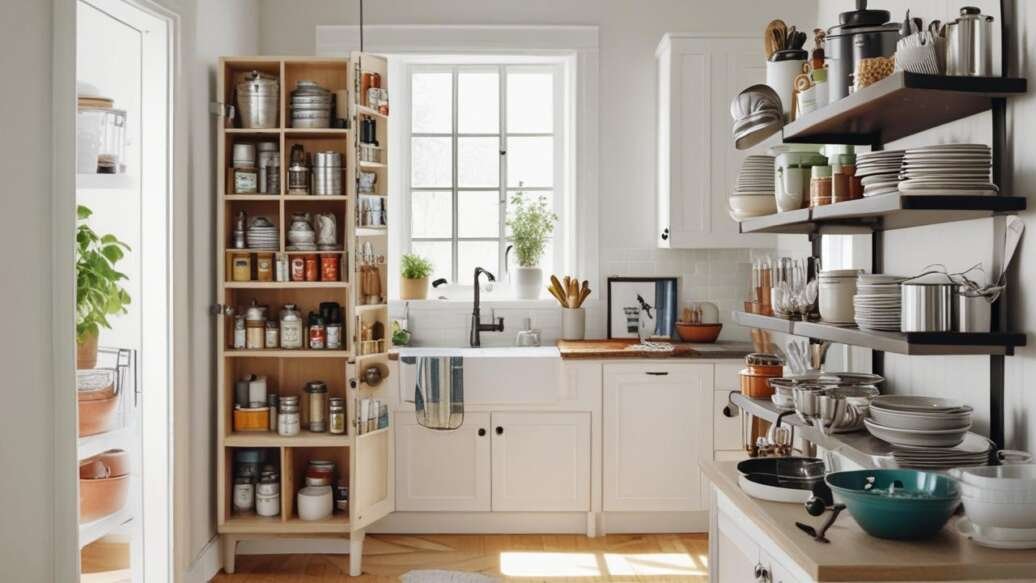
How to Maximize Pantry and Closet Space for Cookware
When your kitchen cabinets are simply too small to hold everything, look beyond the kitchen. Nearby pantries, linen closets, and even sideboards can become valuable cookware storage zones. This strategy is especially effective for bulky items like roasters, Dutch ovens, and specialty pots.
- Install heavy-duty shelving in a pantry to hold stockpots and Dutch ovens. Adjustable wire shelves allow you to customize the height for tall pots.
- Use a rolling utility cart as a mobile pot storage station. Push it against a kitchen wall and pull it out when you need access to less frequently used pans.
- Repurpose a bookshelf in a dining area or laundry room. Use sturdy bins for lids and smaller pans to keep the appearance neat.
- Hang a pegboard on the inside of a closet door near the kitchen. Use it for lightweight lids, measuring cups, and small saucepans.
- Store seasonal cookware in high cabinets or pantries. Keep holiday roasting pans and large stockpots out of the way during everyday use.
This approach keeps your prime kitchen cabinet space reserved for everyday dishes, food items, and the pans you use on a weekly basis. A 2024 home organization report from Better Homes & Gardens found that 30% of homeowners with small kitchens now use adjacent closets or pantries for overflow cookware storage.
Tip: If you store cookware in a basement or garage pantry, use airtight bins with desiccant packets. Basements are usually damp and can cause rust on cast iron or carbon steel pans within weeks.
Frequently Asked Questions
Is it OK to stack pots and pans on top of each other?
Yes, but you must use protective padding between them. Stacking without protectors scratches non-stick coatings and damages the surface of stainless steel pans. Limit stacks to three pans high to avoid pressure issues and instability.
What is the best way to store pots and pans in a very small apartment kitchen?
The best way combines vertical dividers for frying pans, a hanging rack for heavy stockpots, and a lid organizer on the cabinet door. This system maximizes vertical space and prevents the clutter that often overwhelms small apartment kitchens.
How do I store pots and pans if I have no pantry or closet space?
Use wall-mounted rails with S-hooks, ceiling pot racks over open floor space, or the dead space above your refrigerator. You can also buy a freestanding kitchen island with built-in pot drawers or a rolling cart that fits between counters.
Should lids be stored on pots or separately for better organization?
Store lids separately. Placing lids on top of pots creates unstable stacks that topple easily. A dedicated lid organizer on the cabinet door or a tension rod mounted vertically inside the cabinet is much more effective and keeps lids visible.
How do I store cast iron pots and pans without causing rust?
Store cast iron with the lid slightly off to allow air circulation. Never stack them directly on top of each other without a soft layer in between. Keep them in a dry, cool cabinet and rub a thin layer of oil on the surface before long-term storage.
Final Thoughts
Storing pots and pans in a small kitchen does not have to mean constant clutter or damaged cookware. By using vertical dividers, hanging racks, and protective padding, you can double your usable space while keeping your cookware safe. Focus on accessibility, material protection, and smart use of wall or ceiling areas.
Your kitchen will feel significantly larger and your pans will last longer.

Leave a Reply