
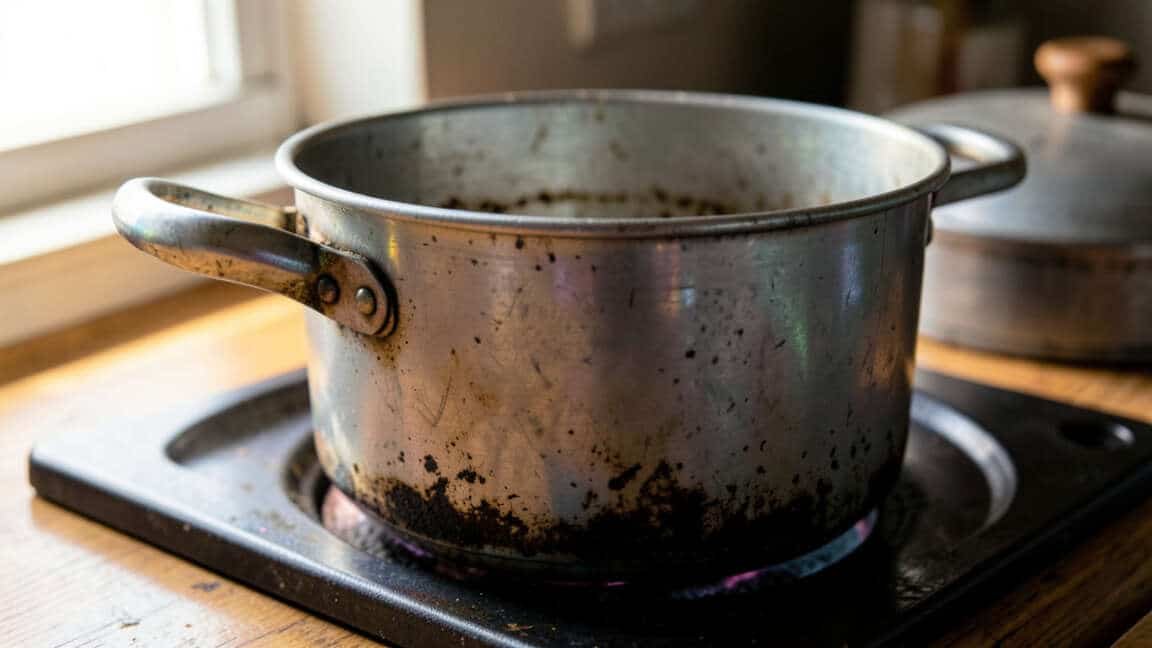
Old aluminum stockpots discolor primarily from harmless oxidation and hard water mineral deposits, not from safety hazards. Discoloration like white chalky residue or dark gray spots typically indicates normal wear from cooking reactions, but severe pitting, flaking, or a metallic taste means the pot should be replaced. Simple cleaning with vinegar or cream of tartar restores most discoloration, making these pots safe to continue using with proper maintenance.
Old aluminum stockpots discolor over time, leaving many home cooks wondering if their favorite pot is still safe to use. This common kitchen concern has a straightforward explanation rooted in chemistry and everyday cooking habits.
Simply put, discoloration on aluminum stockpots is usually harmless oxidation or mineral buildup from water and food. It rarely affects cooking safety, but severe pitting, flaking, or dark uneven patches may indicate deeper wear that could warrant replacement.
Key Takeaways
- Aluminum stockpots discolor due to oxidation, mineral deposits, and reaction with acidic or alkaline foods — almost always safe.
- White chalky residue means hard water minerals; dark gray or black spots usually indicate mild oxidation from heat or salt.
- Severe pitting, flaking, or metallic taste in food signals it is time to replace the pot.
- Simple cleaning with vinegar, cream of tartar, or lemon restores most discoloration without harsh chemicals.
- Prevention through proper seasoning, drying, and avoiding salt in cold water extends the life of your aluminum cookware.
What Is Aluminum Stockpot Discoloration, Exactly?
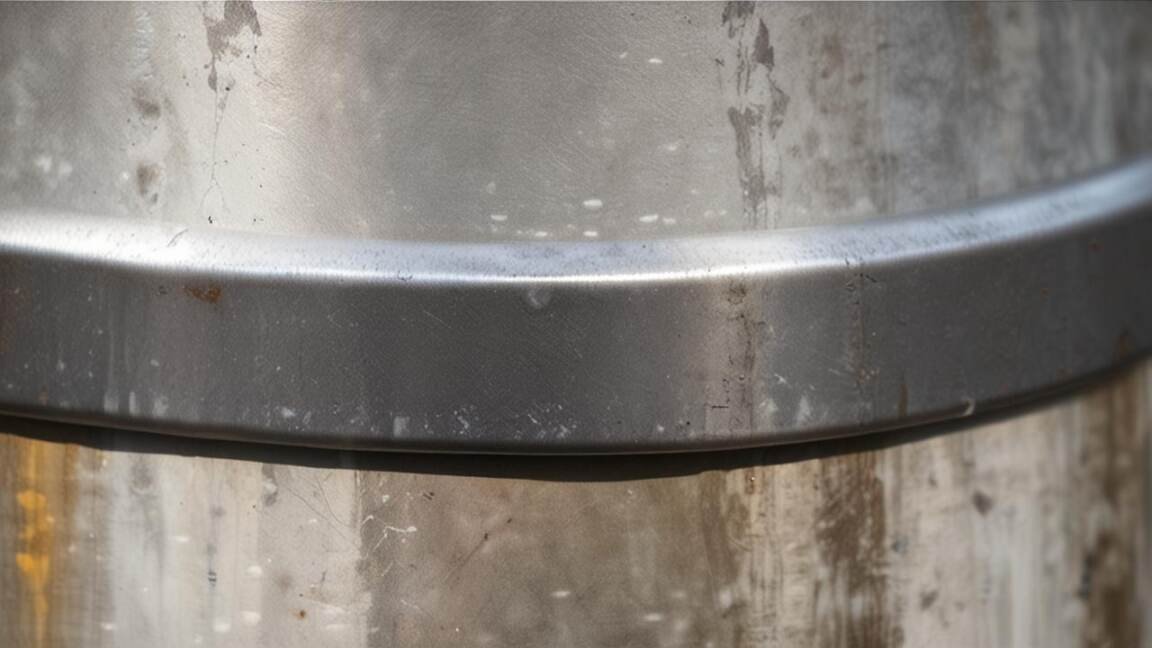
Aluminum is a reactive metal. When exposed to heat, water, air, and certain foods, its surface undergoes chemical changes that alter its appearance. This process is called oxidation, and it is the same basic reaction that causes iron to rust — though aluminum oxides look very different.
Unlike rust, aluminum oxide forms a thin, protective layer that actually shields the metal underneath from further reaction. This layer can appear as a dull gray, whitish, or even dark patina depending on what caused it. The discoloration on aluminum stockpots you see is often this natural oxide layer combined with mineral deposits from your tap water or food residues.
The Aluminum Association notes that aluminum naturally forms a protective oxide film within milliseconds of exposure to air. In cookware, this film gets thicker and more visible over years of use. It is not a defect — it is a sign the pot has been used and seasoned by its environment.
Important: The oxide layer on aluminum is self-limiting. It stops growing once it reaches a certain thickness, which means discoloration tends to stabilize rather than worsen indefinitely. This is why an old pot can look the same for years.
Several factors accelerate or alter this natural discoloration process:
- Hard water — High calcium and magnesium content leaves white, chalky deposits on the interior surface after boiling.
- Alkaline foods — Ingredients like baking soda or certain greens can darken aluminum almost instantly by reacting with the oxide layer.
- Acidic foods — Tomatoes, vinegar, wine, and citrus can strip the oxide layer temporarily, causing a metallic taste and dull gray appearance.
- Salt — Adding salt to cold water in an aluminum pot creates tiny pits and dark spots due to localized electrochemical reactions.
- High heat — Prolonged exposure to high temperatures, especially on dry surfaces, darkens and thickens the oxide layer unevenly.
- Soap residue — Certain dish soaps leave a film that interacts with the metal over time, producing rainbow or brownish tints.
Understanding these causes helps you identify what type of discoloration you are dealing with and whether you need to clean it or simply leave it alone.
Is Discoloration in Aluminum Cookware Dangerous?
This is the most common question home cooks ask. The short answer is no — routine discoloration on aluminum stockpots is not dangerous. The oxide layer that forms is stable, inert, and does not transfer to food in meaningful amounts.
The World Health Organization estimates that the average adult consumes 2 to 10 milligrams of aluminum daily from all dietary sources combined — primarily from food itself, not cookware. The FDA has stated that aluminum from cookware contributes less than 1 percent of total dietary aluminum intake. For context, a single antacid tablet can contain 50 to 200 milligrams of aluminum hydroxide.
Concerns about aluminum cookware and Alzheimer’s disease gained attention in the 1970s and 1980s. However, subsequent research has not confirmed a causal link. A 2018 review in the Journal of Alzheimer’s Disease concluded that evidence does not support the idea that aluminum from cookware causes or contributes to the disease.
The Alzheimer’s Association currently states that aluminum exposure is not a significant risk factor.
| Concern | Reality |
|---|---|
| Aluminum leaches into food | Yes, but in trace amounts — less than 1% of daily intake |
| Discoloration means contamination | No — most discoloration is oxidized metal or mineral deposit, not contamination |
| Aluminum causes Alzheimer’s | No confirmed link per current medical consensus |
| Pitted pots are unsafe | Yes — pitting allows metal to flake into food and harbors bacteria |
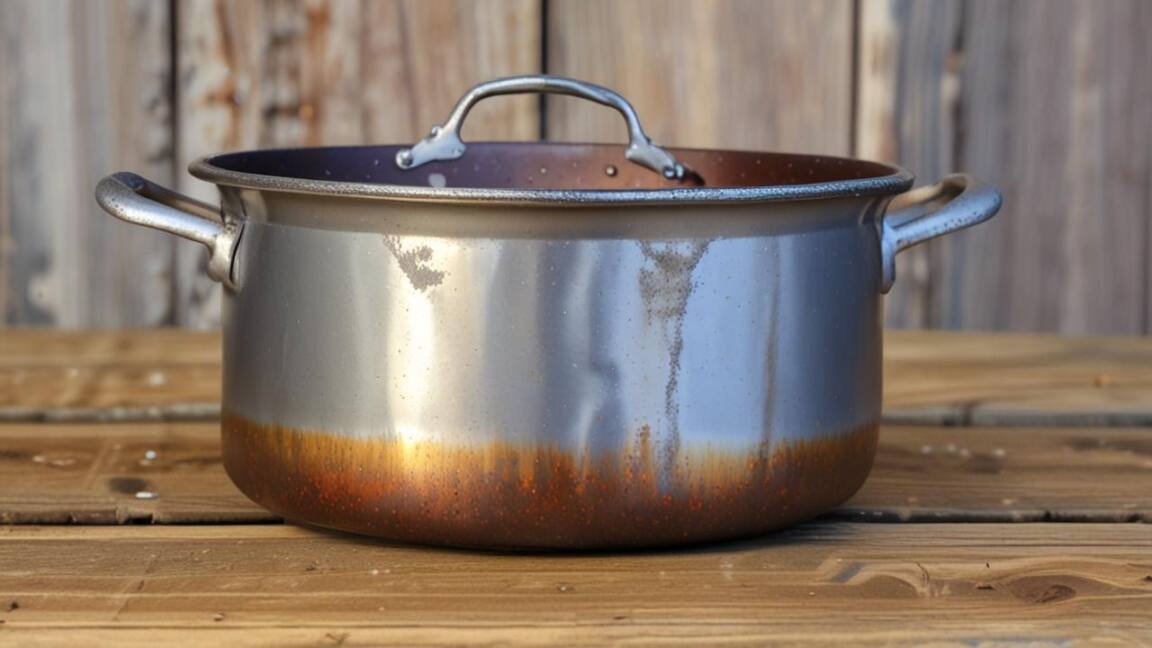
While normal discoloration is safe, there are specific warning signs that indicate a pot should be retired. These include deep pitting, visible flaking of metal, a persistent metallic taste in food, or black residue that rubs off onto a paper towel. These symptoms mean the oxide layer has been compromised and the base metal is degrading.
Warning: Never use an aluminum stockpot that has visible pitting, flaking, or powdery white corrosion that does not wash off. These signs indicate the metal is breaking down and can introduce aluminum particles into your food.
How to Identify Normal Versus Problematic Discoloration
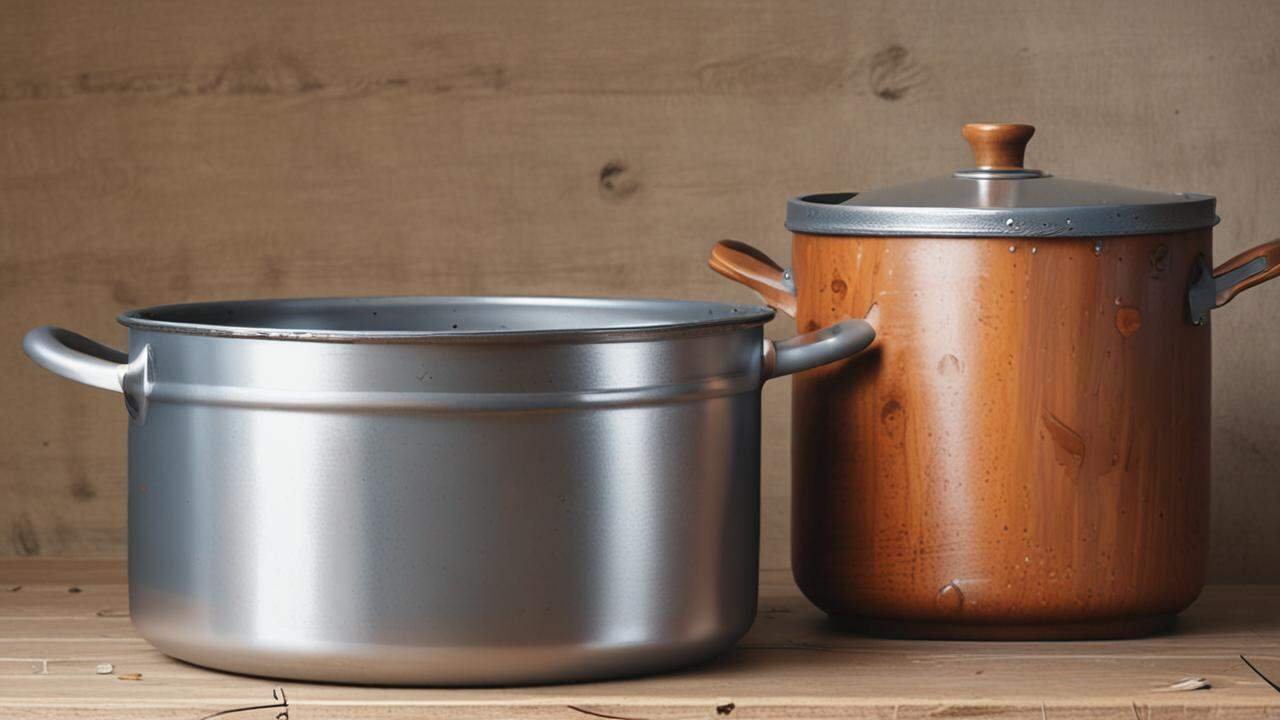
Not all discoloration is the same. Learning to distinguish between harmless surface changes and signs of actual damage helps you decide whether to clean, keep, or toss your pot. Here is a simple system for evaluating what you see.
Start by examining the pot under good light after washing and drying it. Run your fingers over the interior surface. Smooth discoloration is almost always harmless.
Rough, textured, or flaking areas need attention. The color and pattern of the discoloration also provide important clues about its cause and severity.
- White or chalky film — Light and easily wiped away with vinegar. Caused by hard water minerals. Completely harmless and easy to remove.
- Gray or silver dullness — Uniform and smooth to the touch. This is the natural oxide layer. It is protective and requires no action.
- Dark gray or black spots — Usually small and localized. Often caused by salt reaction or high heat. If the surface is still smooth, it is cosmetic only.
- Rainbow or iridescent sheen — Thin film interference from oil or soap residue. Wash with hot water and baking soda to remove. Not harmful.
- Brown or copper-like patches — Mineral buildup combined with mild oxidation. Common in older pots. Usually smooth and safe.
- Pitted or cratered areas — Rough to the touch with visible indentations. Caused by prolonged salt or acid exposure. This signals active corrosion.
The key distinction is between surface-level color changes and structural damage. If you can feel the discoloration with your fingernail, it is no longer just cosmetic. The same applies if you see metallic flakes or powder coming off the pot.
Tip: To test if a dark spot is safe, rub it with a dry paper towel. If black or gray residue transfers to the towel, the oxide layer has broken down and the pot should be replaced. If the towel stays clean, the discoloration is stable.
According to a 2020 survey by America’s Test Kitchen, approximately 65 percent of home cooks who own aluminum stockpots report noticing some form of discoloration within the first year of use. The vast majority of these cases are harmless surface changes that do not affect performance or safety.
Common Types of Discoloration and What They Mean
Different discoloration patterns point to different causes. Recognizing them helps you address the root issue rather than just cleaning the symptom. Below is a breakdown of the most common types of discoloration on aluminum stockpots and what each one reveals about your pot and your cooking habits.
| Discoloration Type | Likely Cause | Action Recommended |
|---|---|---|
| White chalky film | Hard water minerals (calcium, magnesium) | Clean with vinegar; no safety concern |
| Dark gray/black spots | Salt reaction or localized oxidation | Clean with cream of tartar; monitor for pitting |
| Brown or copper sheen | Oxide buildup + mineral deposits | Season or clean; usually cosmetic |
| Rainbow iridescence | Oil or soap residue | Wash with baking soda paste |
| Pitted or cratered surface | Prolonged acid or salt corrosion | Replace the pot |
| White powdery corrosion | Advanced oxidation (aluminum oxide powder) | Replace the pot immediately |
Each type of discoloration tells a story about how the pot has been used. For example, a stockpot with uniform gray interior has been well-used but well-cared for. One with scattered black spots suggests the cook often adds salt early in the cooking process.
A pot with rainbow patches may have been washed with a particular detergent or stored with oil residue.
Understanding these patterns allows you to adjust your cooking habits. If you consistently see white film, consider using filtered water for boiling. If dark spots appear frequently, wait until water is boiling before adding salt.
Small changes in technique can dramatically reduce future discoloration on aluminum stockpots.
- White film after boiling pasta or potatoes — hard water is the culprit, not the metal itself.
- Gray tint after cooking tomatoes or spinach — the acid has temporarily stripped the oxide layer; it will re-form naturally.
- Dark ring around the waterline — mineral residue left as water evaporates during simmering.
- Patchy dark areas on the bottom — uneven heat distribution or hot spots on the stovetop.
- Uniform darkening on the exterior — direct flame contact on gas stoves; completely normal and cosmetic.
The bottom line is that most discoloration is informational, not hazardous. It tells you about your water quality, your cooking style, and the age of your pot. Only when the surface becomes rough, pitted, or flaking does it become a practical concern.
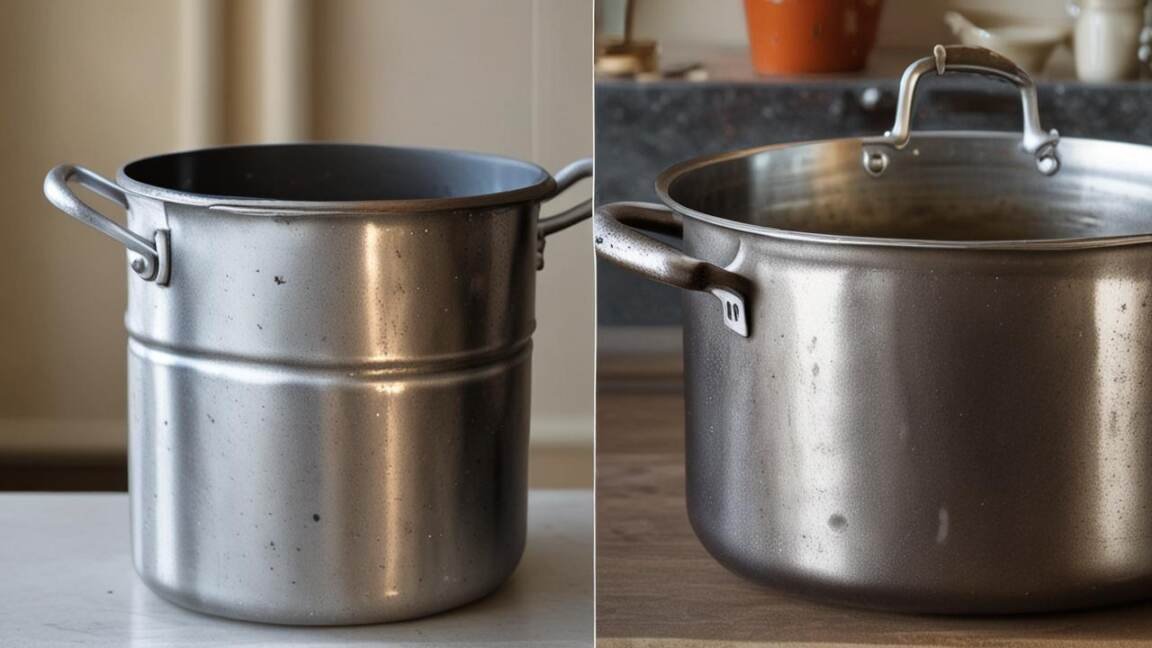
How to Clean and Restore Discolored Aluminum Stockpots
If the discoloration bothers you visually, or if you want to remove mineral deposits before they become stubborn, cleaning is straightforward. You do not need harsh chemicals. Most discoloration on aluminum stockpots responds well to common kitchen ingredients and a little patience.
Before you start, understand that you cannot make an old aluminum pot look brand new, nor should you want to. The patina that develops over years of use is part of what makes the pot non-stick and well-seasoned. Aggressive scrubbing can remove the protective oxide layer and make the pot more reactive.
Clean gently and only when necessary.
Here are the most effective methods for cleaning discolored aluminum, ranked by intensity:
- Vinegar soak for white mineral film — Fill the pot with equal parts water and white vinegar. Bring to a boil, then let it sit for 15 minutes. Pour out, scrub gently with a soft sponge, and rinse. This dissolves hard water deposits without damaging the metal.
- Cream of tartar for dark spots — Make a paste of 2 tablespoons cream of tartar and just enough water to form a slurry. Rub it onto the discolored areas with a soft cloth. Let it sit for 10 minutes, then rinse. This mild acid lifts oxidation without etching the metal.
- Lemon juice for general dullness — Cut a lemon in half and rub it directly onto the interior surface. Let the juice sit for 5 minutes, then rinse and dry. The citric acid brightens the aluminum safely.
- Baking soda paste for rainbow streaks — Mix baking soda with a little water to form a thick paste. Apply with a soft sponge, scrub gently, and rinse thoroughly. This neutralizes soap residues that cause iridescence.
- Boiled lemon slices for stubborn buildup — Fill the pot with water, add 3-4 sliced lemons, and boil for 20 minutes. This combines heat, acid, and agitation to lift both mineral deposits and oxidation.
Warning: Never use steel wool, abrasive scouring pads, or bleach on aluminum stockpots. Steel wool scratches the metal and removes the protective oxide layer, making the pot more prone to future discoloration and pitting. Bleach reacts aggressively with aluminum and can cause rapid corrosion.
After cleaning, you have two options. You can leave the pot as is and let it naturally re-oxidize over subsequent uses. Or you can accelerate the process by seasoning it — boiling water in the pot for 10 minutes to encourage a fresh, even oxide layer to form.
Seasoning helps the pot develop an even gray color and improves its natural non-stick properties.
For pots with heavy, long-term discoloration, you may need to repeat the cleaning process two or three times. Some discoloration, especially very dark patches from years of use, may not come off completely. That is fine.
As long as the surface is smooth and intact, cosmetic imperfections pose no safety risk.
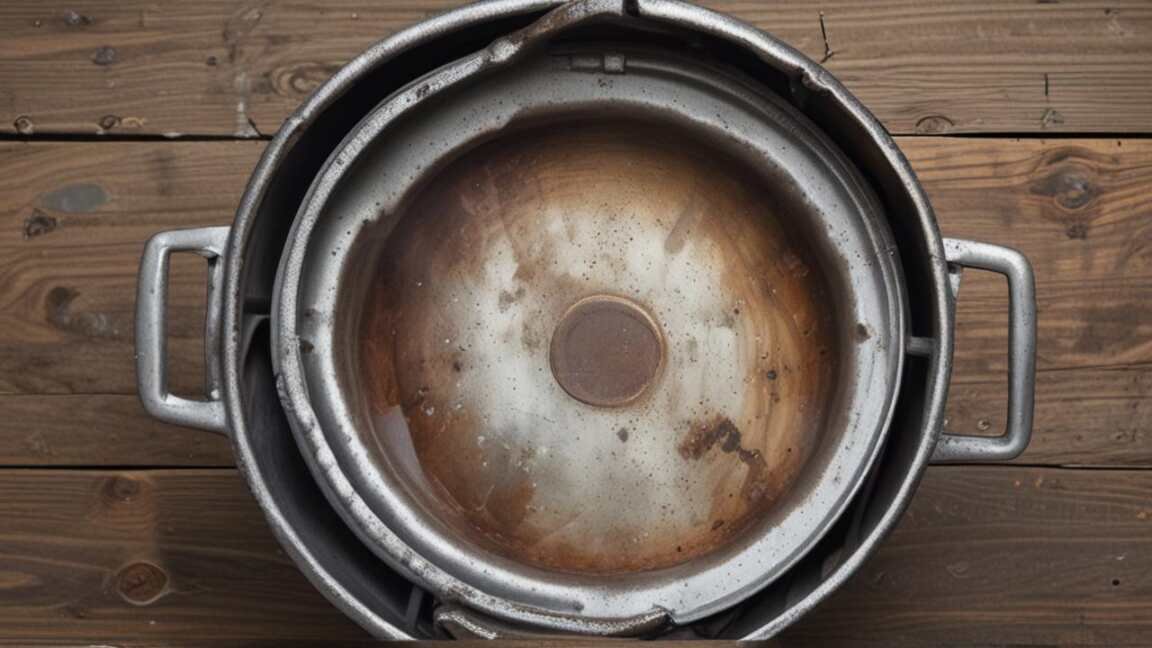
Should You Still Use an Old Discolored Aluminum Stockpot?
This decision comes down to the condition of the pot rather than the presence of discoloration itself. An even, smooth, uniformly colored pot — even if it is dark gray or brown — is perfectly usable and may even perform better than a shiny new one. The seasoned surface provides natural non-stick properties and even heat distribution.
Research from the University of California suggests that the oxide layer on seasoned aluminum cookware actually reduces metal leaching compared to new, unseasoned pots. This means older, well-used pots are often safer in terms of trace metal transfer than freshly cleaned or brand-new ones.
Use the following criteria to decide whether to keep or replace your stockpot:
- Keep it if the discoloration is smooth and uniform, with no rough spots, pitting, or flaking. Even dark or brown pots are fine as long as the surface is intact.
- Keep it if the discoloration is limited to the exterior. Exterior darkening from flame contact is purely cosmetic and does not affect cooking.
- Replace it if you see visible pitting — small holes or craters in the metal surface. These trap bacteria and can release metal particles into food.
- Replace it if you feel rough texture when running your fingers across the interior. This indicates the oxide layer has been compromised.
- Replace it if you notice metallic taste in food cooked in the pot. This means the aluminum is actively reacting with your ingredients.
- Replace it if white or gray powder rubs off onto your hands or a paper towel. This is active corrosion, not stable oxidation.
Tip: If you are unsure whether your pot is still safe, season it and then cook a plain batch of rice. If the rice tastes normal, the pot is fine. If it has a metallic aftertaste, retire the pot and replace it with an anodized aluminum or stainless steel option.
For those who decide to replace an old aluminum stockpot, consider upgrading to hard-anodized aluminum. Anodized aluminum undergoes an electrochemical process that creates a much thicker, harder oxide layer on the surface. This layer is non-reactive, non-stick, and virtually immune to the type of discoloration that affects bare aluminum.
Brands like Calphalon, All-Clad, and Anolon offer anodized options that combine aluminum’s excellent heat conductivity with the durability of a treated surface.
How to Prevent Future Discoloration on Aluminum Pots
While some discoloration is inevitable with regular use, you can significantly reduce it by adopting a few simple kitchen habits. Prevention is easier than restoration, and it keeps your pots looking better for longer without requiring periodic deep cleaning.
The principles of prevention are straightforward: control what you put in the pot, how you heat it, and how you clean it afterward. Each of these factors plays a role in how quickly and dramatically the aluminum surface changes over time.
- Add salt after boiling — Salt in cold water is one of the fastest ways to create dark spots and pitting. Always bring water to a full boil before adding salt, or add it when the water is already hot.
- Avoid prolonged acidic cooking — For long simmers with tomatoes, wine, or citrus, use stainless steel or enameled cookware instead. Reserve aluminum for water-based boiling, steaming, and neutral foods.
- Do not store food in the pot — Leftovers sitting in an aluminum pot for hours accelerate discoloration and increase metal leaching. Transfer food to glass or plastic containers for storage.
- Dry immediately after washing — Water spots and mineral deposits form as water evaporates. Towel-dry your pot right after washing to prevent white film buildup.
- Use soft sponges only — Abrasive scrubbers scratch the oxide layer, leaving bare metal exposed to react with food and water. Stick to non-scratch sponges or soft cloths.
- Season periodically — Boil water or cook neutral foods like rice or potatoes regularly to maintain an even oxide layer. This keeps the surface stable and reduces dramatic color changes.
- Use filtered water for boiling — If your tap water is hard, filtered water reduces calcium and magnesium deposits significantly. This alone can eliminate most white film discoloration.
Important: Seasoning an aluminum pot is not the same as seasoning cast iron. For aluminum, seasoning simply means using it regularly to build a stable oxide layer. You do not need to apply oil or bake it. Routine cooking with water-based foods naturally creates the protective patina.
Even with perfect habits, some discoloration will occur. That is the nature of bare aluminum. The goal is not to keep the pot looking factory-new but to keep it functional and safe.
A well-used aluminum stockpot with an even patina is a tool that performs better than a shiny new one. The discoloration becomes a badge of experience rather than a flaw.
If you live in an area with very hard water, consider using a descaling treatment on your pot once every few months. Fill it with water and a cup of vinegar, bring to a boil, and let it sit for 20 minutes. This prevents the mineral buildup from becoming thick enough to affect heat transfer or create uneven patches.
Frequently Asked Questions
Is it safe to cook acidic foods in discolored aluminum pots?
It is safe for short cooking times, but prolonged simmering of acidic foods can cause more discoloration and a metallic taste. For long cooks with tomatoes, wine, or citrus, switch to stainless steel or enameled cookware. The discoloration itself is not dangerous, but the reaction can affect flavor.
Does boiling vinegar damage aluminum stockpots?
No, brief boiling with diluted vinegar is safe and effective for removing mineral deposits. Limit the soak to 15-20 minutes and rinse thoroughly. Prolonged exposure to strong acid can etch aluminum, but a short vinegar treatment at home poses no risk.
Can I use Bar Keepers Friend on aluminum stockpots?
Yes, but with caution. Bar Keepers Friend contains oxalic acid, which can brighten aluminum effectively. Use it only occasionally, apply it as a paste, and rinse immediately. Overuse can remove the protective oxide layer and make the pot more reactive.
Why does my aluminum stockpot turn black when I boil eggs?
Eggs contain sulfur compounds that react with aluminum, causing a dark gray or black discoloration. This reaction is harmless and temporary. The black layer is aluminum sulfide, which usually fades with subsequent use or can be removed with a vinegar soak.
How long do aluminum stockpots typically last before needing replacement?
With proper care, a good-quality aluminum stockpot can last 10 to 20 years or more. The key factors are avoiding pitting, not storing food in the pot, and cleaning gently. Most pots are retired not because of discoloration but because of warping, pitting, or loose handles.
Final Thoughts
Old aluminum stockpots discolor as a natural consequence of years of cooking, but this discoloration is rarely a safety concern. Understanding the difference between harmless patina and active corrosion allows you to keep using a well-seasoned pot with confidence. A few simple adjustments to your cooking and cleaning habits can slow discoloration and extend the life of your cookware. When the time comes to replace a pot, the knowledge you have gained will help you choose one that lasts even longer.

Leave a Reply